A sustainable capsule wardrobe is not a beige uniform or a personality cleanse. It is simply a smaller collection of clothes you love wearing, that work together, and that you can maintain with care instead of constantly replacing. Think fewer pieces, more outfits, and a lot less “why did I buy this?” guilt.
I grew up tailoring thrift-store finds on my grandmother’s sewing machine, so I will always be biased toward making what you already own work harder. This guide is for beginners who want to minimize waste without losing their style. We are building your wardrobe, not someone else’s mood board.
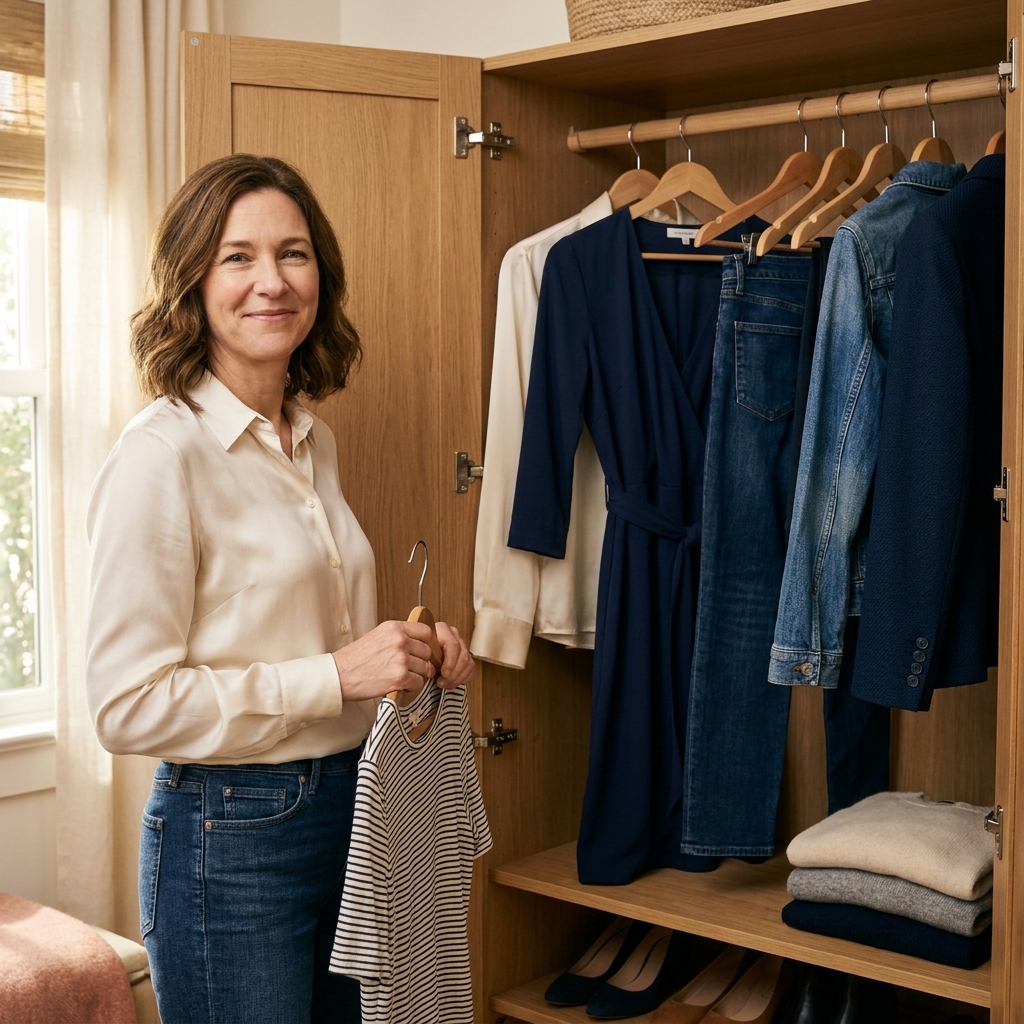
Step 1: Dress for real life
The most sustainable clothes are the ones you wear a lot. Before you declutter or shop, take 10 minutes to map your week. Ask yourself:
- What do I do most days? Work, school, caregiving, commuting, walking, standing, travel, creative events, going out.
- What is my climate reality? Hot, cold, humid, rainy, unpredictable, office air-conditioning, lots of layers.
- What is my comfort non-negotiable? Waistbands, sleeve length, shoe height, fabric feel, bra friendliness, sensory preferences.
Write down your top three “outfit zones” like: work, errands, social. Your capsule should cover those first. Special occasion pieces can come later, and you can borrow or rent when needed.
Step 2: Audit your closet
Shopping your closet is not just a cute phrase. It is often the fastest way to reduce waste because it stops you from buying duplicates and helps you notice what already fits, flatters, and functions.
A closet audit you will finish
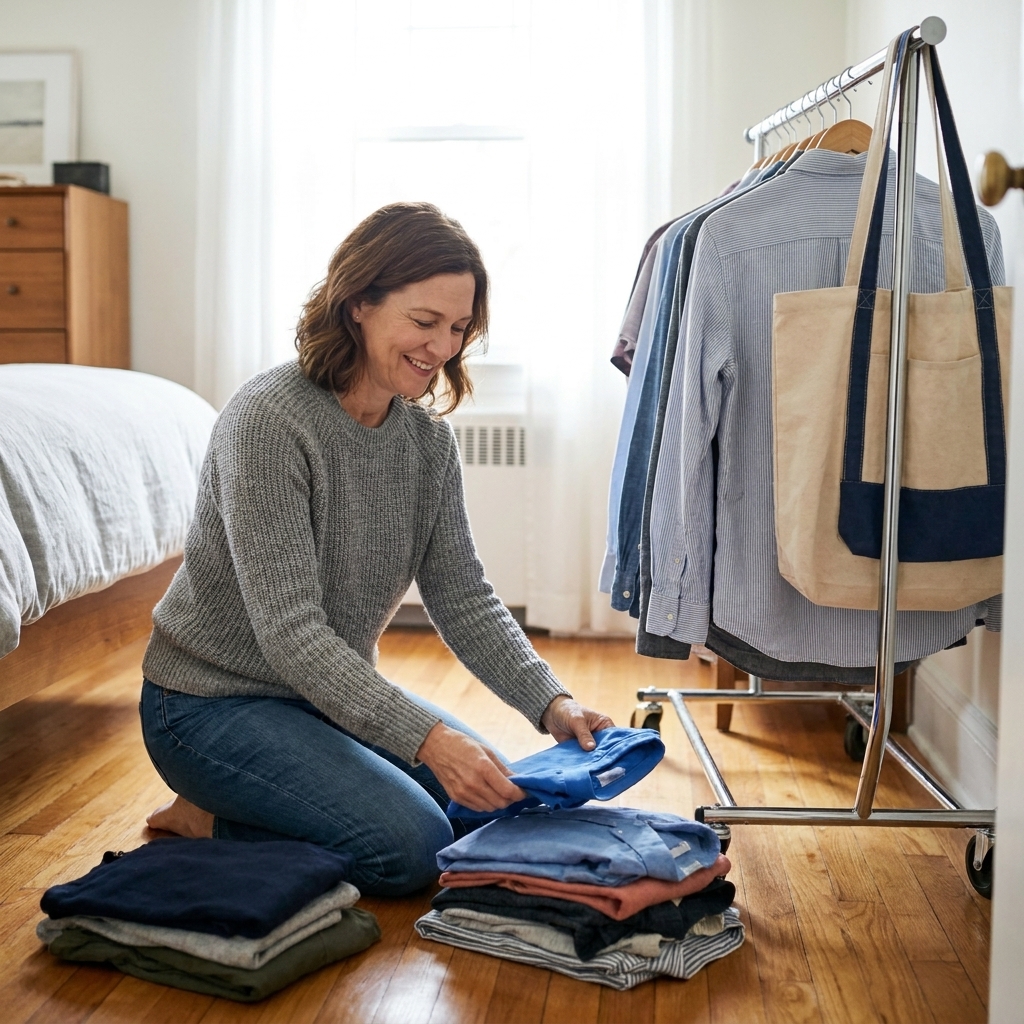
- Pull your most-worn items: the pieces you reach for on repeat. These are your capsule clues.
- Separate “almost” items: things you like but do not wear because of fit, scratchy fabric, missing button, weird hem length.
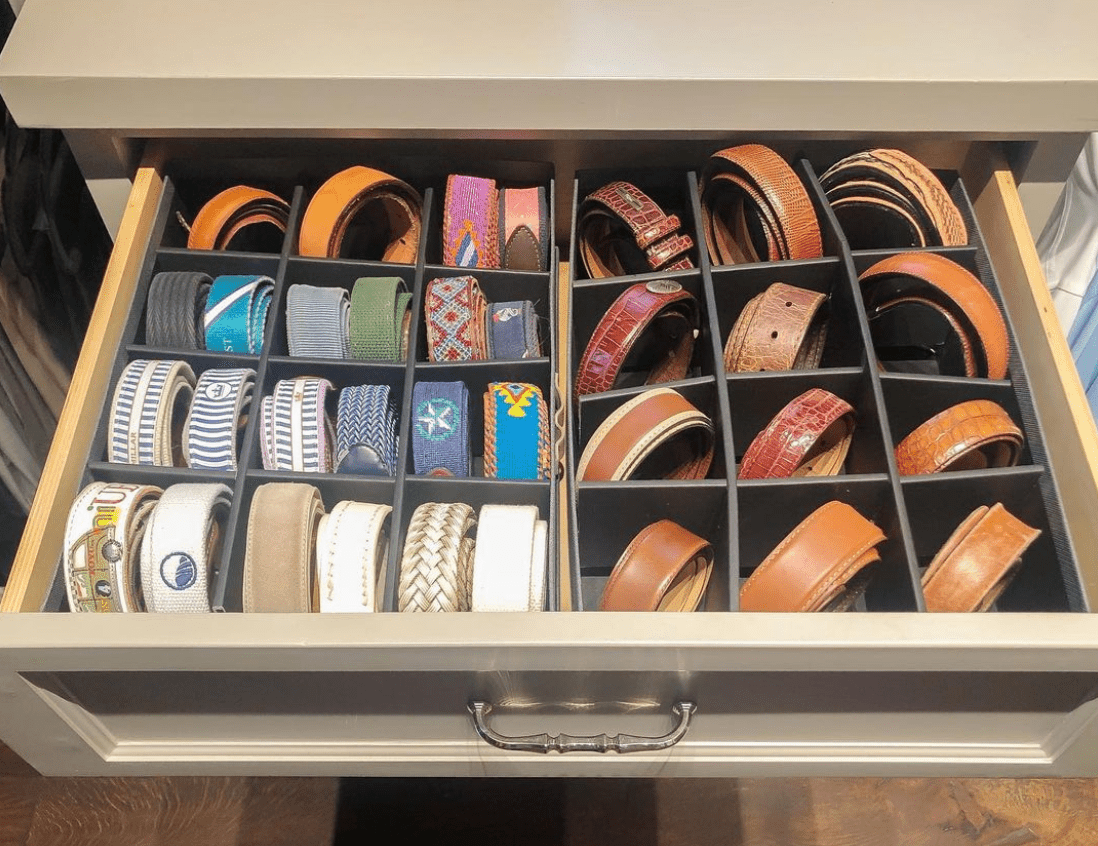
- Identify true gaps: what would make your outfits easier? Example: a layering tee, weatherproof shoes, a belt, a cardigan.
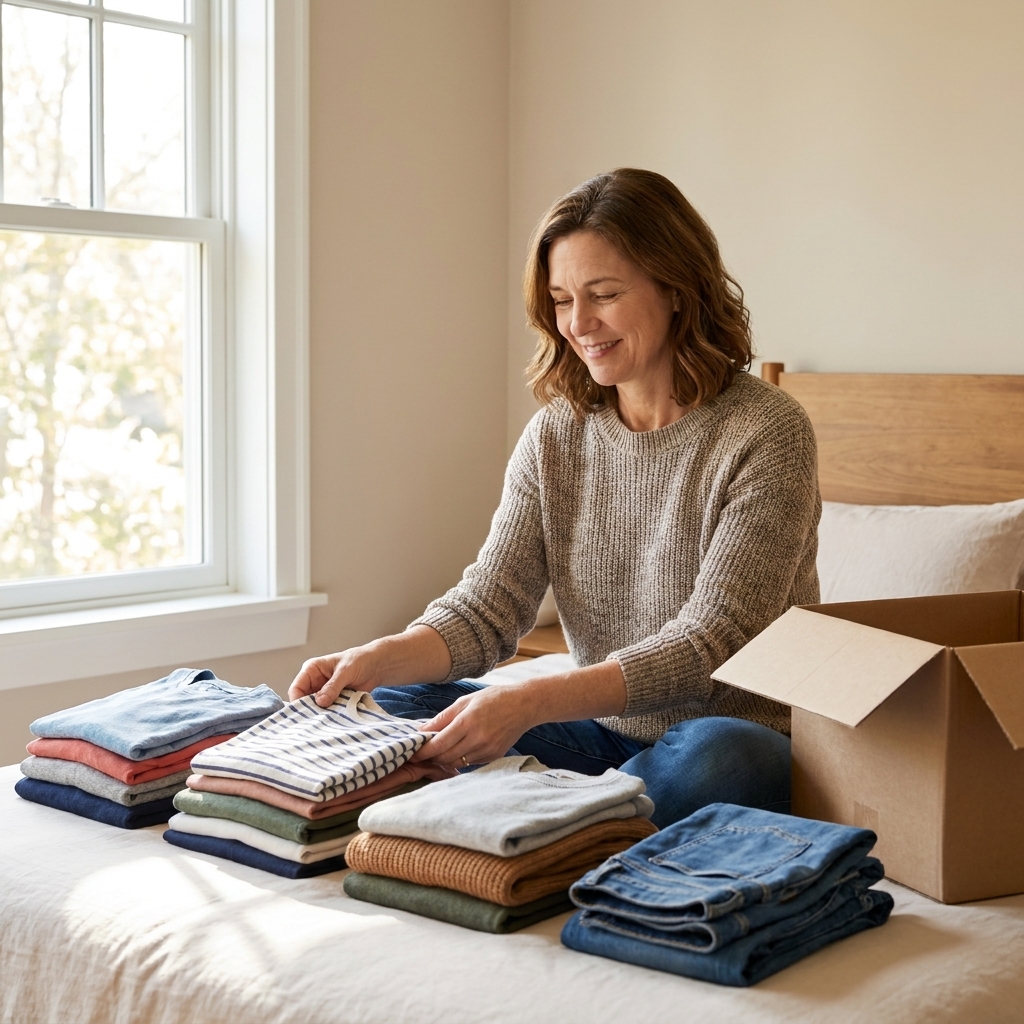
Pro tip from my visual merchandising years: lay your favorites on the bed like a mini store display. When you see them together, patterns pop out. Maybe you love structured shoulders, warm neutrals, or all-black with one bright accessory. That is your style talking.
What to do with what you do not keep
This is the sustainability loop-closer, and it matters.
- Resell: for higher-quality pieces in great condition (denim, coats, bags). Try consignment, resale apps, or a local buy-sell group.
- Swap: clothing swaps are underrated, especially for trend experiments you do not want to buy new.
- Donate intentionally: only donate clean, wearable items to organizations that actually want them. If your donation spot is overwhelmed, that “free bag” can become trash fast.
- Textile recycle: for stained, torn, or unwearable items. Look for municipal textile recycling, brand take-back programs, or local drop-offs.
- Repair first: if it is one button, one hem, one zipper away from being a favorite, it belongs in the “fix” pile, not the guilt pile.
Step 3: Pick a palette
A capsule wardrobe works best when your pieces play nicely together. Color is the easiest way to create that without feeling boring.
A beginner palette formula
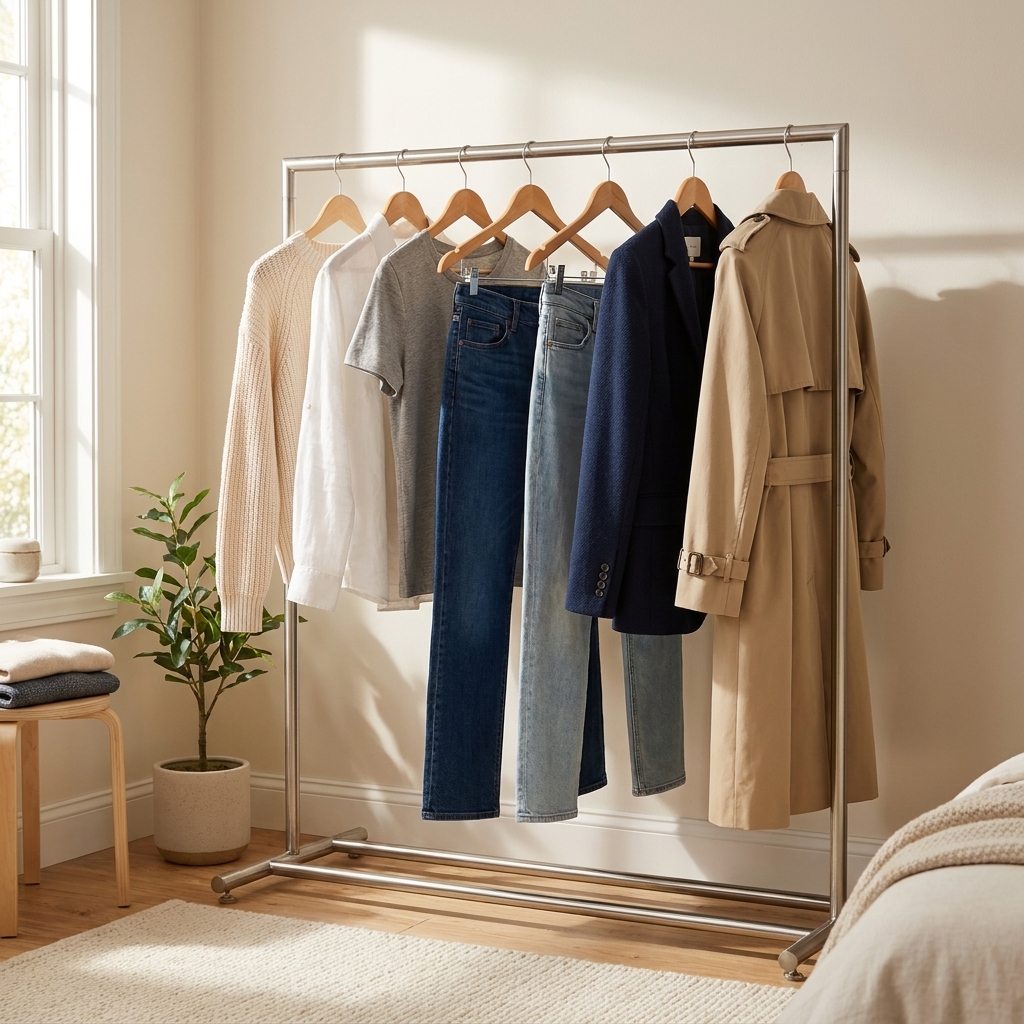
- 2 neutrals you love wearing near your face and on your bottom half. Examples: black and cream, navy and camel, charcoal and olive.
- 1 to 2 accent colors that light you up. Examples: rust, cobalt, lilac, forest green, blush.
- 1 “bridge” tone that connects everything. Examples: denim blue, chocolate brown, soft white.
If you are not sure what suits you, start with what you already wear the most. Sustainability includes not forcing yourself into a palette you will abandon in three months.
Step 4: Choose fit and fabric
Here is the truth I wish more people heard: a well-fitted garment gets worn. A “good deal” that pinches, pulls, or slides off your shoulders becomes closet clutter.
Choose 2 to 3 go-to silhouettes
- Tops: fitted tee, relaxed button-down, knit tank, lightweight sweater.
- Bottoms: straight-leg jeans, wide-leg trouser, midi skirt, tailored short.
- Layers: blazer, cardigan, denim jacket, trench, puffer.
Prioritize longevity over fiber hype
Natural fibers can be great, but they are not automatically low-impact. Conventional cotton can be resource-intensive. Wool has animal-welfare and methane considerations. Synthetics can last, but they come with shedding and end-of-life issues. The most sustainable choice is the one you will wear for years and care for well.
When you can, look for durable fabrics and better signals: organic or certified cotton, linen, responsibly sourced wool, recycled fibers, and sturdy blends that hold shape. Secondhand is still one of the lowest-impact ways to get quality.
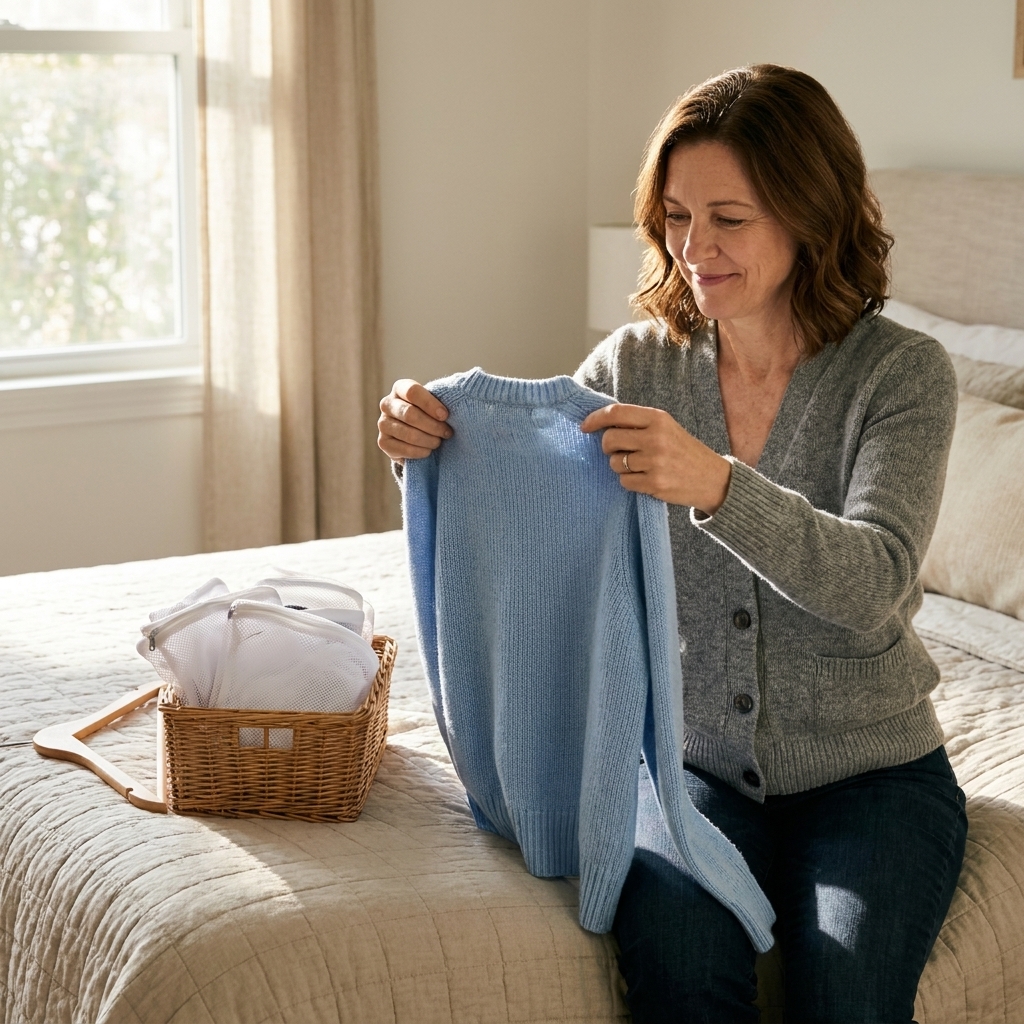
Recycled synthetics can be a smart pick for outerwear and activewear when you need performance like water resistance. If you wash synthetics often, consider using a microfiber-catching laundry bag or filter to reduce shedding.
Try to avoid flimsy fabrics that pill or lose shape quickly. If it already looks tired on the hanger, it will not magically get better after five washes.
Quick thrifting checks
- Seams: look for even stitching and generous seam allowance when possible.
- Closures: test zippers, check buttons, and inspect buttonholes.
- Fabric: hold it up to light. If it looks thin in high-friction areas, it will wear out faster.
- Care label: if it demands dry cleaning and you know you will not do it, leave it.
Step 5: Choose a capsule size
There is no moral prize for having the smallest wardrobe. A common starting range for a beginner capsule is 25 to 40 pieces, excluding underwear, socks, workout gear, and special-occasion items. If you live in a four-season climate, you might do a seasonal capsule that rotates.
A starter capsule outline
- 8 to 10 tops (a mix of tees, tanks, blouses, knits)
- 4 to 6 bottoms (jeans, trousers, skirt, shorts depending on climate)
- 2 to 3 dresses or jumpsuits (if you wear them)
- 3 to 5 layers (cardigan, blazer, jacket, coat)
- 3 pairs of shoes (everyday, weatherproof, dressier)
If those numbers feel stressful, start with a mini capsule for one part of your life, like work outfits or weekend wear. Small wins are how you build a wardrobe that lasts.
Mini example: office + weekend
Try this if you want something concrete without overhauling your whole closet at once:
- 2 bottoms: straight-leg jeans + one trouser
- 5 tops: 2 tees, 1 button-down, 1 knit, 1 going-out top
- 2 layers: blazer + cardigan or jacket
- 2 shoes: comfy everyday + slightly dressier pair
That is enough to build a week of outfits while you learn what you actually reach for.
Step 6: Shop with a plan
Sustainable shopping is not “never buy new.” It is buying with intention, and choosing the lowest-impact option that meets your needs.
The sustainable shopping ladder
- Use what you have: restyle, layer differently, wear the dress with boots, belt the blazer.
- Repair or tailor: hem the pants, replace the zipper, take in the waist. Tailoring can be cheaper than rebuying and it changes everything, but pricing varies a lot by city and garment complexity.
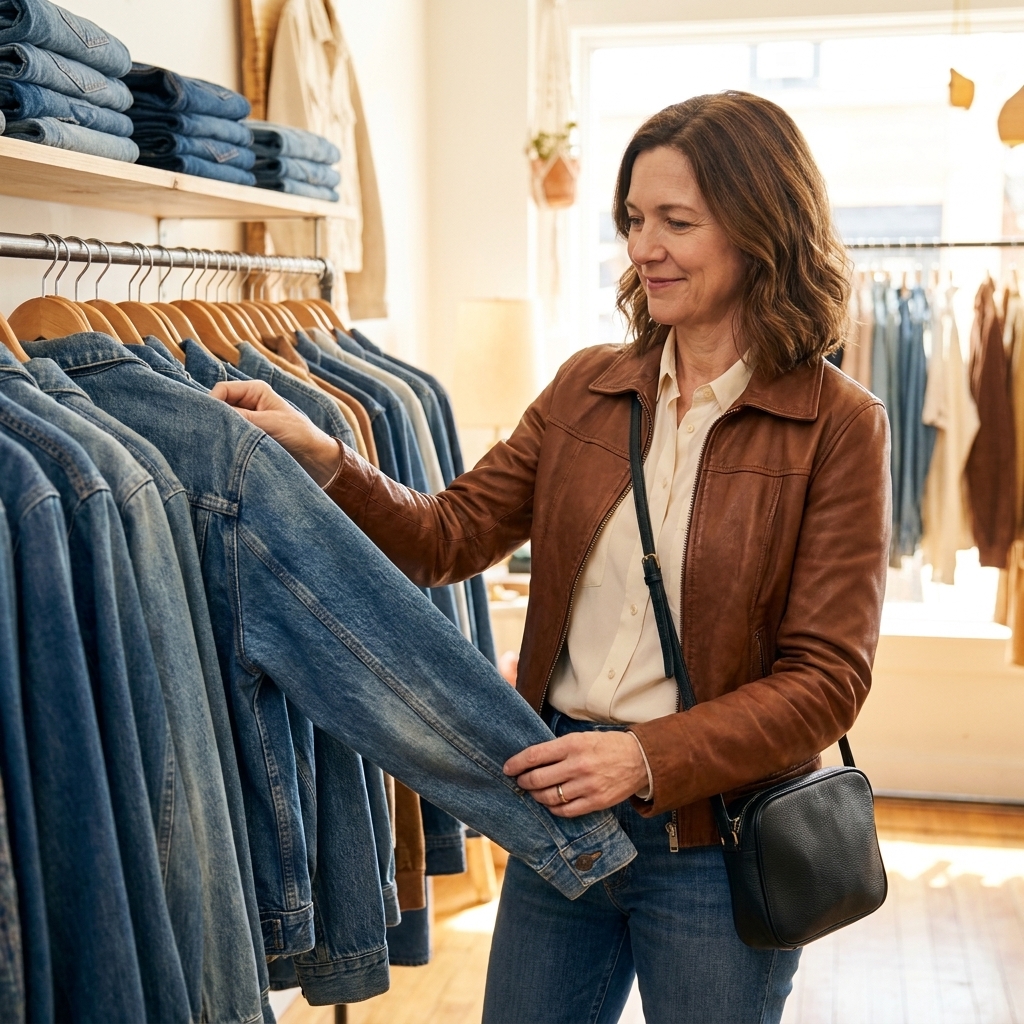
- Buy secondhand: thrift, consignment, resale apps, estate sales. This is my favorite place to find wool coats, denim, leather bags, and silk.
- Buy better new: when you truly cannot find it secondhand, choose brands with transparent materials, ethical labor practices, and quality construction.
My pause rules
- 48-hour rule for non-urgent items.
- 3-outfit test: can you name three outfits you will wear it with right now?
- Care test: can you realistically wash, dry, and store it the way it requires?
- Comfort test: sit, walk, raise your arms. If it fights you in the fitting room, it will fight you at home.
Cost per wear is a helpful tool, but only if you are being honest. Do not use it to justify an aspirational purchase you are hoping you will become.
Step 7: Choose hero pieces
Hero pieces are the wardrobe workhorses you can build outfits around. They can be basics or statement items, as long as they feel like you.
Beginner capsule heroes
- A well-fitted blazer (yes, I believe in their life-changing powers). Wear it over tees, dresses, and knits.
- A great pair of jeans or trousers that fit your current body comfortably.
- A versatile outer layer like a trench, wool coat, or denim jacket depending on your climate.
- Everyday shoes you can walk in for hours.
- A bag you use daily that holds what you actually carry.
Quality does not have to mean expensive. The goal is cost per wear, not a price tag. A $25 thrifted wool coat you wear 100 times is a superstar.
Step 8: Make outfits
Most people think the capsule wardrobe wins because you own fewer things. The real win is that you stop wasting energy getting dressed.
10 outfits in 20 minutes
- Pick 3 bottoms and 5 tops.
- Add 2 layers and 2 pairs of shoes.
- Mix until you have 10 outfits you would genuinely wear this week.
Take quick mirror pics on your phone. No fancy setup. This becomes your personal lookbook for busy mornings, and it helps you spot what is missing.

Step 9: Care and repair
Sustainability lives in the boring stuff, and I say that with love. When you care for clothes well, you buy less and your favorite pieces stay in rotation longer.
High-impact habits
- Wash less, air more: many items do not need a full wash after one wear.
- Use cold water and gentle cycles when you do wash.
- Skip the dryer for knits, denim, and anything you want to keep shaped.
- Learn two repairs: sewing a button and fixing a small seam tear. YouTube is your best friend.
- Store smart: fold heavy knits, hang structured jackets, use shoe trees or stuff boots to keep their shape.
Two label clues to know
- Wash symbols tell you heat and agitation. When in doubt, go colder and gentler.
- Dry clean only does not always mean “must,” but it does mean you should think hard about whether you will actually maintain it.
If you only do one thing: tailor the piece you keep avoiding. Fit is often the barrier, not your taste.
Common mistakes
Decluttering too hard
If you are unsure, make a “maybe” box and date it. Revisit in 30 days. Sustainability includes not panic-purging and rebuying later.
Buying a capsule that is not you
If you love color, prints, or texture, your capsule should include them. A sustainable wardrobe is one you actually want to wear.
Forgetting shoes and layers
Most outfits are made by the third piece: the jacket, cardigan, scarf, or shoe. Budget and plan for these, especially if you live somewhere with real weather.
Beginner checklist
- Define your weekly lifestyle needs
- Pull your most-worn pieces and note patterns
- Pick 2 neutrals + 1 to 2 accents
- Choose 2 to 3 silhouettes you love
- List true gaps and shop using the ladder: use, repair, secondhand, then better new
- Make 10 outfits and save mirror pics
- Set a care routine that supports longevity
- Resell, swap, donate intentionally, or textile recycle the rest
FAQ
Do I need all new “sustainable brands”?
No. The most sustainable capsule is usually built from what you already own plus secondhand finds and a few intentional upgrades. Buying fewer, wearing more, and taking care of your clothes beats a cart full of “eco” items you rarely reach for.
How long does it take?
Give yourself a season. Start with what you have, then add pieces slowly as you notice real gaps. Capsules are meant to evolve with your life.
What if my size changes?
Your body is allowed to change. Build flexibility in with adjustable pieces, forgiving fabrics, and tailoring. If something no longer fits comfortably, you can resell it, swap it, or store it if you truly love it. Your wardrobe should support you, not the other way around.