There is a moment we have all had: you pull on your go-to tee or that “I mean business” blazer, and something feels… off. The shoulders look tired. The black looks more like charcoal. The fabric feels stiff, a little faded, maybe slightly pilled. That slightly crunchy, over-washed vibe.
The good news is you do not need a luxury dry cleaner budget to keep your wardrobe essentials looking expensive. You need a few consistent habits, a little patience, and the confidence to treat laundry like garment care, not punishment.
The golden rules of making clothes last
If you take nothing else from this, take these. They are the low-effort habits that protect fit, color, and fiber across almost every category.
- Wash less, spot-clean more. Most everyday pieces do not need a full wash after one wear if they are not stained or sweaty. Airing out does wonders.
- Cold water is your default. Cold protects dyes, helps reduce fading, and lowers shrink risk for many everyday fabrics. (Warm or hot can be useful for sanitation or heavily soiled items like bedding during illness. Always follow the label.)
- Gentle cycle is your friend. Agitation breaks fibers down. Less friction equals longer life.
- Turn garments inside out. This reduces fading, pilling, and abrasion on the outer surface.
- Skip heat when you can. High dryer heat is basically fast-forward aging for elastics and knits, and it can shrink some natural fibers, especially cotton knits.
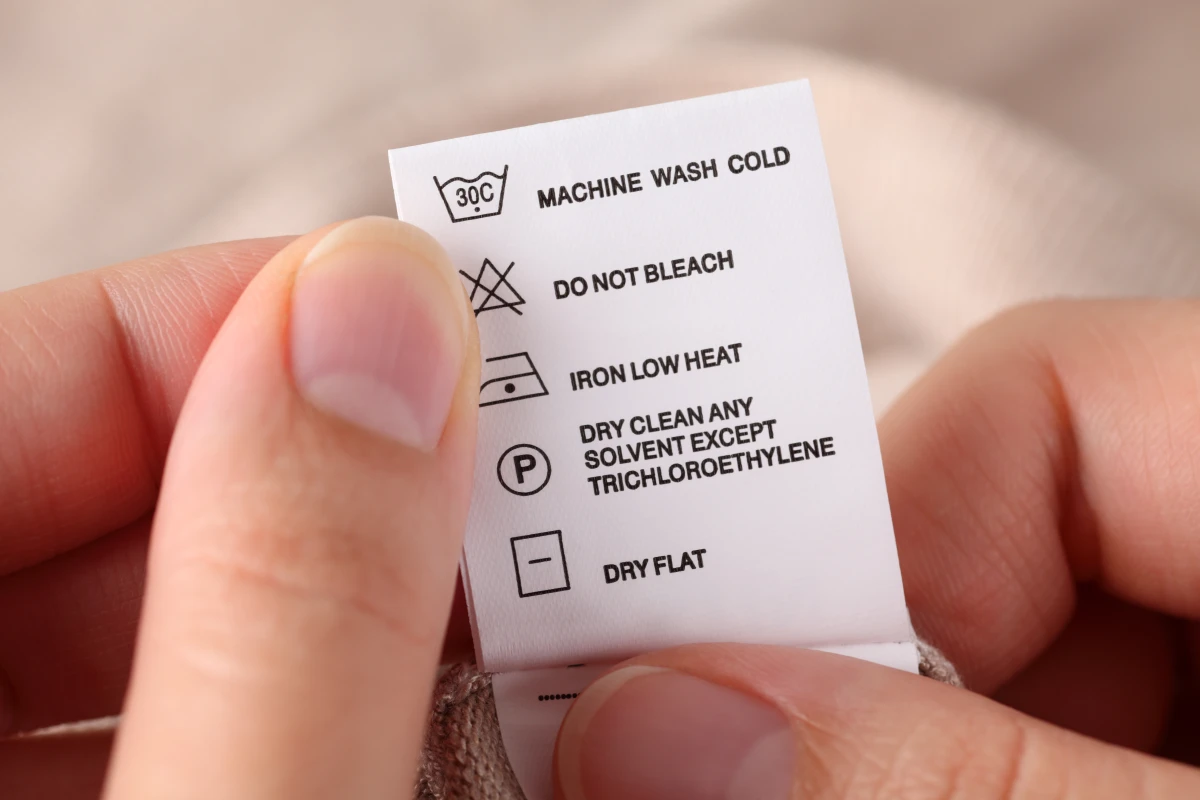
- Start with the care label, then use common sense. Labels are guidelines, but you can often choose gentler options than the most aggressive “allowed” setting.
Laundry, but make it strategic
Sort smarter (not just by color)
Color sorting is great. Sorting by fabric weight and abrasiveness is even better. Rough fabrics like denim, towels, and anything with zippers or hardware create friction and can chew up softer pieces.
- Separate by weight: heavy (denim, sweatshirts) vs. light (tees, blouses).
- Separate by surface: lint-makers (towels, fleece) away from lint-magnets (dark knits).
- Close zippers, fasten hooks. This prevents snagging and stretching in the wash.
- Use mesh bags for the vulnerable stuff. Bras, lingerie, anything with straps or hooks, and delicate knits do better when contained.
Detergent: less is more
Too much detergent can leave residue that makes fabric look dull and feel stiff. Use the lower end of the recommended amount, especially in high-efficiency machines.
- For darks: use a detergent formulated for dark colors and avoid heavy optical brighteners.
- For delicates: a gentle wash or wool wash helps preserve elasticity and softness.
- Skip fabric softener on most basics. It can coat fibers, reduce breathability, and trap odors, especially in activewear.
Drying: the quiet hero of longevity
If I could ban one habit, it would be blasting everything on high heat. Heat breaks down elastane, can shrink some fibers and weaves, and it can set stains.
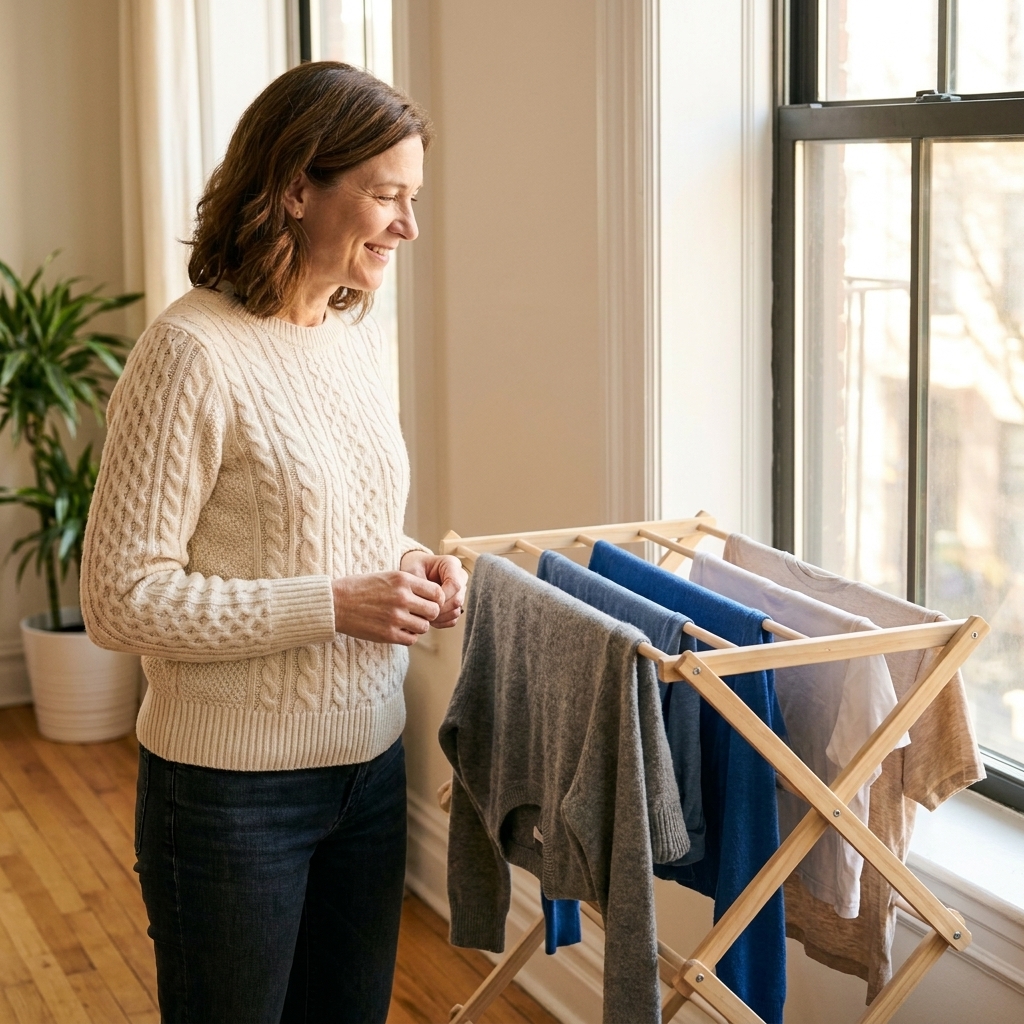
- Air-dry when possible: tees, knits, denim, and anything with stretch.
- Use low heat for sturdier items: towels and sheets can handle more, but your wardrobe deserves gentleness.
- Reshape while damp: smooth seams, align hems, and gently tug knits back into shape.
- Do not let wet laundry sit. It is the fastest route to that lingering mildew smell that makes even “clean” clothes feel cheap.
Care by wardrobe essential
Let’s get specific. Here’s how I care for the pieces most of us reach for on repeat.
T-shirts and tanks (cotton and cotton blends)
- Wash: cold, gentle, inside out.
- Protect the neck: avoid hanging heavy wet tees by the shoulders. It can stretch the neckline.
- Dry: air-dry or low heat, then fold. Hanging can cause shoulder bumps over time.
- Keep whites bright: use oxygen bleach occasionally instead of chlorine bleach. Chlorine can weaken fibers and can contribute to yellowing over time, especially if overused or not rinsed well. (Also: body oils, hard water minerals, and heat-drying play a role, so good washing and thorough rinsing matter.)
Denim
- Wash: less often. Spot-clean and air out between wears.
- When you do wash: inside out, cold, gentle, minimal detergent.
- Dry: air-dry for best shape retention. A quick 5 to 10 minute low-heat tumble can soften them, then hang to finish.
- Storage: fold or hang by the waistband. Avoid clipping delicate washes with harsh clamps that can leave marks.
Sweaters and knits (wool, cashmere, cotton knits)
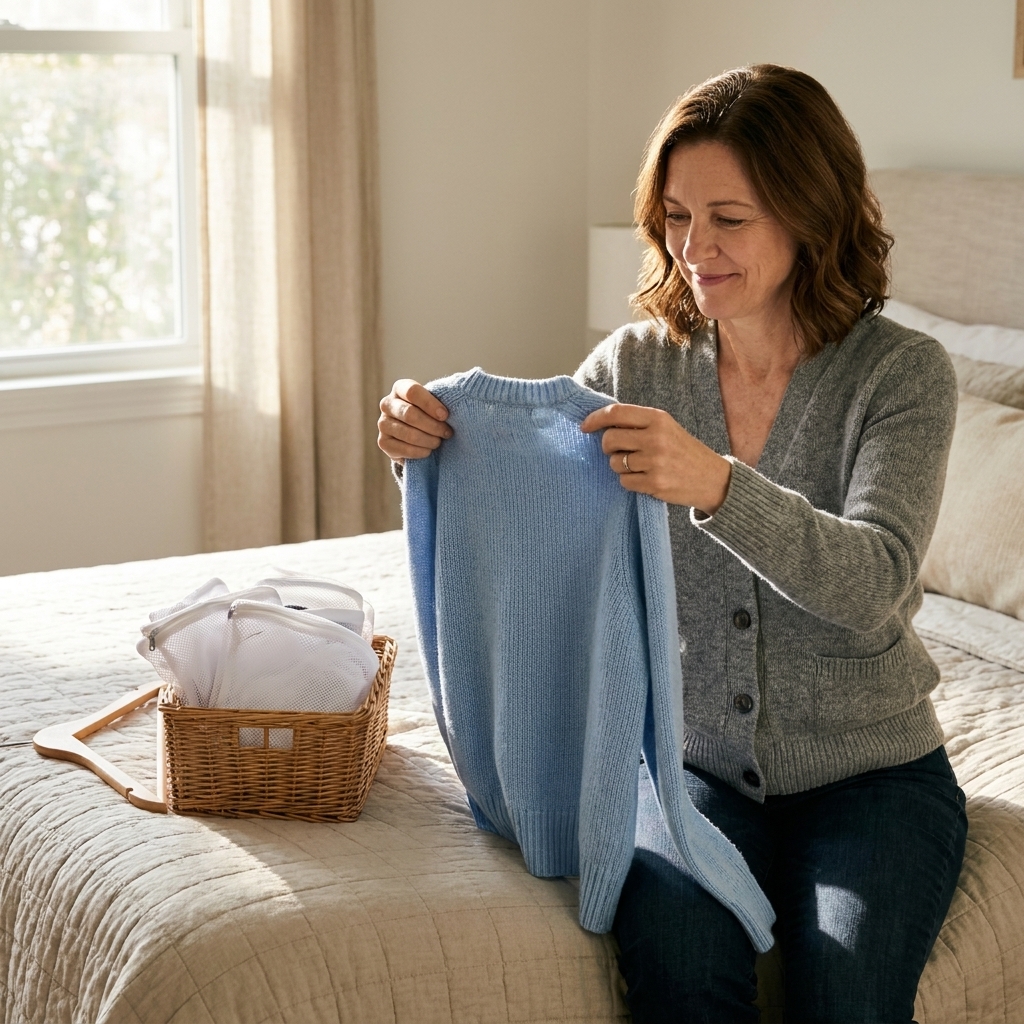
- Wash: hand wash or delicate cycle in a mesh bag with wool wash.
- Dry: always lay flat. Hanging can stretch knits out of shape.
- De-pill: use a fabric comb or sweater shaver gently, only on dry fabric.
- Rest between wears: knits need recovery time to bounce back.
Blazers and structured jackets
I truly believe a well-fitted blazer can change your life. It can also be dulled by over-cleaning. Most blazers need less washing and more maintenance.
- After wear: brush off lint and dust, and hang on a wide, supportive hanger.
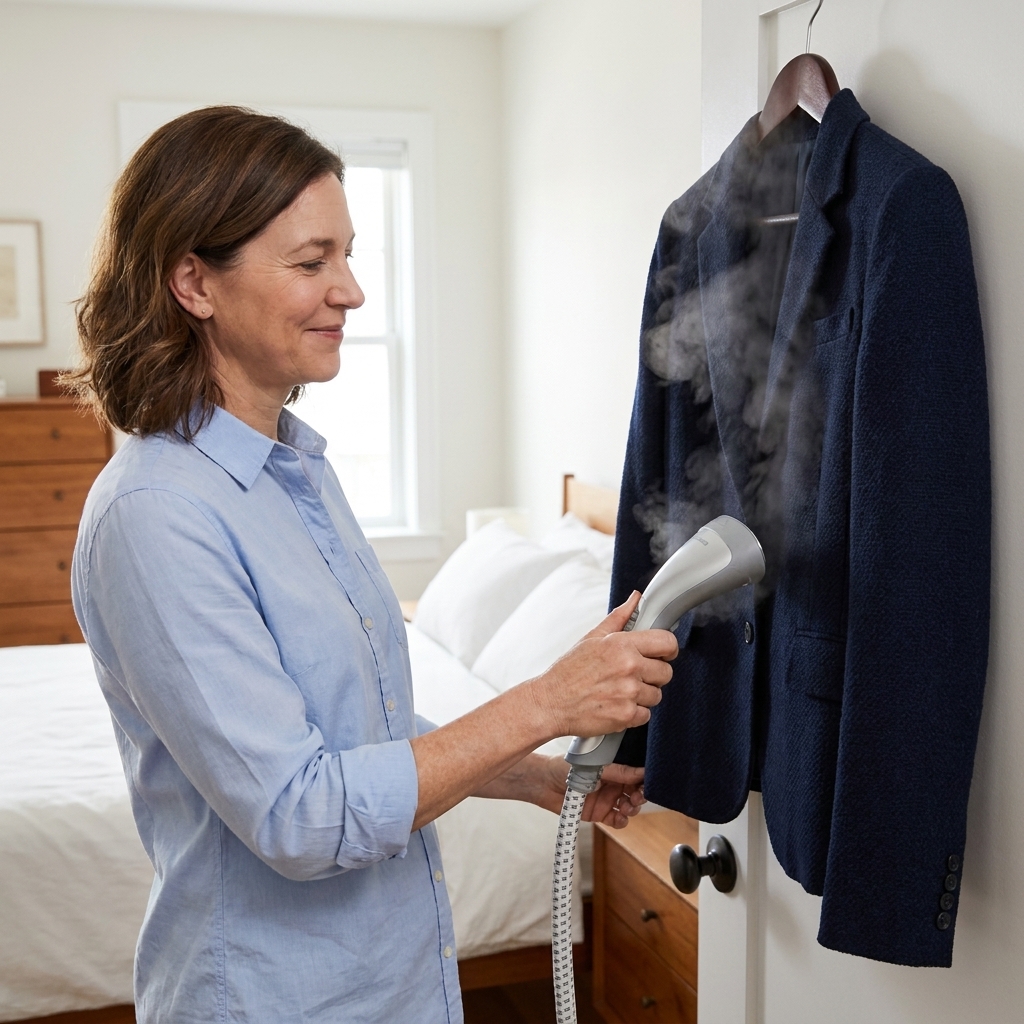
- Steam: steaming relaxes wrinkles and freshens fabric without wear and tear.
- Spot clean: dab, do not rub, and test any product on an inside seam first.
- Dry clean: only when truly necessary (visible stains, odors that will not release). Frequent dry cleaning can wear fibers down over time and, on some fused or heavily interfaced garments, it can weaken structure.
Stain care: act fast, stay gentle
Stains are not moral failures. They are just chemistry. The biggest mistake is scrubbing hard and spreading the problem.
My simple stain framework
- Blot first. Paper towel or clean cloth, press gently.
- Cold water rinse. Especially for protein stains like blood, dairy, and sweat.
- Pre-treat. A tiny amount of dish soap for grease, or a gentle stain remover for general use.
- Do not dry until it is gone. Heat sets many stains permanently. Air-dry and check first.
Common stains and what to do
- Oil or salad dressing: dish soap, let sit 10 to 15 minutes, rinse, then wash.
- Coffee or tea: cold rinse from the back of the fabric, then pre-treat.
- Deodorant marks: gently rub with a clean dry cloth or a little diluted soap, then rinse. Avoid aggressive scrubbing on dark knits.
- Red wine: blot, rinse cold, pre-treat. Avoid hot water (it can set it). If the fabric is colorfast, an oxygen bleach soak can help.
Storage that protects shape
A crowded closet can wreck clothes as surely as a hot dryer. Think of storage as “reducing friction” and “supporting structure.”
Hang vs. fold: a quick guide
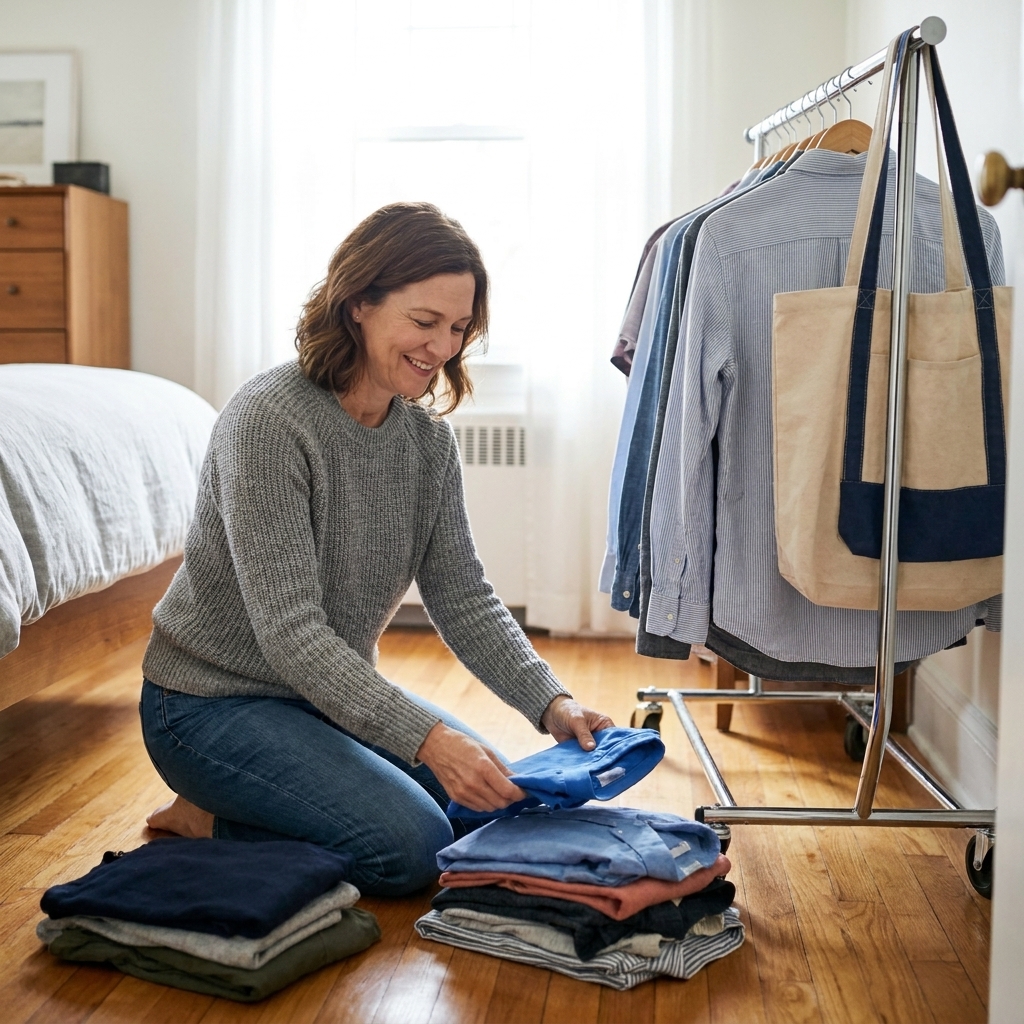
- Hang: blazers, coats, button-downs, dresses, trousers you want crease-free.
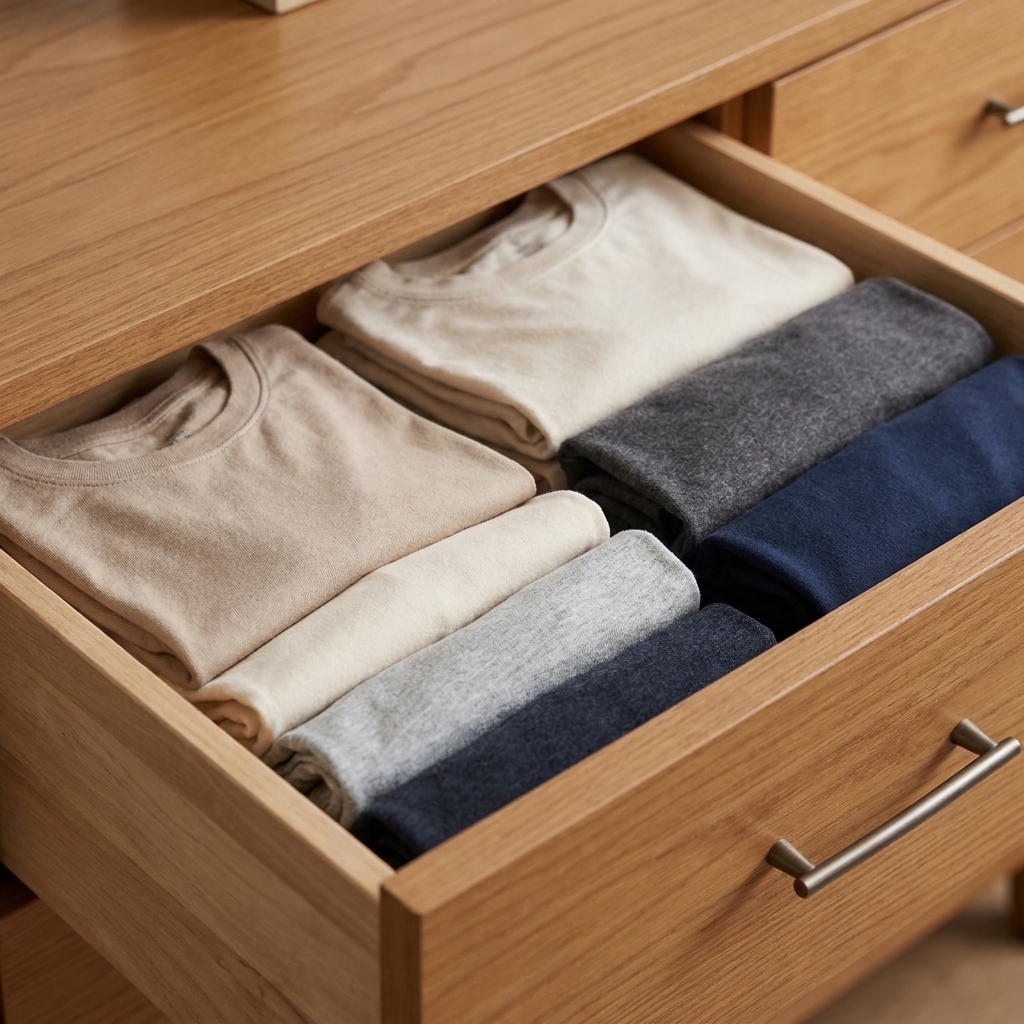
- Fold: sweaters, tees, knits, anything prone to hanger bumps or stretching.
- Use the right hangers: wide-shouldered hangers for jackets, slim velvet hangers for tops to prevent slipping.
Seasonal storage (without heartbreak)
- Clean first. Stains and body oils attract pests and can oxidize over time.
- Choose breathable containers. Cotton garment bags or fabric bins are kinder than airtight plastic for natural fibers.
- Moth prevention: cedar can help, but cleanliness and airflow matter most. Consider wool items stored with lavender sachets and regular check-ins.

Small repairs that save big money
I learned this at my grandmother’s sewing machine: if you can fix a tiny issue early, you keep a garment in your life for years. If you wait, the damage spreads.
Keep a mini mending kit
- Small scissors
- Needle and thread in black, white, and a neutral
- Safety pins
- Extra buttons (save the spares that come with garments)
- Iron-on hemming tape for quick fixes
What to fix immediately
- Loose buttons: reinforce before they disappear.
- Snags: do not cut. Gently pull the thread to the inside with a needle.
- Open seams: a quick stitch prevents a full tear.
- Hems: especially on trousers and skirts, a dragging hem will shred fast.
If it feels “almost right,” it is worth maintaining. Fit is a relationship. A tiny repair can bring the spark back.
Fabric watch-outs
Wool and cashmere
- Avoid frequent washing. Air out between wears.
- Use a wool-safe detergent and cool water.
- Never wring. Press water out gently with a towel.
Silk and satin
- Hand wash cold when label allows, otherwise dry clean sparingly.
- Avoid spraying perfume directly on silk, it can stain.
- Steam carefully: test first, use distilled water if you can, and avoid over-steaming to reduce the chance of water spots.
Activewear
- Skip fabric softener. It traps odors and reduces wicking.
- Wash soon after heavy sweat.
- Air-dry to protect stretch fibers.
Linen
- Expect wrinkles, it is part of linen’s charm.
- Wash cold, gentle, and reshape.
- Iron or steam while slightly damp for best results.
A simple weekly routine
If laundry feels like a forever project, try this rhythm. It keeps your essentials in good shape without eating your weekend.
- After wear: empty pockets, air out, spot-clean if needed, hang or fold properly.
- Laundry day: sort by weight and abrasiveness, cold wash, gentle cycle, minimal detergent. Do not overload the washer because less crowding means less friction and a better rinse.
- Drying: default to air-dry, then finish with a quick steam or iron for polish.
- Once a month: de-pill sweaters, check buttons, wipe shoes, and do a 10-minute closet reset.
- Also monthly (or when it smells “off”): run a washer-clean cycle and check the gasket or filter. A clean machine keeps clothes from picking up lingering odors.
FAQ
How often should I wash jeans, really?
When they are visibly dirty, smell, or have stretched out so much they are not holding shape. For many people, that is every 5 to 10 wears. Spot-clean in between and let them air out.
Is it bad to dry clean too often?
It can be. Frequent dry cleaning can wear fibers down over time. For blazers and coats, aim for spot-cleaning and steaming first, and dry clean only when necessary. This matters even more for fused or heavily interfaced garments.
How do I stop black clothes from fading?
Wash cold, inside out, with minimal detergent on gentle. Avoid overdrying and direct sun while drying. Also, do not overload the washer because too much fabric-on-fabric abrasion equals faster fade and a less thorough rinse.
What is the best way to store sweaters?
Fold them. If you hang heavy knits, gravity will slowly change the shape. Store folded sweaters in a breathable bin or on a shelf, and keep cedar or lavender nearby if moths are a concern.
One last stylist note
Clothing care is not about being precious. It is about keeping the pieces that make you feel like yourself in rotation for as long as possible. Your favorite essentials do not need perfection. They need consistency.
Start with one upgrade: cold wash, air-dry, or better hangers. Give it two weeks. I promise you will feel the difference every time you get dressed.