If your closet feels packed but you still say “I have nothing to wear,” you do not need a shopping cart. You need a clear, kind audit. I learned that early, hunched over my grandmother’s sewing machine, turning thrift-store maybes into pieces I actually reached for. A sustainable closet audit is the grown-up version of that: less waste, more intention, and a wardrobe that feels like you.
This is a true one-weekend project. Not a weeklong identity crisis. We will declutter, organize, and make a responsible plan for everything that leaves your closet.
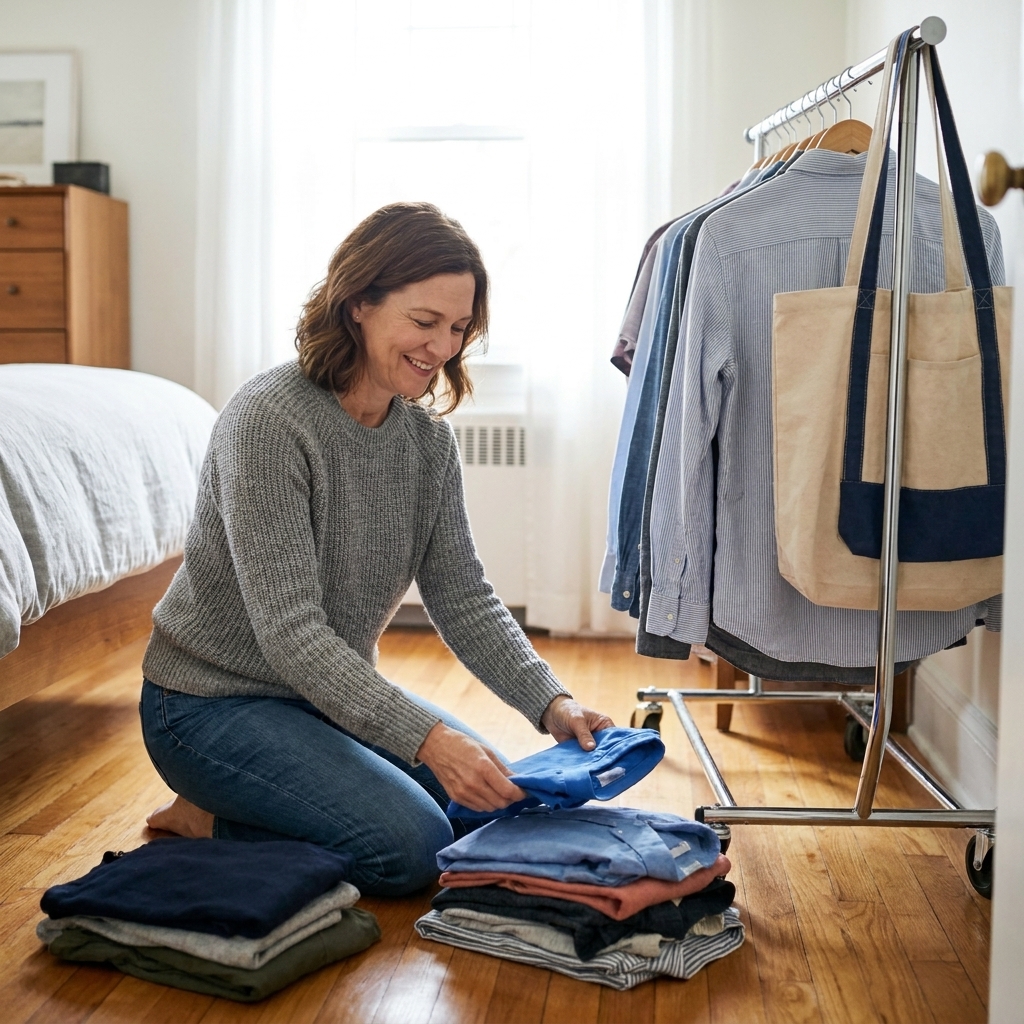
Before you start
Sustainability is not perfection. It is reducing what you buy, extending what you own, and making sure the rest exits your life with as little harm as possible.
Pick your 3 non-negotiables
- Fit and comfort: if it pinches, slides, itches, or requires constant adjusting, it is not “a future you” problem. It is a now problem.
- Wearability: can you name at least two outfits you would wear this week with it?
- Care reality: if it needs dry cleaning you never do, it will live in limbo. Choose pieces you can actually maintain.
Gather supplies (10 minutes)
- 5 containers or labeled bags: Keep, Repair/Alter, Sell/Consign, Donate, Recycle
- A lint roller and stain remover for quick triage
- Hangers that match (even switching to one type makes your closet feel calmer)
- Phone for photos (selling) and notes (missing basics)
- A small “maybe” basket for anything emotionally loaded
Closet audit rule: nothing goes into the Donate pile unless it is clean and actually wearable. Stained, torn, or stretched-out items deserve recycling, not guilt-dumping.
Your weekend plan
Saturday: edit and sort
- 9:00 to 10:00 Set up, pull everything out, quick closet wipe-down
- 10:00 to 12:00 Sort by category and make fast decisions
- 12:00 to 12:30 Break
- 12:30 to 2:00 Try-on round for the “maybes” and fit questions
- 2:00 to 3:00 Start the exit plan for each outgoing pile
Sunday: reset and follow through
- 10:00 to 11:30 Put keeps back in a system that supports outfits
- 11:30 to 12:30 Photograph and list sell items
- 12:30 to 1:30 Donations packed and labeled, recycling sorted
- 1:30 to 2:00 Make a tiny repair plan and a no-buy buffer list
If you only have one day, do the edit and the follow-through in miniature. The magic is not just decluttering. It is finishing the “where does this go now?” part.
Step 1: Pull it all out
I know. It looks worse before it looks better. But you cannot audit what you cannot see.
- Empty your closet and drawers completely.
- Group items by category: tops, bottoms, dresses, layers, activewear, formal, shoes, bags, accessories.
- Set aside a small pile for seasonal storage if you live in a four-season climate.
Quick sustainability win: as you handle each item, check the label and note anything that needs special care. Pieces that require constant high-impact cleaning can be replaced slowly with easier-care fabrics when they genuinely wear out.
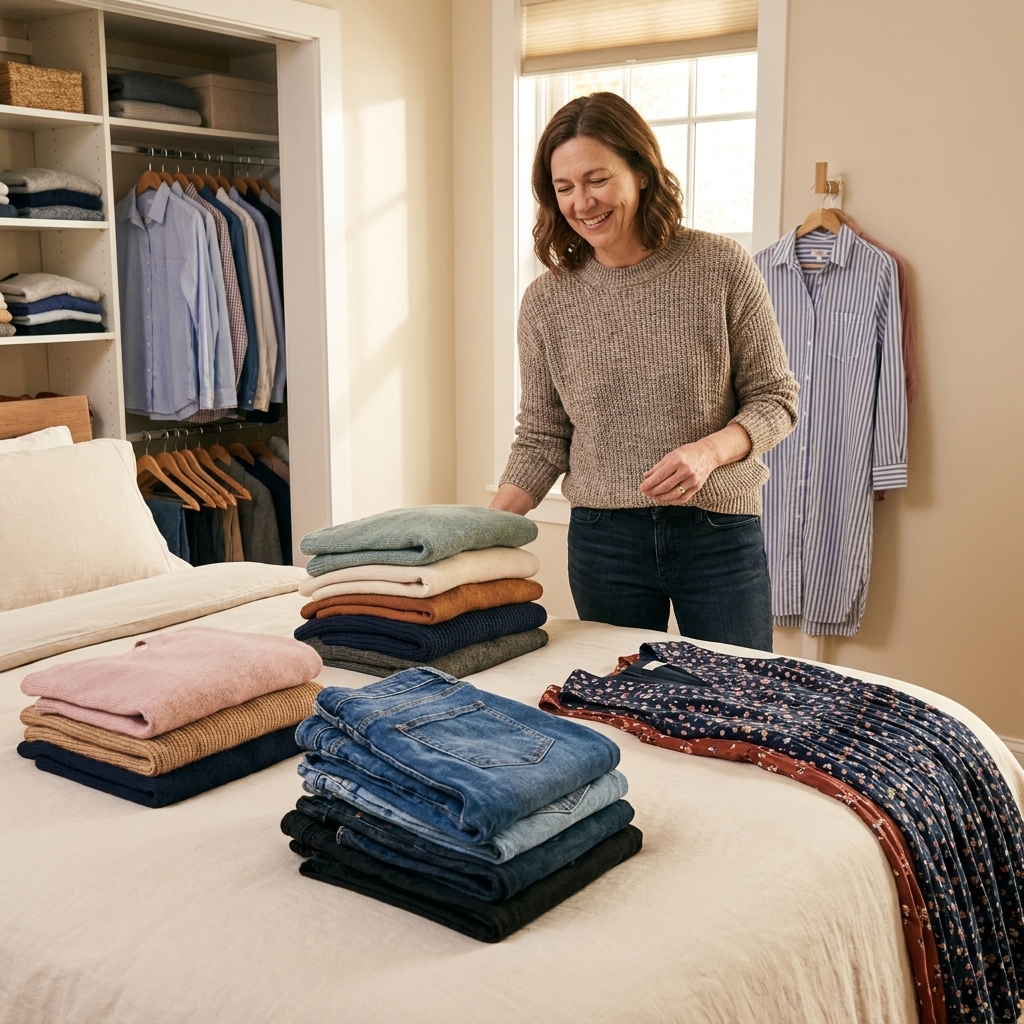
Step 2: Fast-sort
Pick up one item at a time and choose a pile. Keep the pace brisk. Overthinking is how we keep clothes we do not even like.
Keep
- You wore it in the last year and felt good in it.
- It fits your current body comfortably.
- It works with at least two other pieces you own.
Repair/Alter
- Buttons, hems, small seam splits, zipper issues.
- Minor tailoring that would dramatically improve wear: taking in a waist, shortening sleeves, hemming trousers.
Sell/Consign
- Great condition, recognizable brand, current enough to move quickly.
- Pieces with strong resale appeal: leather boots, denim, coats, occasion dresses.
Donate/Recycle
- Donate: clean, wearable, no holes, no heavy stains, working zippers.
- Recycle: threadbare tees, stretched knits, single socks, worn-out underwear, badly stained items.
A gentle truth: keeping something because it was expensive is like paying rent to store guilt. If it does not serve you, let it go responsibly.
Step 3: Try-on round
Now you try on anything that made you pause: special-occasion pieces, “almost fits,” and items you have not worn in a while.
Fit checklist
- Shoulders: for structured pieces, seams usually sit near the edge of your shoulder. For drop-shoulder or intentionally oversized styles, focus on whether the shape looks intentional and feels comfortable through movement.
- Waistbands: you should be able to sit comfortably. If you need to unbutton in the car, it is a no.
- Length: hems should hit intentionally, not awkwardly. A quick hem is one of the best sustainable investments.
- Fabric feel: if it itches or overheats you, it will never become a favorite.
The outfit question
“If I had to wear this tomorrow, what would I pair it with?” If you cannot answer in 10 seconds, it probably belongs in Sell or Donate.

Step 4: Exit plan
This is the sustainability part most people skip. The goal is to keep usable clothing in use and keep textiles out of landfill when possible.
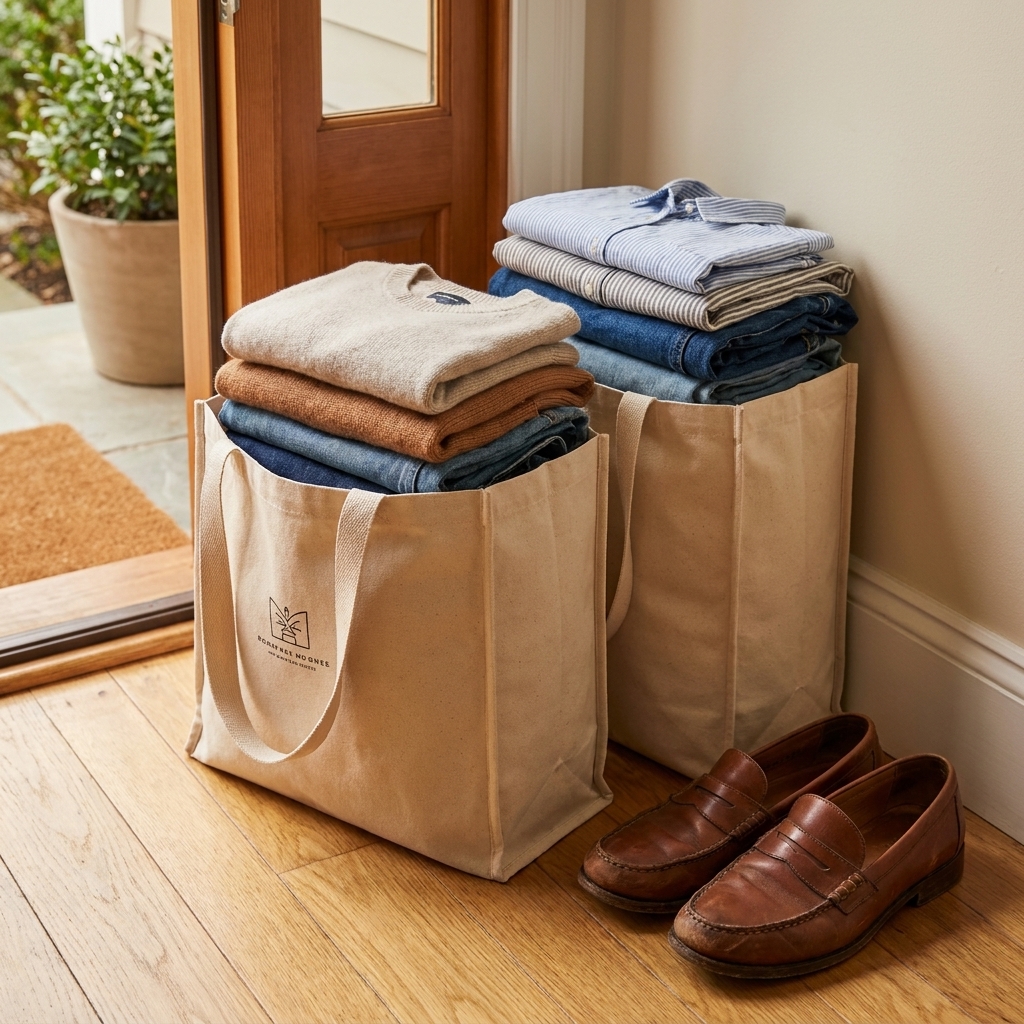
Donate thoughtfully
Local organizations often need specific items more than random bags. Before you drop off, do a quick check of your area for shelters, refugee resettlement programs, community closets, and job-readiness nonprofits. Many prioritize:
- Professional basics: blazers, trousers, button-downs, belts, closed-toe shoes
- Warm layers: coats, sweaters, boots, scarves
- Everyday essentials: jeans, tees, leggings in good condition
Donation best practice: donate in-season whenever possible. A winter coat in November helps more than a winter coat in April.
Sell without burnout
Choose the method that matches your energy:
- Consignment: less work, lower payout, great for contemporary brands and outerwear.
- Resale platforms: more payout, more time. Batch-list on Sunday with good daylight photos.
- Garage sale or clothing swap: fast and social, especially for casual basics.
My rule of thumb: if you cannot list it within two weeks, move it to Donate. Your closet is not a waiting room for your to-do list.
Recycle and repurpose
Textile recycling options vary by location, but these are common pathways:
- Store take-back programs that accept textiles for recycling (call ahead to confirm what they take). Outcomes vary, including downcycling, export, or disposal, so it is fair to ask where items go and what materials they accept.
- Local textile recyclers or municipal drop-offs.
- Reuse at home: cut worn cotton tees into cleaning cloths; use old flannels as dust rags; save buttons and zippers for mending.
Please skip: donating torn, stained, or heavily pilled items “just in case.” It often becomes disposal work for understaffed donation centers.
Step 5: Organize what stays
A sustainable closet is a wearable closet. If you cannot see it, you will not reach for it.
Set it up for outfits
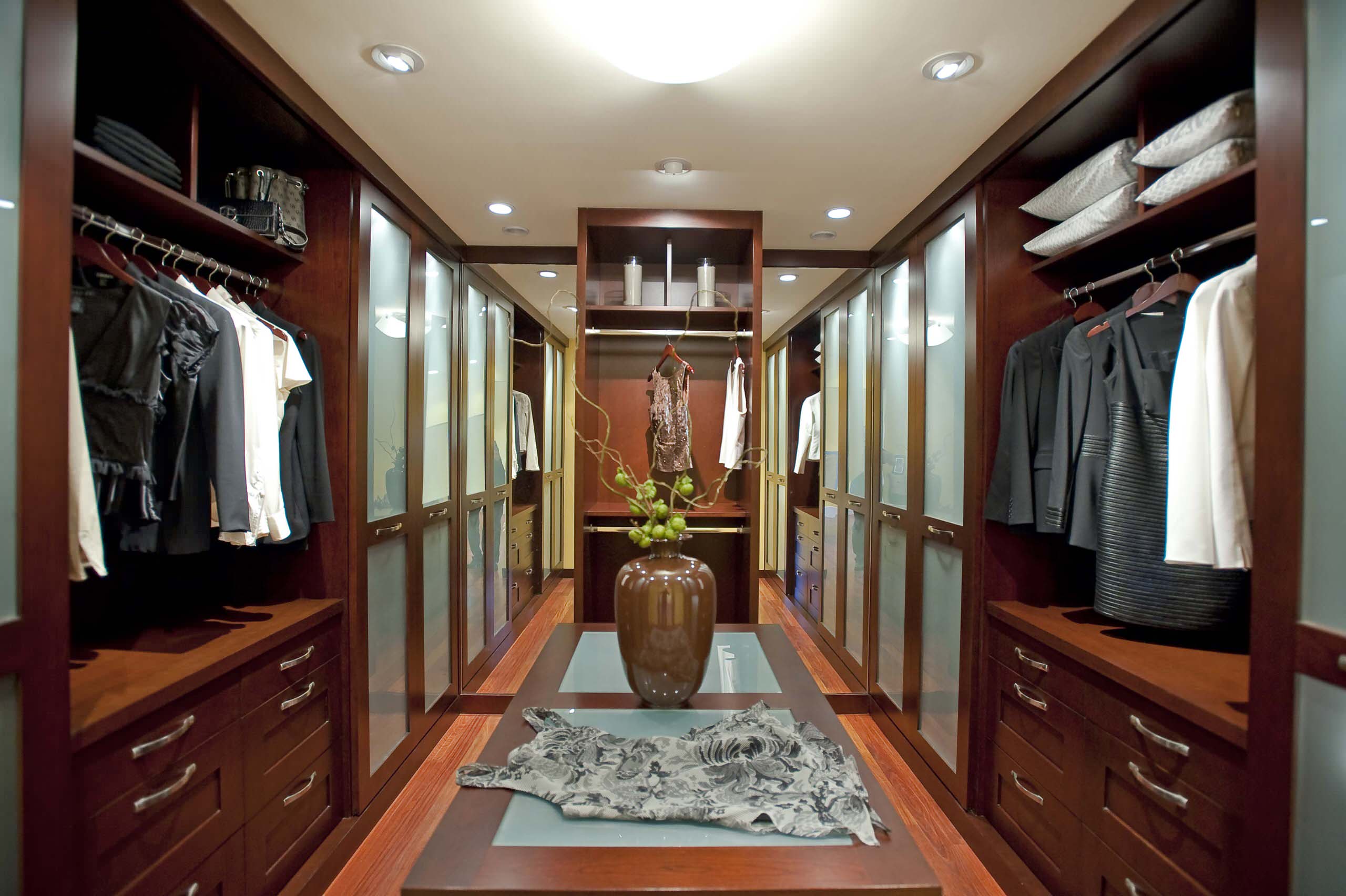
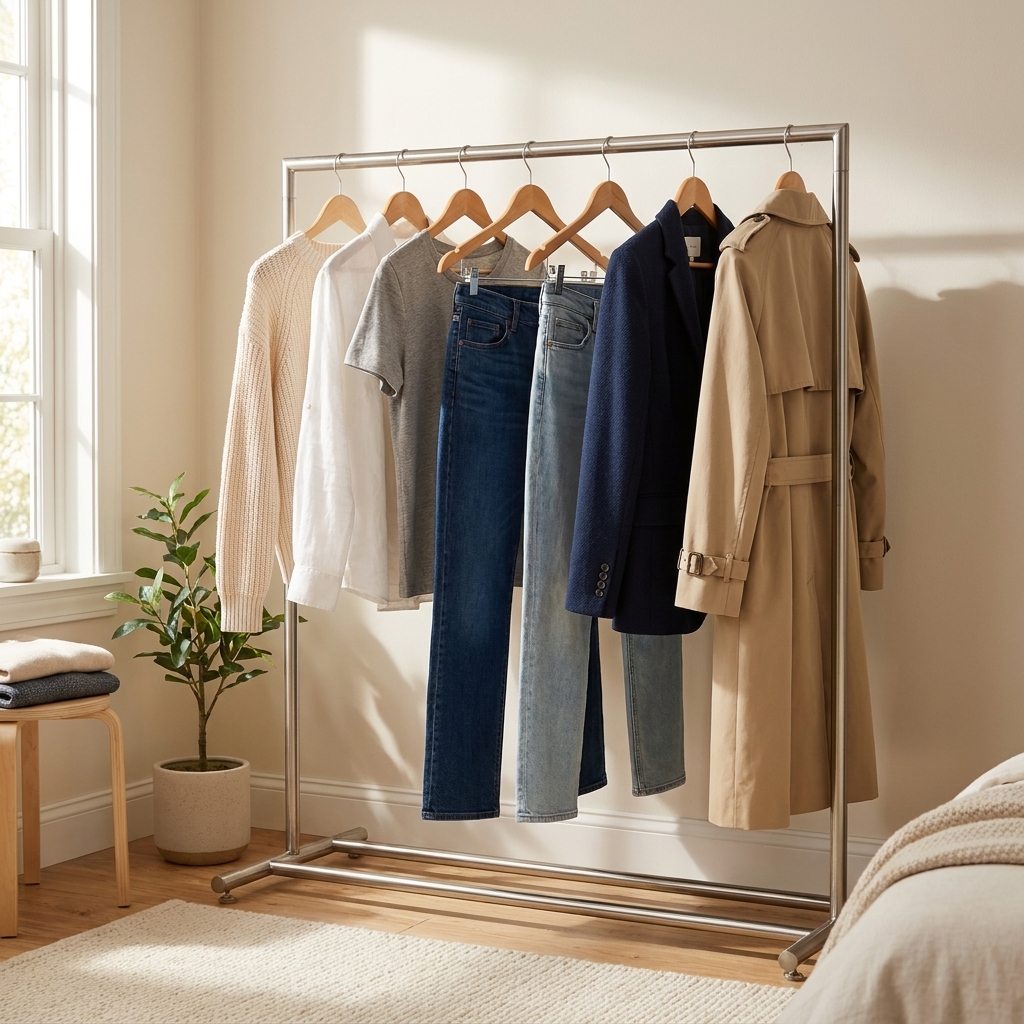
- Hang by category (jackets, blazers, shirts, dresses) and then by color.
- Store daily shoes at eye level, occasion shoes higher up.
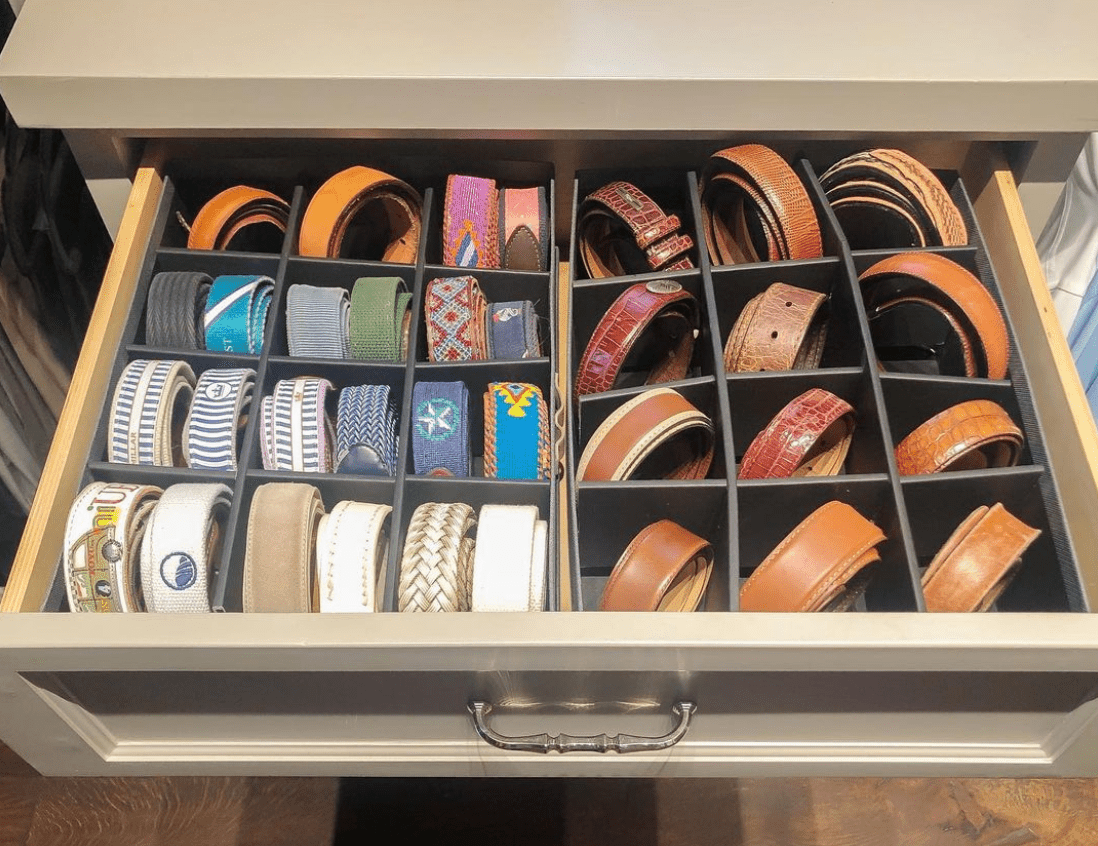
- Keep a small basket for accessories you wear weekly: belts, hair clips, tights.
Create a “wear this week” lineup
Pick 8 to 12 pieces you love right now and make them the easiest to grab. Think of it like a gentle capsule wardrobe without rigid rules.
Reset your keeps
Before you hang everything back up, give your keep pile a quick refresh: steam or press what wrinkles easily, lint-roll knits and coats, and spot-treat stains so you are not rediscovering them mid-week.
Respect your current body
If you are holding onto a pile of “when I lose” items, choose your favorites and cap it. One small bin, labeled and out of the main closet. Your everyday space should serve your everyday life.
Step 6: Repair plan
Nothing makes a wardrobe feel more expensive than fit, and nothing is more sustainable than keeping good garments in circulation.
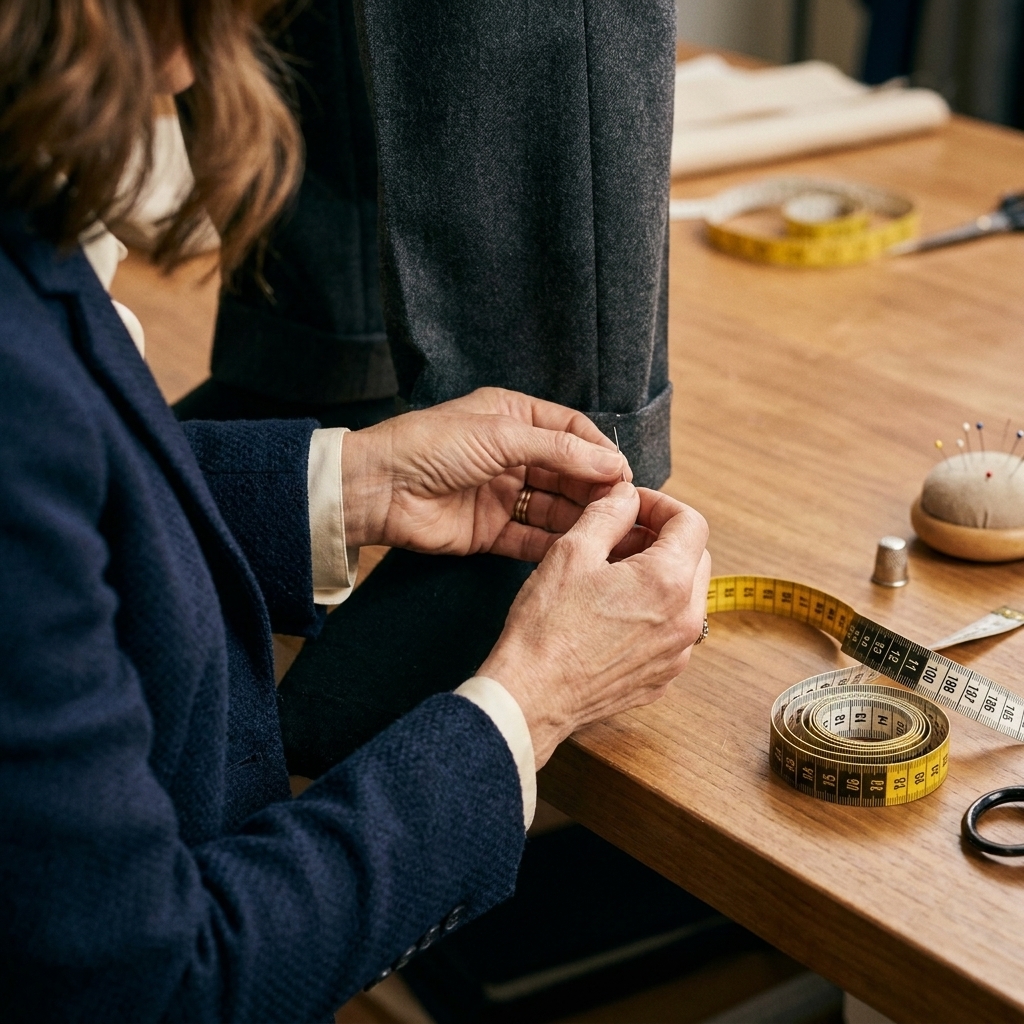
30-minute mending triage
- Quick fixes (do yourself): sew a button, fix a loose hem, remove pills with a fabric shaver.
- Tailor-worthy: blazer sleeve adjustments, trouser hemming, waist tweaks, zipper replacements.
- Not worth it: severe fabric thinning, blown-out inner thighs with no reinforcement possible, dry rot in elastic.
If you have never tried a tailor, start with a blazer hem or pant hem. I mean it when I say a well-fitted blazer can change your life.
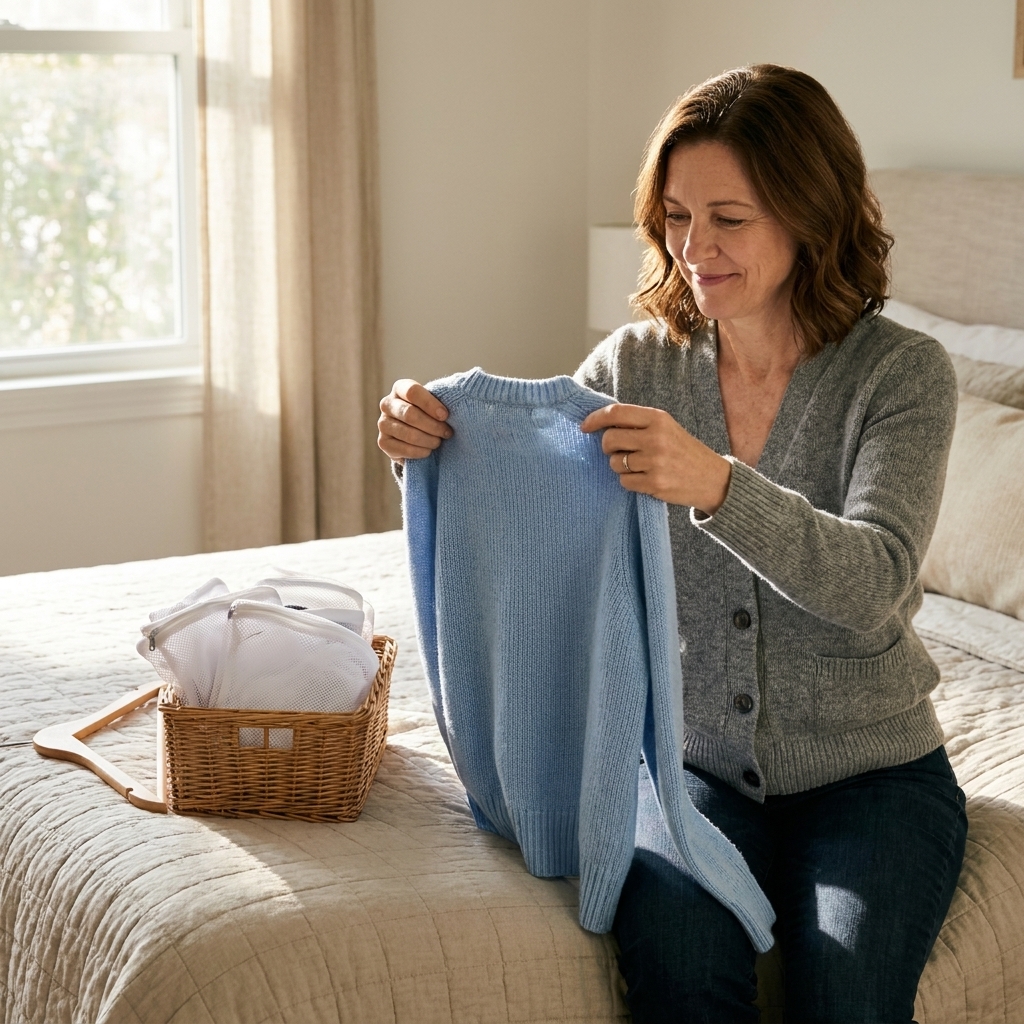
Mini sidebar: Suits and structured coats usually benefit from professional pressing and proper hangers. Leather and suede last longer with conditioning and a quick visit to a cobbler when soles start to go. Delicates behave better in a mesh bag and cold water.
Step 7: Shopping pause
After an audit, it is tempting to “fill the gaps” immediately. Give it a week. Wear what you kept and see what you truly miss.
Make two lists
- Gap list: specific items that would multiply outfits (example: “black belt with simple buckle,” “midweight cardigan,” “wide-leg trousers that fit at the waist”).
- Upgrade list: items you own but want to replace when they wear out, preferably with better fabric or construction.
Sustainable shopping rule: buy to replace or to complete outfits, not to chase a fantasy version of your life.
Track what you wear
If you want this to stick, try the hanger-flip method for one month: hang items facing one direction, flip the hanger when you wear something. At the end of the month, you will have real data, not vibes.
Common questions
How much should I get rid of?
There is no gold star for minimalism. Keep what you wear, what fits, and what supports your lifestyle. The win is eliminating the pieces that create decision fatigue.
What if I feel guilty about gifts or expensive items?
Gratitude lives in the moment you received it, not in your closet forever. If a piece does not work for you, selling or donating it is a respectful way to let it be loved properly.
Should I wash everything before donating?
Yes. Clean, dry, and wearable is the baseline. It protects donation workers, increases the chance it will be put on the floor, and keeps your good intentions from becoming someone else’s burden.
What about sentimental clothing?
Choose a small memory box. Keep the best representatives, not every supporting actor. If you want to preserve the textile, consider turning one meaningful piece into something you will use, like a pillow cover or a patch on a denim jacket.
Final note
A sustainable closet audit is not about having fewer clothes to prove a point. It is about making space for the pieces that make you stand a little taller. When your wardrobe reflects your real life and your real body, getting dressed stops feeling like a fight and starts feeling like self-respect.
Put on a playlist, pour your iced oat milk latte, and give yourself one weekend. Your closet can handle it, and so can you.