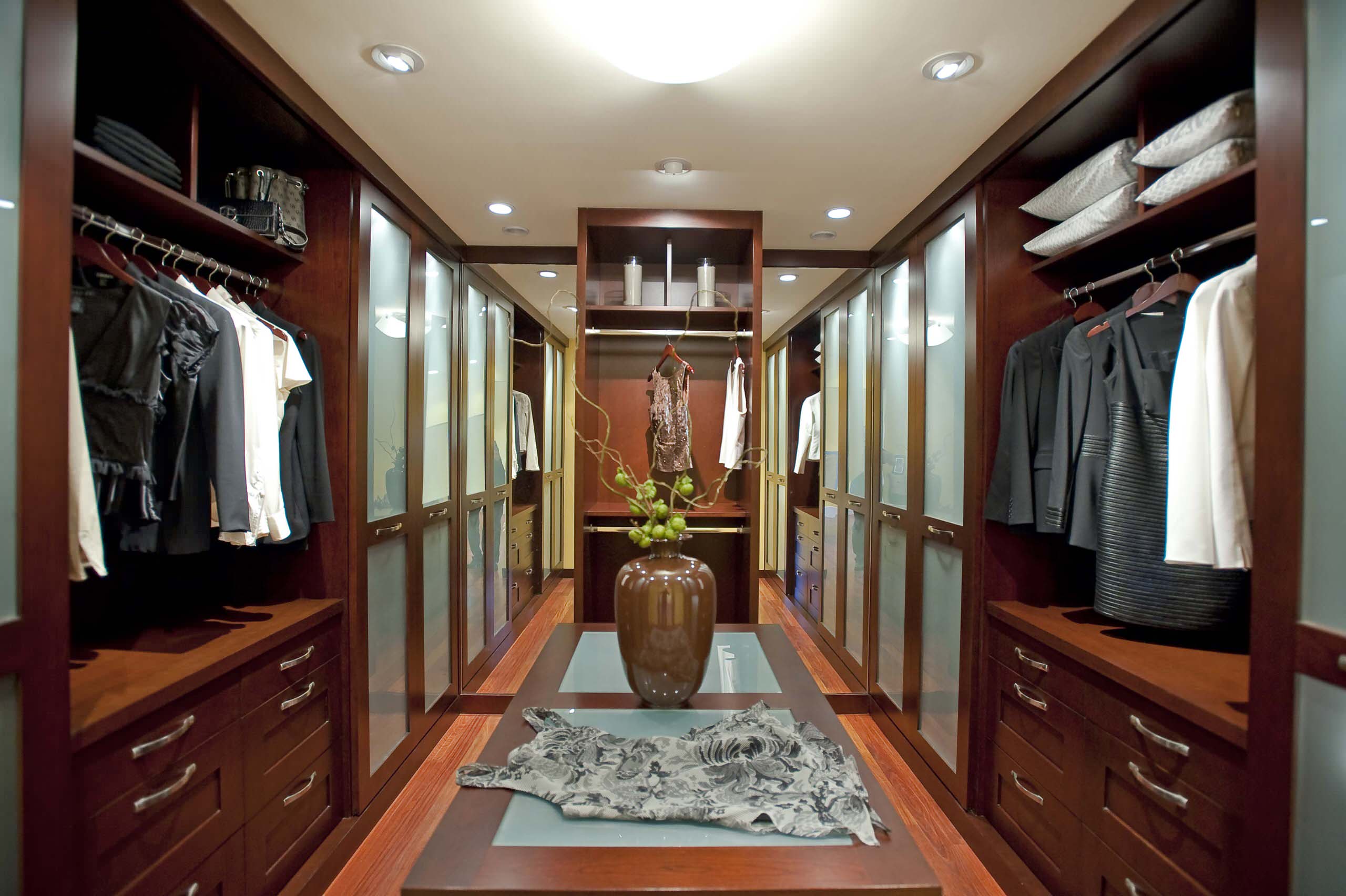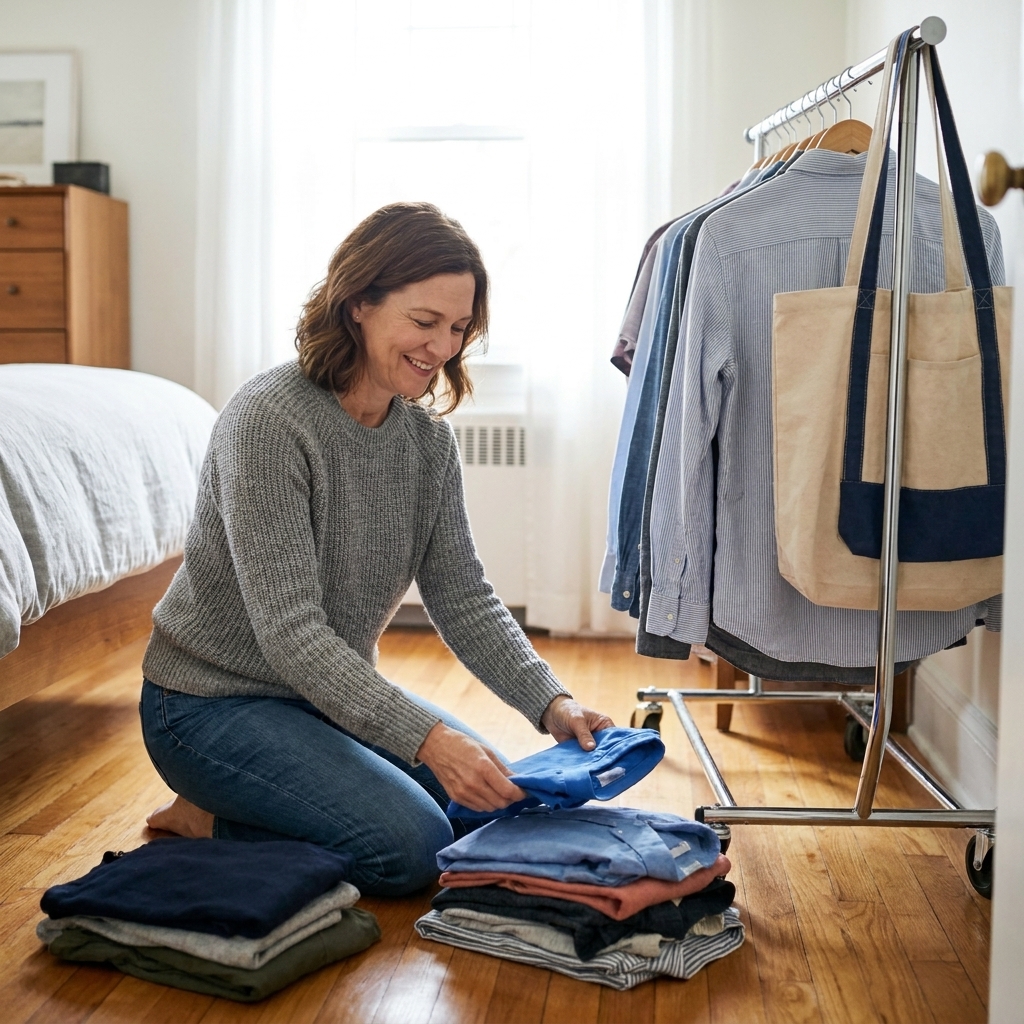
Capsule wardrobes get a bad rap for being boring, restrictive, or only for “minimalist” people who wear beige and own exactly one spoon. In real life, a capsule wardrobe is simply a smaller, more intentional closet where most pieces play well together. For a lot of people (me included), it is one of the easiest ways to get dressed faster, shop less impulsively, and feel more like you.
I built my first capsule the scrappy way, with thrifted finds and a grandmother-approved sewing machine that could turn an “almost” into a “perfect.” The goal is not perfection or a tiny number. The goal is a wardrobe that supports your actual life, fits your body today, and gives you outfits on repeat that feel good.
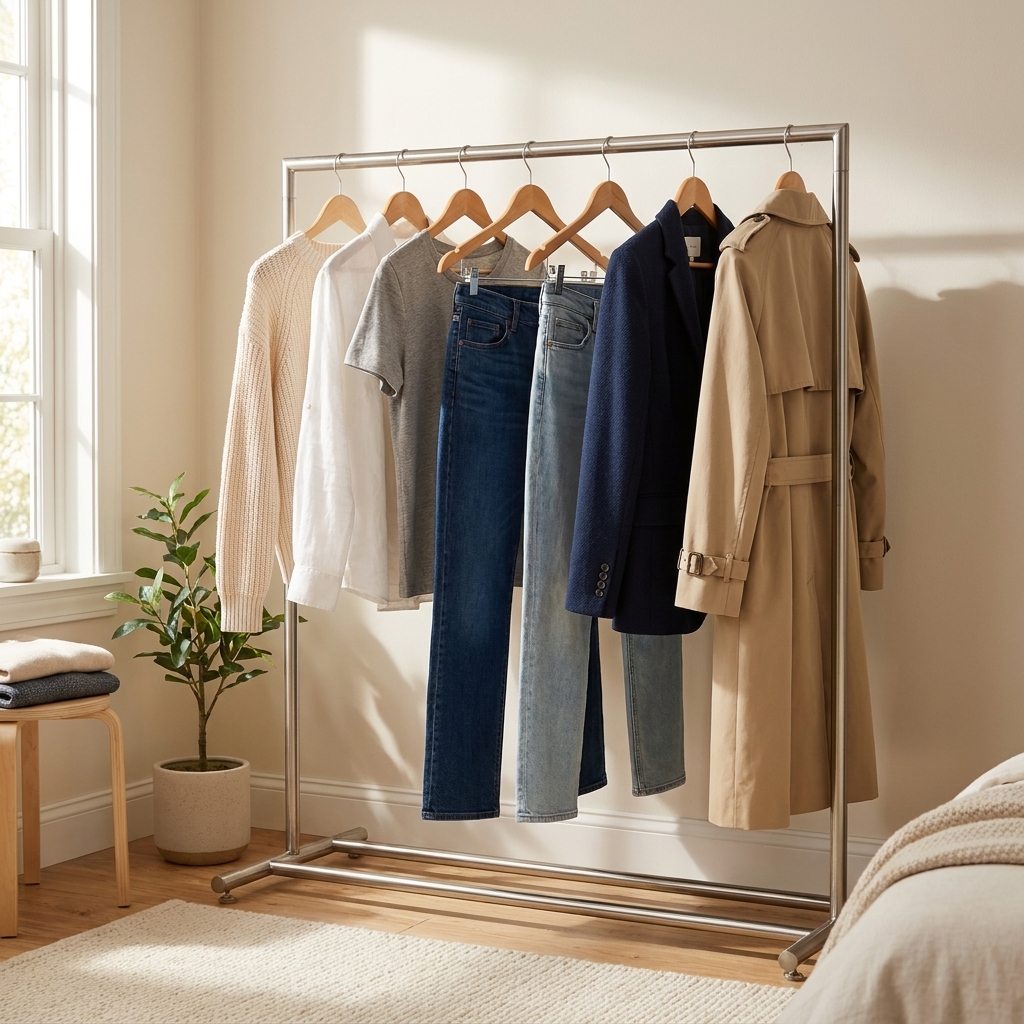
Step 1: Define your real life
Before you touch a single hanger, take five minutes and answer this honestly: Where do you actually go in a normal week? A capsule works when it mirrors your calendar.
- List your main categories: work, school runs, errands, social plans, travel, events, workouts, lounging.
- Assign rough percentages: for example, 60% casual, 30% office, 10% dressy.
- Note your climate reality: hot summers, long winters, rain, unpredictable shoulder seasons.
That percentage becomes your shopping and keeping compass. If you keep buying dressy clothes for a life that is mostly casual, your closet will always feel like it is “missing something.”
Step 2: Reset your closet
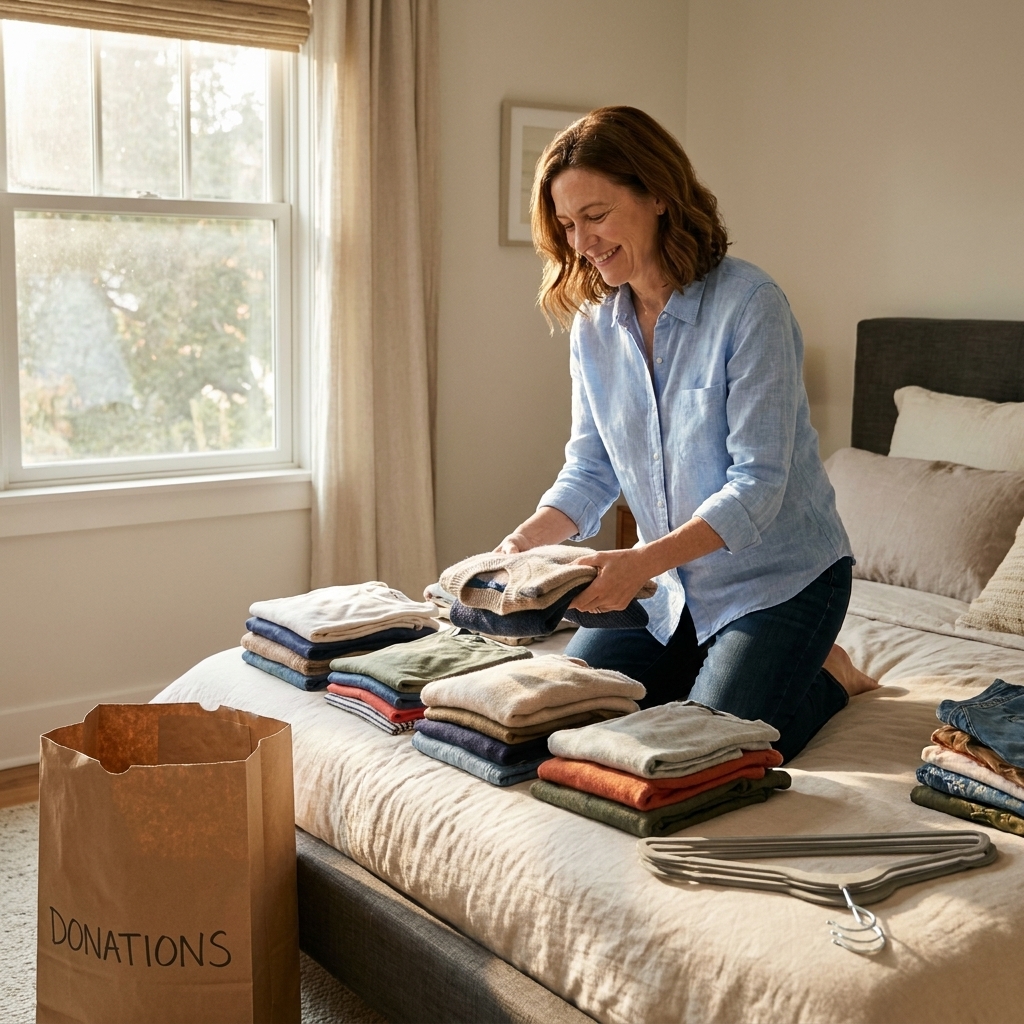
Decluttering should feel like relief, not punishment. Put on a playlist, make a drink, and plan for one focused hour. You can always do a second round later.
The 4-pile method
- Love and wear: fits well, you reach for it, you feel like yourself in it.
- Maybe: good piece but styling is unclear, or fit is almost right.
- Repair or tailor: missing button, hem you keep meaning to fix, slight waist tweak needed.
- Release: doesn’t fit, doesn’t match your life, or makes you feel “off.”
If you are stuck, ask: Would I wear this tomorrow if it were clean? If the answer is no, it does not belong in the “maybe” pile.
A quick fit check (my merchandiser trick)
Stand in front of a mirror and check three zones:
- Shoulders: seams sit at the shoulder bone, not drooping or pulling.
- Waist and hips: you can sit comfortably without tugging or button strain.
- Length: sleeves and hems land where you like them, or can be altered easily.
Tailoring is the quiet superpower of capsule wardrobes. A simple hem or waist tweak can make a thrift find look custom, and the price varies depending on where you live and what you are altering.
Step 3: Choose a palette
A capsule wardrobe is less about owning “basics” and more about owning compatible basics. Color is the shortcut.
An easy palette formula
- 2 neutrals: choose your workhorses. Examples: black + cream, navy + camel, charcoal + white, olive + tan.
- 1 to 2 accent colors: colors you love wearing near your face. Examples: rust, cobalt, burgundy, soft pink, forest green.
- 1 metal tone: gold or silver for jewelry and hardware cohesion.
If you are unsure, start by looking at the clothes you wear most. Your favorites are already telling you your palette.
Step 4: Pick your uniforms
Most of us have 2 to 3 outfit formulas we repeat. A capsule wardrobe gets powerful when you name those formulas and build for them.
Examples of outfit formulas
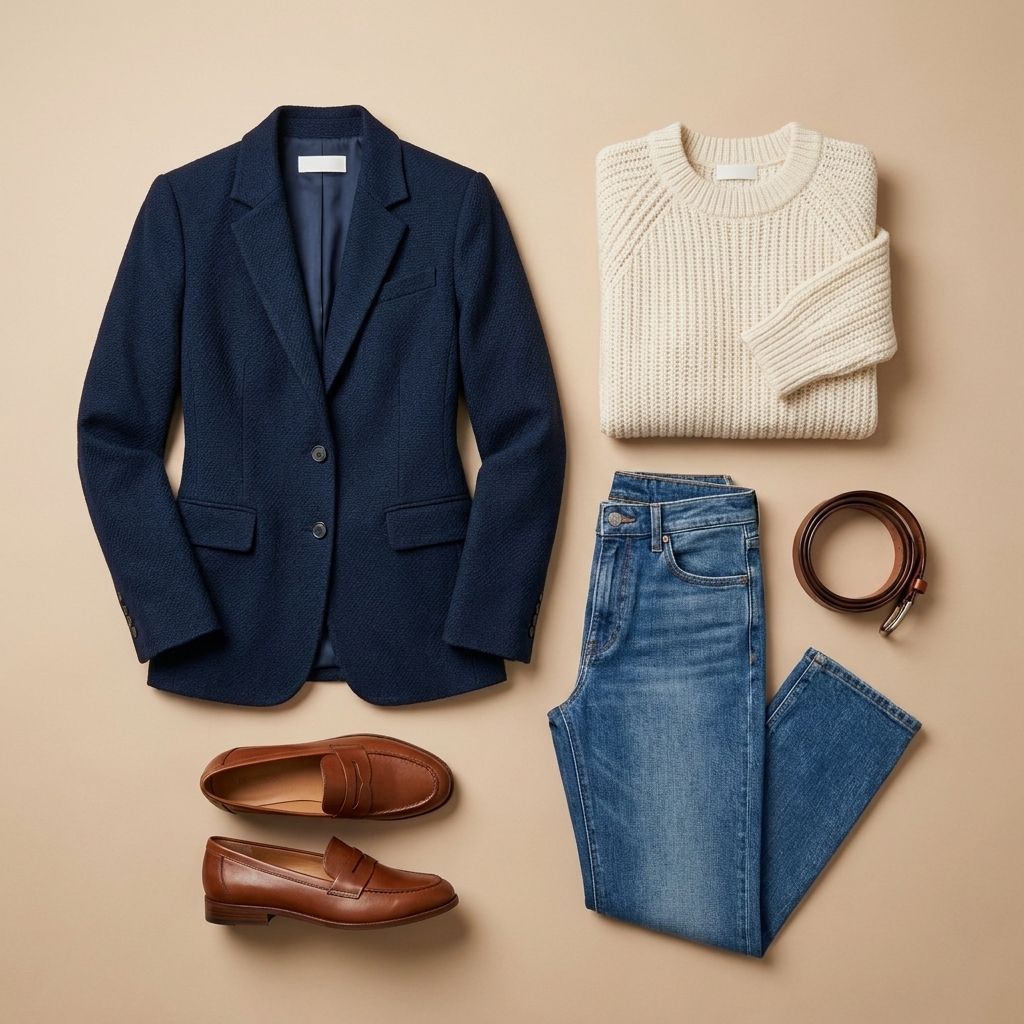
- Polished casual: straight-leg jeans + fitted tee + blazer + loafers
- Easy workwear: tailored trousers + knit top + trench or cardigan + ankle boots
- Dressy but not fussy: midi dress + denim jacket or blazer + heeled boots
Write down your top three. These will guide what you keep, what you tailor, and what you shop for next.
Step 5: Build in layers
Here is the momentum saver: you do not need to buy everything at once. Start with a tight core, then add support pieces that multiply outfits.
Phase 1: The core (10 to 15 pieces)
Choose pieces you can wear at least once a week. Adjust for your lifestyle, but here is a flexible starter list. Counting note: some people count shoes, bags, and outerwear in their “capsule number,” and some do not. Pick one method and stay consistent.
- 2 tops: one tee or knit tee, one elevated top (button-up, silky tank, or fine knit)
- 2 layering tops: long sleeve tee, lightweight sweater, or turtleneck
- 2 bottoms: jeans you love, and trousers or a skirt you can dress up
- 1 dress or jumpsuit: optional if you actually wear them
- 1 blazer or structured jacket: instant polish, even with a tee
- 1 casual jacket or coat: denim jacket, chore coat, or seasonal outerwear
- 2 shoes: everyday pair (sneakers, loafers) and a dressier pair (boots, heels, sleek flats)
- 1 bag: crossbody or tote that fits your day
My note: If you only buy one “investment” piece early on, make it the blazer. A well-fitted blazer can make everything else in your closet look intentional.
Phase 2: The multipliers (5 to 10 pieces)
- One more bottom in a different silhouette (wide-leg trouser, midi skirt, tailored shorts)
- A second knit in your accent color
- A versatile dressy top for dinners or events
- A weather-specific layer (trench coat, wool coat, lightweight puffer)
- A comfortable third shoe option (sandals, weatherproof boots, ballet flats)

Phase 3: Personality pieces
Capsules are not meant to erase your style. Once your core is working, add pieces that feel like you, but still coordinate with your palette and silhouettes.
- A vintage silk scarf
- A statement belt
- A patterned blouse that matches both of your neutrals
- Jewelry you will wear daily
Step 6: Shop your closet
Before you buy anything, build outfits from your “love and wear” pile and take photos. This creates a mini lookbook you can reference on sleepy mornings.
Tailoring shortcuts
- Hem pants: especially wide-leg trousers and jeans. Length changes everything.
- Take in the waist: common for thrifted trousers and skirts.
- Button and sleeve tweaks on blazers: small changes, big payoff.
If tailoring is new to you, start with one piece. Pick the item you would wear constantly if it fit just a little better.
Step 7: Fill gaps on purpose
When you notice a true gap, shop with a purpose. I like a simple rule: do not buy a piece unless you can name at least three outfits you can make with what you already own.
My gap list worksheet
- What is the missing piece? (Example: black ankle boots)
- What problem does it solve? (Example: makes dresses wearable in winter)
- What is the success criteria? (Example: walkable heel, wide toe box, works with jeans and dresses)
- What is the budget? (Example: $80 to $180, open to secondhand)
This is how you avoid buying “cute” items that never leave the closet.
Step 8: Keep it affordable
You can absolutely build a capsule without dropping a month’s rent. Here is where I recommend spending versus saving, based on cost per wear and fit sensitivity.
Worth investing in
- Blazer: structure and fit matter
- Coat or trench: it is your most visible piece in cold months
- Everyday shoes: comfort and durability pay off
- Jeans or trousers you wear weekly: prioritize fit and fabric recovery
Great to thrift or buy secondhand
- Button-ups and cotton shirts
- Wool sweaters (check for holes, moth damage, and felting)
- Silk blouses and scarves
- Denim jackets and leather belts
Fabric tip from my textile-obsessed heart: natural fibers like cotton, wool, linen, and silk often breathe well and age gracefully. That said, high-quality blends and performance fabrics can be amazing too, especially for heat, sweat, and long wear days.
Step 9: Plan a week of outfits
A capsule wardrobe becomes real when it supports Monday morning. Take 20 minutes and pre-build 5 to 7 outfits, even if you do not wear them exactly as planned. You will quickly see what is missing and what you overestimated.
What to watch for
- Too many tops, not enough bottoms: a common imbalance
- No layering options: you need at least one third piece
- Shoes that do not match the vibe: footwear can break an otherwise perfect capsule
- Comfort gaps: if nothing feels good on your body, the capsule will fail
Special events
Real life includes weddings, interviews, funerals, holiday parties, and the occasional “help, I need to look like an adult” moment. If your day-to-day capsule is mostly casual, keep a tiny standby set:
- 1 event outfit: a dress you love, or trousers + a dressy top
- 1 pair of event shoes: comfortable enough to last the night
- 1 layer: blazer, coat, or wrap that works with the outfit
Store it together so you are not panic-shopping the day before.
Laundry and season swaps
Your laundry rhythm quietly controls your capsule size. If you do laundry once a week, you need enough repeatable basics to get you through seven days. If you do it more often, you can go smaller. For seasonality, I like to keep off-season pieces stored (bin, suitcase, top shelf) so the current season gets to be the main character.
How many pieces?
There is no capsule police. Many capsule stylists suggest a starting range of 25 to 40 pieces for a season, not counting underwear, socks, sleepwear, or workout gear. Your number depends on climate, lifestyle, and laundry habits.
Counting note: accessories can be their own category. I do not count bras and socks, but I do pay attention to belts, bags, and jewelry because they change the outfit. Do what makes your life simpler, not more complicated.
If you are overwhelmed, start with a mini capsule of 12 to 20 pieces and wear it for two weeks. Let your real life tell you what to add.
Common mistakes
- Buying “basics” you hate: if you do not like white tees, stop forcing it. Pick the basic you actually wear, like a ribbed tank or black knit top.
- Ignoring fit: the most versatile piece in the world will still sit in your closet if it pinches or slides.
- Choosing a palette that does not feel like you: neutrals are tools, not rules. Navy can be your neutral. So can chocolate brown. So can olive.
- Going too extreme too fast: you do not have to purge your closet to start a capsule. You can run a capsule alongside the rest of your wardrobe while you test it.
Quick checklist
- Define your weekly lifestyle categories and percentages
- Declutter using the 4-pile method
- Choose 2 neutrals and 1 to 2 accents
- Identify 2 to 3 outfit formulas you repeat
- Build the core first, then multipliers, then personality pieces
- Tailor one item that is almost perfect
- Only buy items you can style 3 ways
- Photograph outfits to create an easy lookbook
If you take nothing else from me: your capsule wardrobe should feel like a friendly support system, not a strict diet. Keep what makes you feel confident, tailor what could be amazing, and let your closet reflect your real, beautiful life.