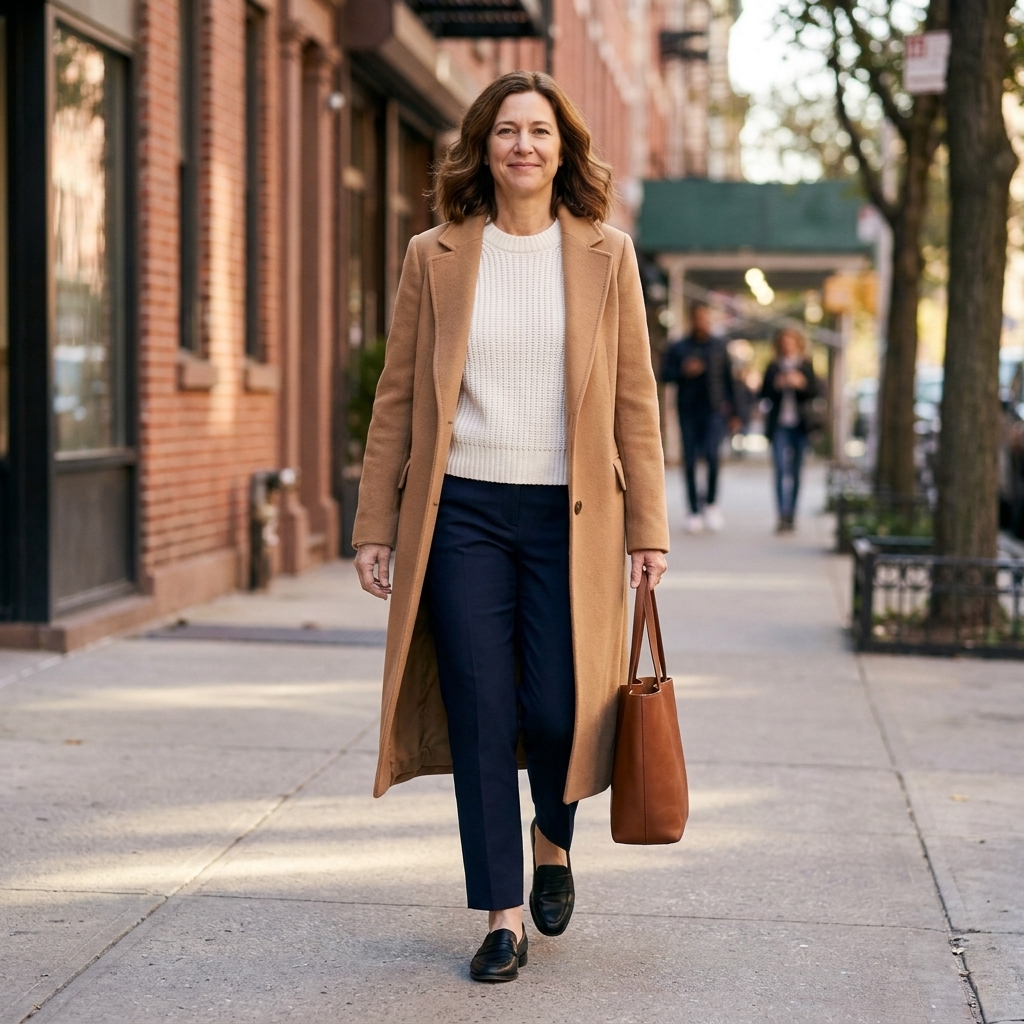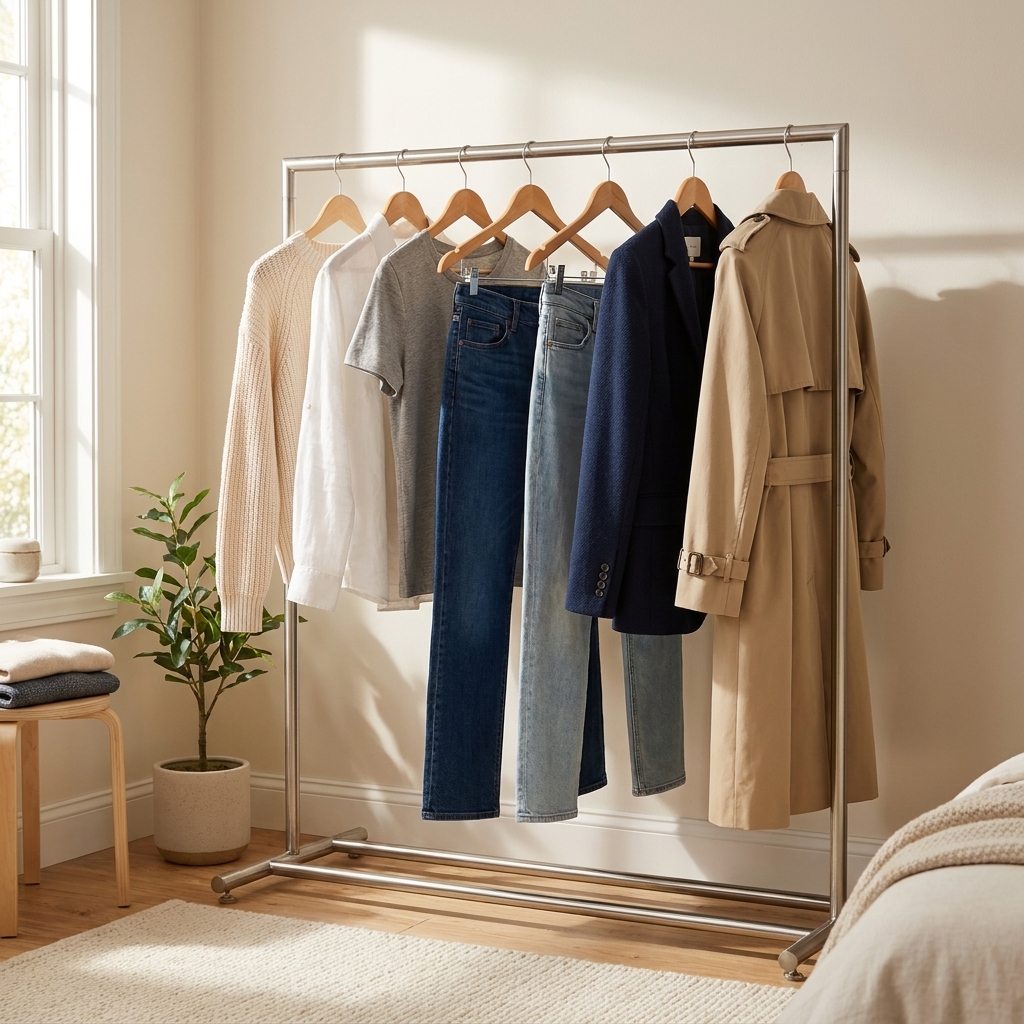
Every season, a new set of colors floats to the top and suddenly your closet can feel like it missed a memo. It didn’t. You just need a few easy entry points that work with your life, your budget, and your actual taste. I’m a big believer in color as self-expression, not a shopping requirement. You can participate in the fun without rebuilding your wardrobe from scratch.
Below are my go-to ways to incorporate current hues so they look intentional, not costume-y, whether you love a bold statement or prefer a quiet nod.
Start with your closet: find your color neighbors
Before you buy anything, do a quick closet scan. Trend palettes often come with close cousins you already own.
- If the season leans warm (tomato red, marigold, coral), look for your rust, terracotta, camel, warm blush, or chestnut pieces.
- If the season leans cool (powder blue, icy lilac, seafoam), pull your denim, navy, charcoal, crisp white, and cool taupe.
- If the season leans earthy (olive, clay, mushroom), you’re in luck. Those play beautifully with most basics.
Once you spot your color neighbors, you’ve got a built-in bridge. That makes adding one new shade feel seamless instead of loud.
Choose your commitment level
Color is a mood, and moods change. Pick a level that matches how you like to dress day to day.
Level 1: Whisper it with accessories
If color makes you nervous, accessories are your best friend. They’re affordable, easy to swap, and they still read as current.
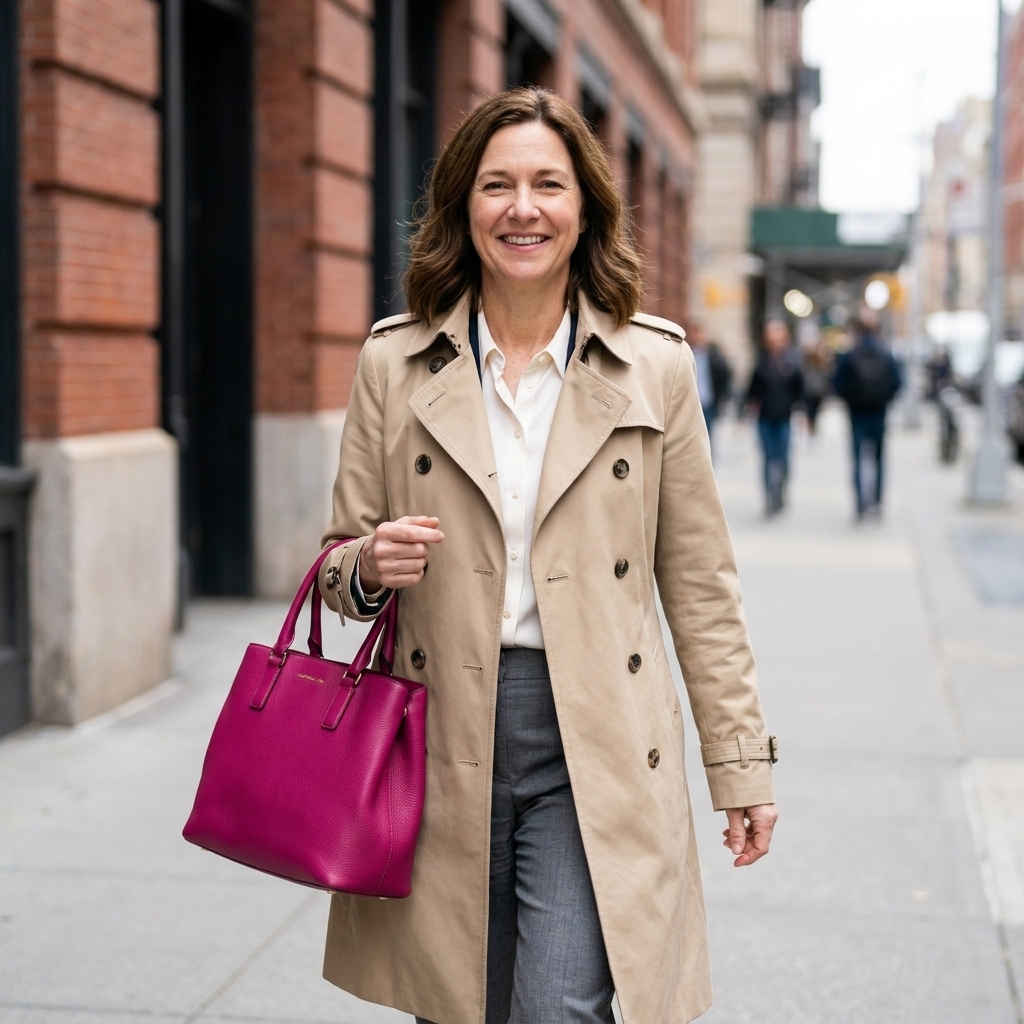
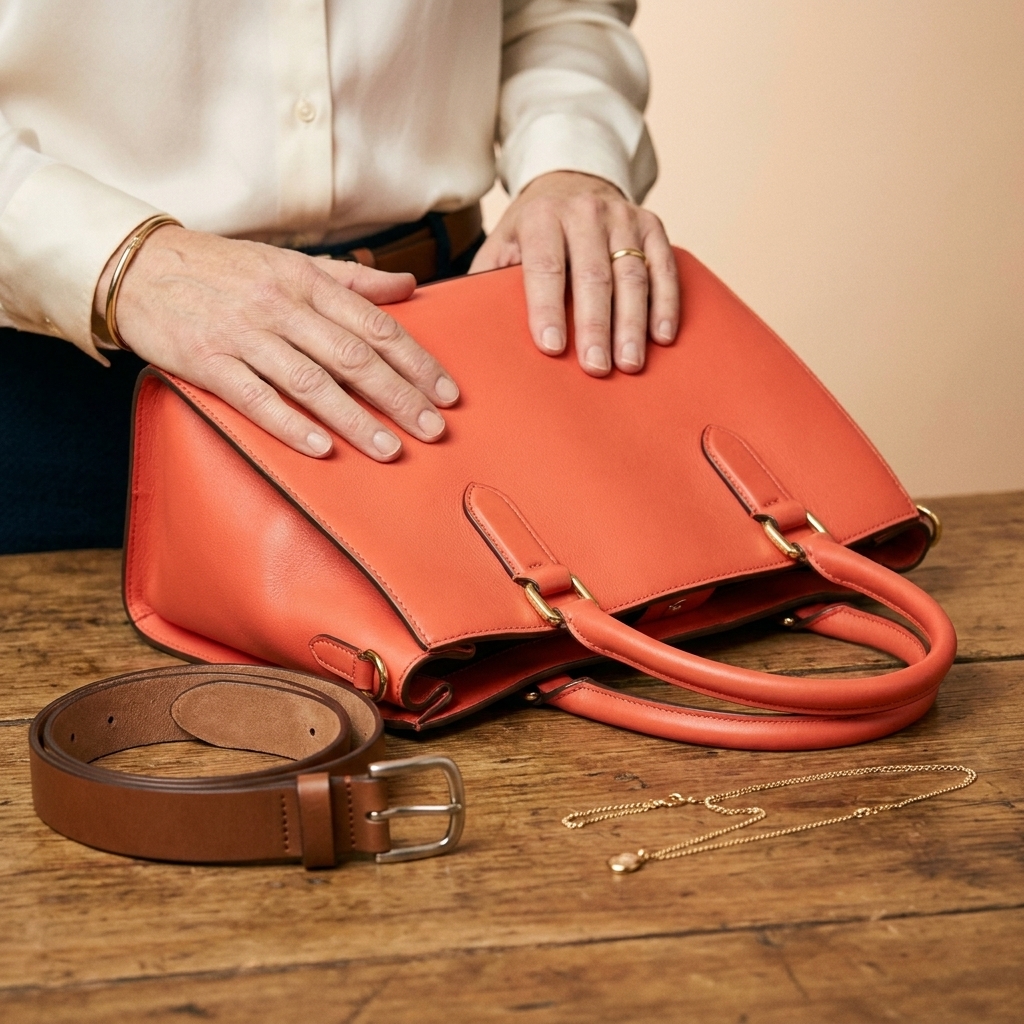
- Bag: A small shoulder bag, tote, or even a canvas carryall in the season’s key shade.
- Shoes: Flats, sneakers, or a low heel in a color that peeks out under denim.
- Belt: Especially good over blazers, trench coats, or knit dresses.
- Hair + jewelry: A claw clip, headband, enamel hoops, or resin bangles.
Level 2: Add one hero piece
This is my sweet spot for most people: one noticeable piece that still plays well with your basics.
- A well-fitted blazer in a modern color upgrades jeans and a tee. Tailoring matters more than the label.
- A knit (sweater or cardigan) is easy, comfy, and forgiving if you’re testing a shade near your face.
- A skirt or trouser keeps bold color away from your face if that feels like too much.
- A transitional trench or light coat is a bigger buy up front, but it’s also the first thing people see. Great cost-per-wear potential.
My best advice: choose a silhouette you already love. Color should be the only new variable.
Level 3: Go tonal
If you want to lean in, try a tonal outfit: two pieces in the same color family, not necessarily an exact match. Think dusty rose with berry, or sky blue with navy. Tonal dressing looks elevated because it’s simple and intentional.
Easy formula: one lighter piece, one darker piece, and one neutral anchor (shoes, belt, or outerwear).

Use neutrals as styling glue
Neutrals are not boring. Neutrals are your support system. If you want a new hue to look wearable, pair it with the neutrals you reach for most.
- Black sharpens brights and makes pastels feel more grown-up.
- Navy is softer than black and gorgeous with reds, pinks, and greens.
- White and cream make saturated color look fresh and intentional.
- Gray calms loud hues and pairs beautifully with cool shades.
- Chocolate and camel make bold colors feel rich, not loud.
If your closet is mostly black, don’t force beige. Work with your real life. The goal is outfits you actually repeat.
Where to place color
This is the part most fashion articles skip, and it matters. If a shade feels “off,” it might not be the color itself. It might be the placement.
If you want it to feel easy
- Below the waist: Pants, skirts, and shoes are low-pressure and still on-trend.
- On the shoulder layer: Jackets, cardigans, and scarves let you remove the color if you stop feeling it mid-day.
If you want it to brighten your face
- Near the neckline: A top, scarf, or earrings can make you look more awake on low-makeup days.
- Try the two-step test: hold the color near your face in daylight, then step back from the mirror. If your eyes show up first, it’s a yes. If the color arrives before you do, it’s a maybe.
- Quick lighting note: if you’re deciding indoors, check it near a window. Overhead bulbs can skew warm or green and make a perfectly good color look wrong.
Styling is not about hiding. It’s about choosing what you want to emphasize, and doing it on purpose.
Mix current color with prints
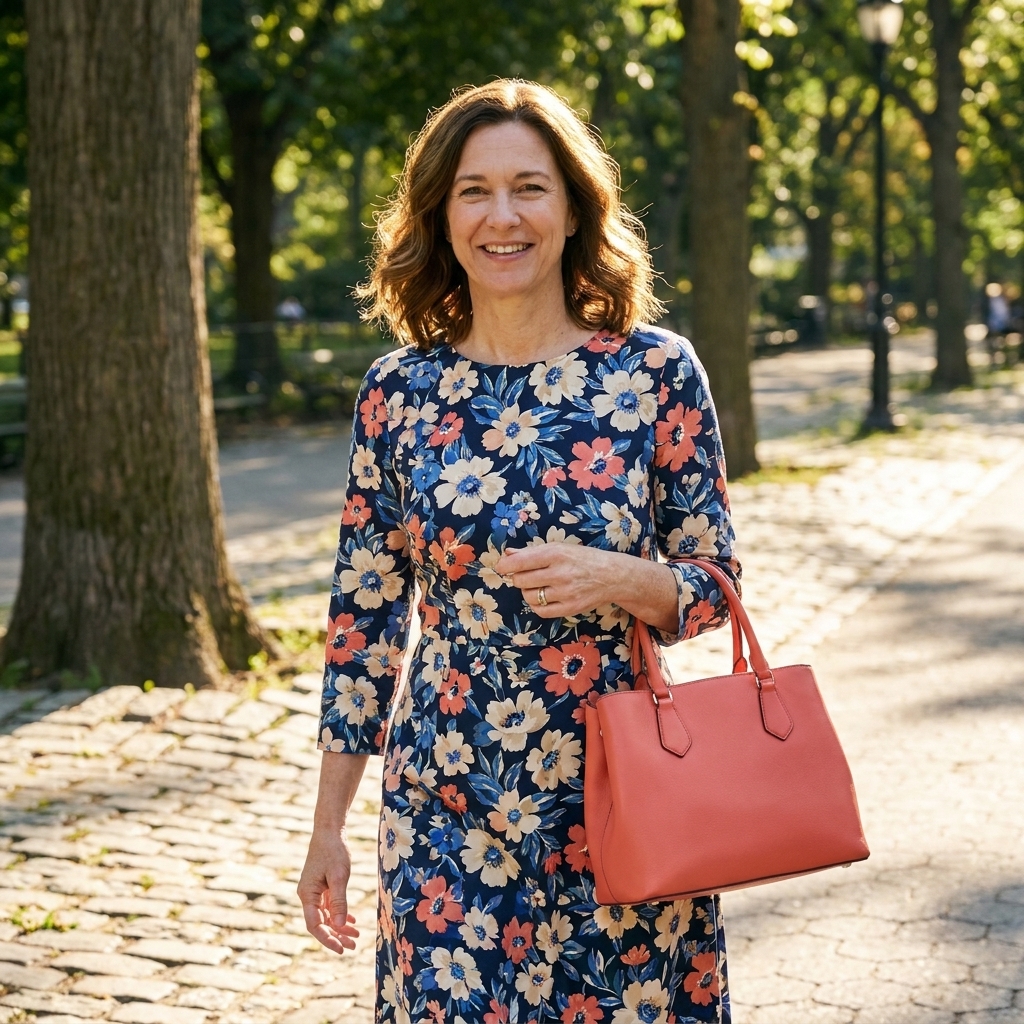
If you love prints, seasonal color is secretly very easy. Look for one tiny thread of the hue inside a print you already wear, then echo it with a solid.
- Leopard print loves red, chartreuse, and cobalt.
- Stripes look crisp with one bold accessory in a bright shade.
- Florals are basically a color roadmap. Pull one color out and repeat it.
Easy color formulas
If decision fatigue hits hard in the morning, steal a formula. These work with almost any of-the-moment shade.
1) Denim + white + one color
- Blue jeans + white tee + trending-color cardigan
- Denim jacket + white tank + trending-color midi skirt
2) Monochrome base + pop accessory
- All black outfit + trending-color shoe or bag
- All cream outfit + trending-color scarf or belt
3) Soft neutral + saturated color
- Gray trousers + saturated sweater
- Camel coat + bright knit beanie or gloves
4) One bright + one support + neutral
- Bright top + softer “neighbor” bottom + neutral shoe
- Bright bag + one related accent (like earrings) + simple base outfit
Smart shopping tips
I love a fun color moment, but I love your budget more. Here’s how to shop a seasonal hue like a stylist, not like a panic scroll.
- Look for fabrics and finishes that hold color well: heavier, better-finished materials often look richer than thin, flimsy ones. Also, do not write off synthetics automatically. Some well-dyed polyester can look incredibly saturated and stay that way.
- Check the undertone: if the color is close to your skin, decide whether you prefer warm, cool, or neutral-leaning versions of that hue.
- Buy the version you’ll reach for on a Tuesday: the “special” piece that only works for one type of plan is where closet clutter is born.
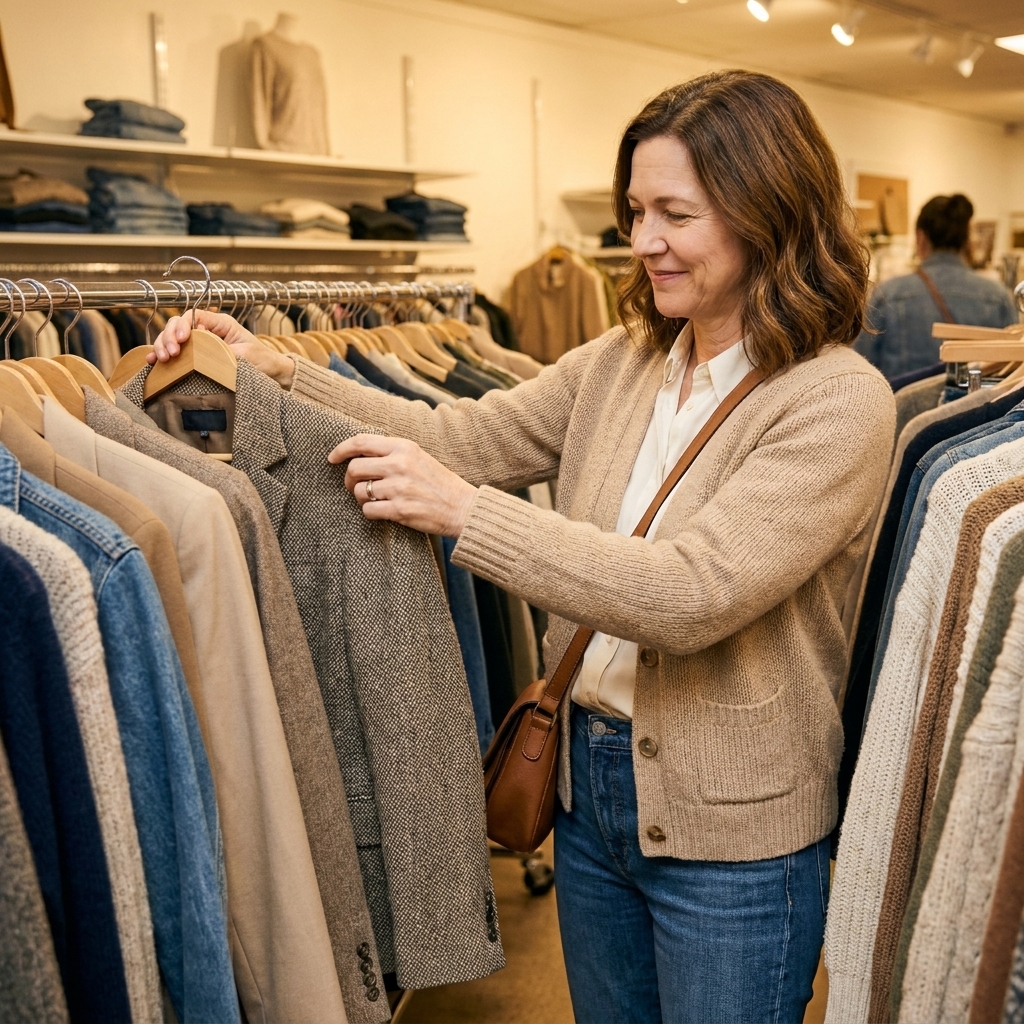
- Try thrift and resale first: color trends cycle, which means great pieces are already out there waiting.
- Tailoring is the cheat code: a $25 blazer that fits your shoulders will beat a $250 blazer that doesn’t, almost every time.
Care and longevity
Few things make a fresh color look dated faster than fading, pilling, or a tired finish.
- Wash cold, inside out for most colored garments.
- Use gentle detergent and skip the overstuffed washer. Friction is the enemy.
- Air dry when you can or tumble on low to protect dyes and fibers.
- De-pill knits with a fabric shaver so brights stay crisp.
Quick FAQ
What if the trending colors don’t flatter me?
Try the shade in a different undertone or move it away from your face. A color you hate as a top might be perfect as a shoe, bag, or skirt.
How many trending colors should I wear at once?
For everyday outfits, one is plenty. Two can work if one is quieter or if you keep everything else neutral.
Do I need to match my accessories exactly?
No. Matching can look a little forced. Aim for related, not identical. Think tomato with burgundy, or lilac with plum.
The bottom line
Trends are tools, not rules. If you want to play, start small, build around the basics you already love, and choose pieces that fit beautifully. A color that makes you stand a little taller is always in season.
If you want a next step, pick one trending hue and try it three ways this week: once as an accessory, once as a layering piece, and once in a tonal or neutral-based outfit. You’ll learn what feels like you, and that is the whole point.