There is something deeply comforting about a trench coat in spring. It is the fashion version of an umbrella you can actually style: protective, polished, and quietly confident. The trick is choosing one that works with your proportions and your real life, not just a product photo on a sunny day.
Below is my fit-first, budget-flexible guide to buying a trench you will reach for every rainy spring, plus outfit formulas that make wet weather feel intentional.

What makes a trench a trench
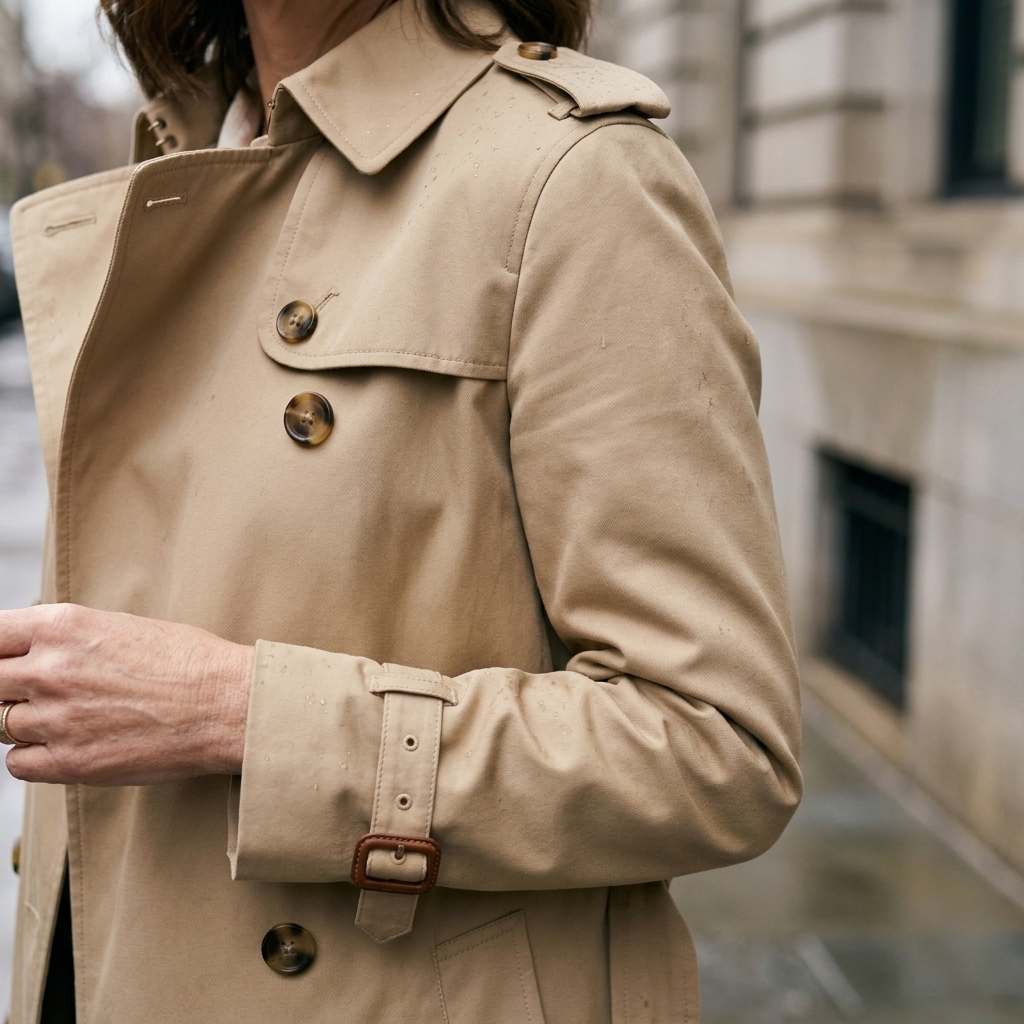
Trenches come from practical military outerwear, popularized in WWI-era Britain, which is why the details are so functional. You do not need every heritage feature, but understanding them helps you shop smarter.
- Double-breasted front: Extra overlap for wind and rain, plus instant structure.
- Belt: Adjusts fit and creates shape. Also great for keeping the coat from flapping around in gusts.
- Storm flap (back or chest): Helps shed water and adds an extra layer where rain tends to hit.
- Adjustable cuffs: Handy when you are juggling a tote, coffee, and a door handle.
- Collar you can pop: Underrated for drizzle and wind.
If a coat is single-breasted, lacks storm details, and is made from a soft drapey fabric, it may still be a great spring coat, but it will wear more like a lightweight overcoat than a true trench.
Buy like a stylist: the 7-point checklist
1) Fabric that can handle real rain
Spring rain is unpredictable, so prioritize fabric first, then color.
- Cotton gabardine (classic): Dense, durable, and looks expensive even when it is not. Many are treated with a water-repellent finish, but most are water-resistant, not fully waterproof.
- Poly-cotton blends: Often more wrinkle resistant and quicker to dry. Water resistance depends on the weave and the coating (look for a DWR or water-repellent finish).
- Technical fabrics (modern): Great if you commute, walk a lot, or live in a truly wet climate. Look for breathable options, and if you want true rain protection, look for sealed seams.
Quick test in-store: Scrunch the sleeve in your fist for 5 seconds. If it wrinkles like a paper bag and never relaxes, it will drive you nuts on humid, rainy days.
Reality check: Even the best classic trench appreciates an umbrella in a downpour.
2) Lining and comfort
A fully lined trench glides over knitwear and blazers, which matters more than people think. If you run warm, a partial lining or unlined style can be perfect for late spring. If you run cold, look for a removable liner or room for a thin quilted layer underneath.
3) Fit through shoulders first
Shoulders are the hardest part to tailor on set-in-shoulder coats. (Raglan sleeves are more forgiving, but you still want clean movement through the upper back.) A good trench should sit comfortably with enough room to move your arms. If it pulls across your upper back when you hug yourself, size up or choose a roomier cut.
4) Sleeve length that suits your lifestyle
Ideally, the sleeve hits around your wrist bone. If you are constantly carrying a bag or umbrella, slightly shorter sleeves can feel more functional. Adjustable cuff straps help you customize without tailoring.
5) Length that flatters and functions
Length is where most trenches win or lose.
- Short (hip to upper thigh): Great for petites, for driving, and for casual outfits.
- Classic (knee): The most versatile for work and weekends.
- Long (mid-calf): Most dramatic and weather-protective, but it should still allow you to take a full stride without feeling restricted.
6) Belt placement and shape
The belt should hit at your natural waist or slightly above it. If the belt loops sit too low, you can look dropped and boxier than you are. If you love the coat otherwise, a tailor can often move belt loops for a surprisingly reasonable price.
7) Pockets that are actually usable
Check pocket placement. Too high can look odd and feel awkward. Too low can distort the silhouette when you put things in them. Ideally, your hands should slip in comfortably with relaxed shoulders.
Bonus: construction cues
- Seams and finishing: Neat stitching, clean seam finishes, and secure seam intersections (especially under the arms) help the coat last.
- Buttons and buttonholes: Buttons should feel firmly attached; buttonholes should be tightly finished, not fuzzy.
- Hardware: Belt buckles and cuff buckles should feel smooth and sturdy, not sharp or flimsy.
Choosing a trench by proportions
Consider this a friendly reminder: your body is not the problem, the pattern is. The goal is balance, comfort, and a silhouette that feels like you.
Petite
- Best lengths: upper thigh to just above the knee.
- Look for: narrower lapels, smaller buttons, and a higher belt placement to elongate your legs.
- Avoid (if you feel overwhelmed): extra-wide collars and very long hems that swallow your frame.
Stylist tip: A petite-friendly trench is often about scale, not size. Even if you are a standard size, tailoring sleeve length and hem can make the coat look custom.
Tall
- Best lengths: knee to mid-calf for that effortless, editorial line.
- Look for: longer sleeves, a belt that truly hits your waist, and deeper pockets.
- Watch: coats that become accidentally cropped on you. If it is meant to be knee-length and hits mid-thigh, it can look off-proportion.
Curvy (hips, bust, or both)
- Best features: a belt that ties easily, a bit of stretch, or a shape that skims rather than clamps.
- Look for: room in the chest and upper arms, plus a tie belt rather than a stiff, tiny-buckle belt.
- Button gap check: if the front pulls open at the bust or hips, size up and tailor the waist, or consider a single-breasted trench for a smoother line.
Apple or midsection-focused
- Best features: gentle A-line, a belt that can sit slightly higher, or a trench that looks great worn open.
- Try: tying the belt at the back to create shape without emphasizing the front.
Rectangle or straighter silhouette
- Best features: strong shoulders, a defined collar, and a belt you can cinch for shape.
- Try: a trench with subtle shoulder structure or raglan sleeves that create a soft, relaxed drape.
Broad shoulders
- Look for: raglan sleeves or softer shoulder construction for ease.
- Balance with: a hem that hits at knee or mid-calf, plus a belt to bring definition back to the waist.
Color: beige and beyond
I love a traditional khaki trench, but the best color is the one that plays nicely with the clothes you already own and the weather you actually live in.
- Warm neutrals: khaki, camel, tan, chocolate. Gorgeous with cream knits and gold jewelry.
- Cool neutrals: stone, dove gray, navy, charcoal. Sharp with black, denim, and silver hardware.
- Soft color: sage, dusty rose, light blue. Surprisingly versatile if your wardrobe leans neutral.
- Black: sleek and city-ready, but it can show water spots and lint. Choose a fabric with a matte finish.
Easy test: Hold the coat next to your favorite scarf or sweater. If your face looks brighter, it is a yes. If you look a little tired, keep hunting.
How to style a trench in the rain
Rainy spring style is about two things: proportion and practicality. The trench is your top layer, so everything underneath should be simple, comfortable, and capable of getting a little damp at the hem.
Balance volume
If your trench is long, keep your base outfit more streamlined (think a cleaner column underneath). If your trench is short, you can play with wider leg pants or a fuller skirt for contrast.
Make the belt your styling tool
- Classic buckle: buckle it normally for the most polished shape.
- Relaxed tie: tie a simple knot at the waist for a less rigid look.
- Back tie: tie the belt behind you and wear the coat open so it drapes cleanly.
Shoes that survive puddles and still look chic
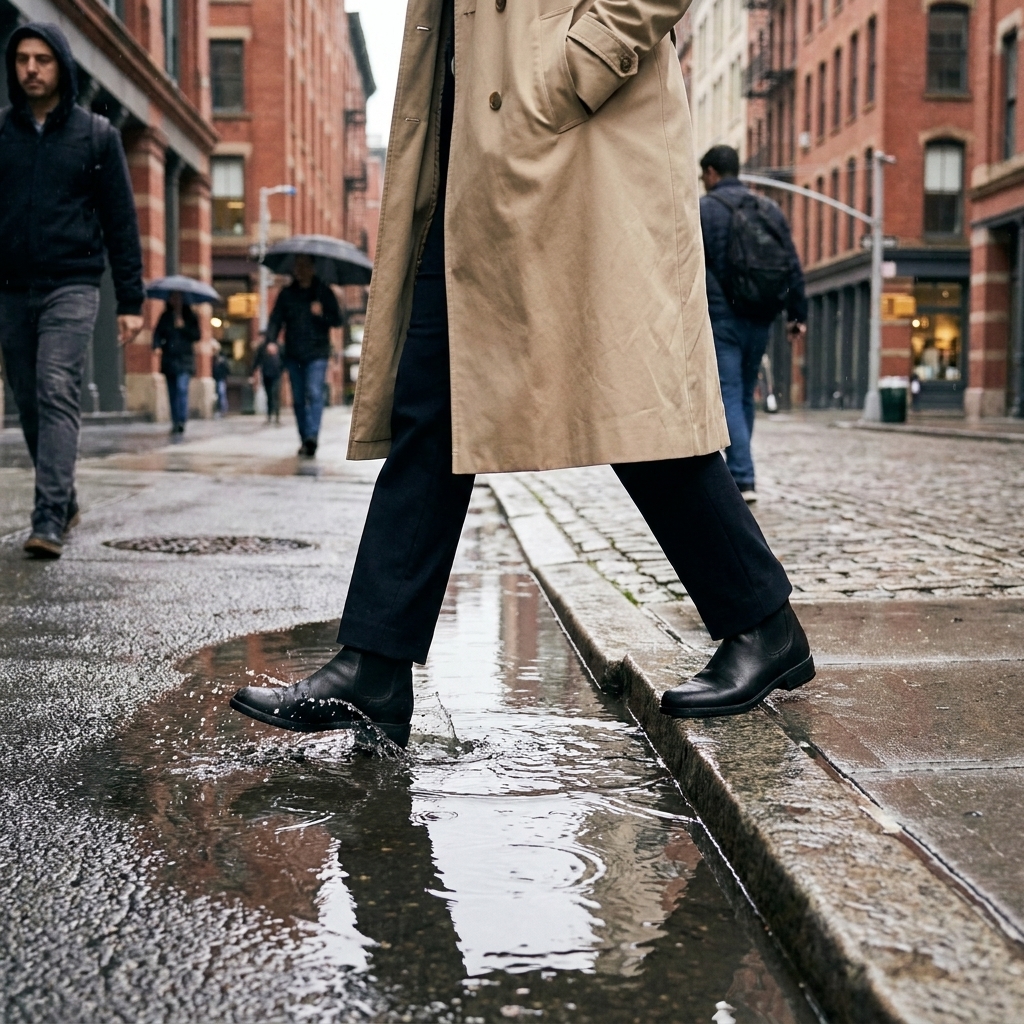
- Water-resistant ankle boots: the MVP. Look for a lug sole or sturdy block heel.
- Loafers (with a chunky sole): great for light rain, pair with socks you do not mind showing.
- Clean sneakers: choose leather or water-resistant finishes when possible.
Save suede and delicate satin flats for days when the forecast looks friendly.
Outfit formulas: casual rainy days
1) The errands uniform
- Trench coat worn open with belt tied at the back
- Breton stripe tee or a simple sweatshirt
- Straight-leg jeans cuffed once
- Water-resistant sneakers or lug-sole loafers
- Baseball cap for drizzle plus a sleek tote
Why it works: The trench adds polish, the denim anchors the look, and the cap helps keep hair smooth in damp weather.
2) The coffee date that turns into a walk
- Trench coat cinched at the waist
- Fine knit sweater or cardigan
- Midi skirt in a washable fabric (think cotton poplin or a sturdy knit)
- Chelsea boots
- Small crossbody worn under the trench so it stays dry
Stylist note: If you love the midi skirt look but hate a wet hem, choose a skirt that hits mid-calf and avoid very floaty fabrics on rainy days.
3) Sporty, but intentional
- Short trench or car coat length
- Hoodie layered underneath (hood outside the collar)
- Wide-leg trousers that hit above the ground
- Leather sneakers
- Simple hoops and a structured backpack
Outfit formulas: professional rainy days
1) The “I mean business” commute
- Knee-length trench, buttoned
- Lightweight blazer underneath
- Tapered ankle trousers
- Water-resistant heeled ankle boots
- Large umbrella and a structured work tote
Fit tip: Make sure you can button the trench over your blazer without pulling at the shoulders. If not, size up and tailor the waist.
2) The dress day, rain edition
- Long trench worn open
- Midi sheath or knit dress
- Opaque tights if it is chilly
- Sleek rain boot that looks like a regular boot
- Trench belt tied in a knot for movement
Pro move: Keep a pair of dry shoes at the office if you have the option. Your feet will thank you.
3) Smart casual office
- Trench with the collar popped slightly
- Crisp button-up or a polished tee
- Dark denim or tailored wide-leg trousers
- Chunky loafers
- Silk scarf tucked inside the trench to protect it from drizzle

Shopping smart at any budget
Thrift and vintage
Vintage trenches can be incredible quality, especially in cotton gabardine. Look closely at:
- Fabric wear: check the cuffs, collar, and pocket edges.
- Odor and storage marks: musty smells can be stubborn, so only buy if you are willing to have it professionally cleaned.
- Buttons and buckles: easy to replace, and swapping buttons can modernize a coat fast.
High street and mid-range
Prioritize fit and fabric over extra details. Many affordable trenches look great but feel stiff or plasticky. If the fabric is noisy when you move, it will annoy you every time you wear it.
Investment pieces
If you invest, invest in what you cannot easily tailor later: beautiful fabric, clean shoulders, and quality finishing at seams and buttonholes. Everything else is negotiable.
A trench coat should feel like a trusted friend: protective, flattering, and ready when the weather changes its mind.
Care tips
- Hang to dry: always. Shake off water, hang on a sturdy hanger, and let it air dry away from direct heat.
- Spot clean first: a damp cloth handles most spring grime.
- Reproof when needed: if water stops beading on the surface, use a fabric-appropriate waterproofing spray and follow the label.
- Steam, do not scorch: steaming relaxes wrinkles without shining the fabric.
- Store smart: in off-season, keep it on a wide hanger, buttoned, with the belt loosely tied so it does not crease.
Trench coat FAQs
Should I size up so I can layer?
If you plan to wear a blazer or chunky knit underneath, yes, consider sizing up. The ideal move is sizing for the shoulders and upper arms, then tailoring the waist for shape.
Is a water-resistant trench the same as waterproof?
Not quite. Water-resistant fabric handles drizzle and light rain. Waterproof fabrics and sealed seams are better for downpours. If you walk or commute in heavy rain often, a truly waterproof option can be worth it.
Can I wear a trench with sneakers to work?
In many workplaces, yes, especially with a sleek leather sneaker and tailored pants. The trench adds enough structure to keep it from feeling too casual.
How do I stop the belt from looking bulky?
Skip the tight bow. Try a simple knot, or buckle it and tuck the tail through one belt loop. If the belt is very long, a tailor can shorten it easily.
The takeaway
The perfect trench coat is the one that fits your shoulders, respects your proportions, and makes rainy spring days feel a little more put together. Choose the fabric for your climate, choose the length for your life, and do not underestimate the power of a good belt and a great boot.
Use this guide as your fitting-room checklist, and you will walk out with a trench that earns its closet space the first time the weather changes its mind.