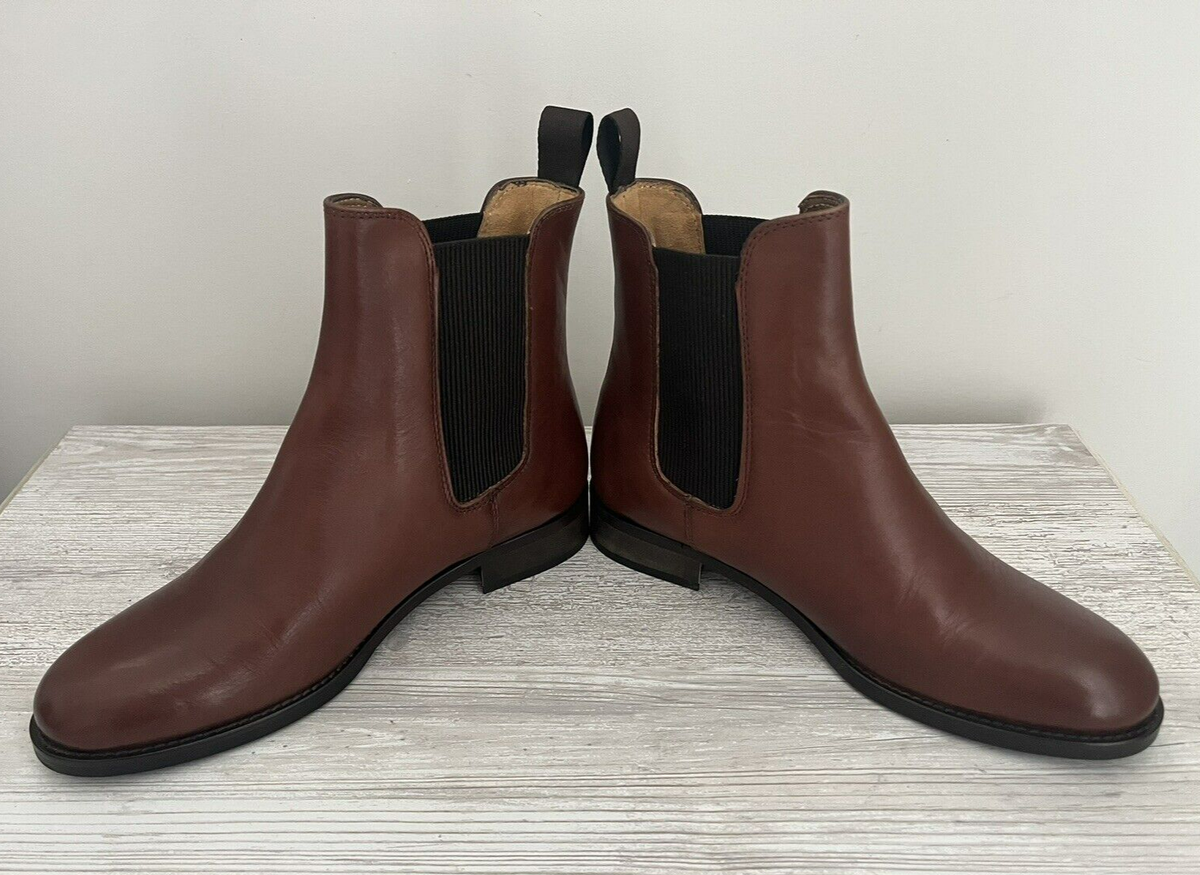
Layering isn't the enemy. Bulk is. And bulk usually shows up when we stack the wrong types of pieces, in the wrong order, in the wrong sizes. The good news is you can be genuinely warm in freezing weather and still look polished, shaped, and very much like yourself.
Think of this as your winter outfit blueprint: fewer, smarter layers that trap heat efficiently and sit smoothly on the body.

The golden rule: insulation over accumulation
Warmth comes from trapping air close to the body, but it only works when you also manage moisture and block wind. That means your goal is to build a system of thin, high-performing layers rather than piling on thick, oversized items that fight each other for space.
- One smooth base layer to manage moisture and reduce friction.
- One insulating mid-layer to trap heat.
- One weather layer to block wind and precipitation.
If you're wearing more than three main layers on your torso and still cold, it's often a fabric and fit issue. That said, temperature, windchill, how long you're outside, and even circulation can absolutely mean you need a fourth layer sometimes, especially in true deep-winter conditions.
Start sleek: base layers that disappear
Your base layer is the foundation. If it's bulky, everything on top will feel tight and look puffy. The best base layers are thin, fitted, and breathable.
Best base layer fabrics
- Merino wool (lightweight): warm even when damp, naturally odor resistant, and rarely looks bulky.
- Silk: surprisingly warm for the thickness and glides under clothing like a dream.
- Technical knits: great for very cold commutes because they manage sweat and dry fast, which helps you stay warmer long-term.
No-wool options (still sleek)
- Synthetic thermals (polyester blends): easy care, good for sensitive skin, and widely available in very thin weights.
- Alpaca blends: often softer than traditional wool, warm for the weight.
- Modal blends: comfy and smooth, best for mild cold or for layering indoors to outdoors.
Fit notes that change everything
- Choose snug but not compressive. If it's digging in, it'll create lines and make you want to size up your top layers.
- Look for longer hems so nothing rides up and bunches at the waist.
- Try a crew or mock neck under most sweaters. Save thick turtlenecks for days you aren't layering much on top.
The mid-layer: where warmth happens
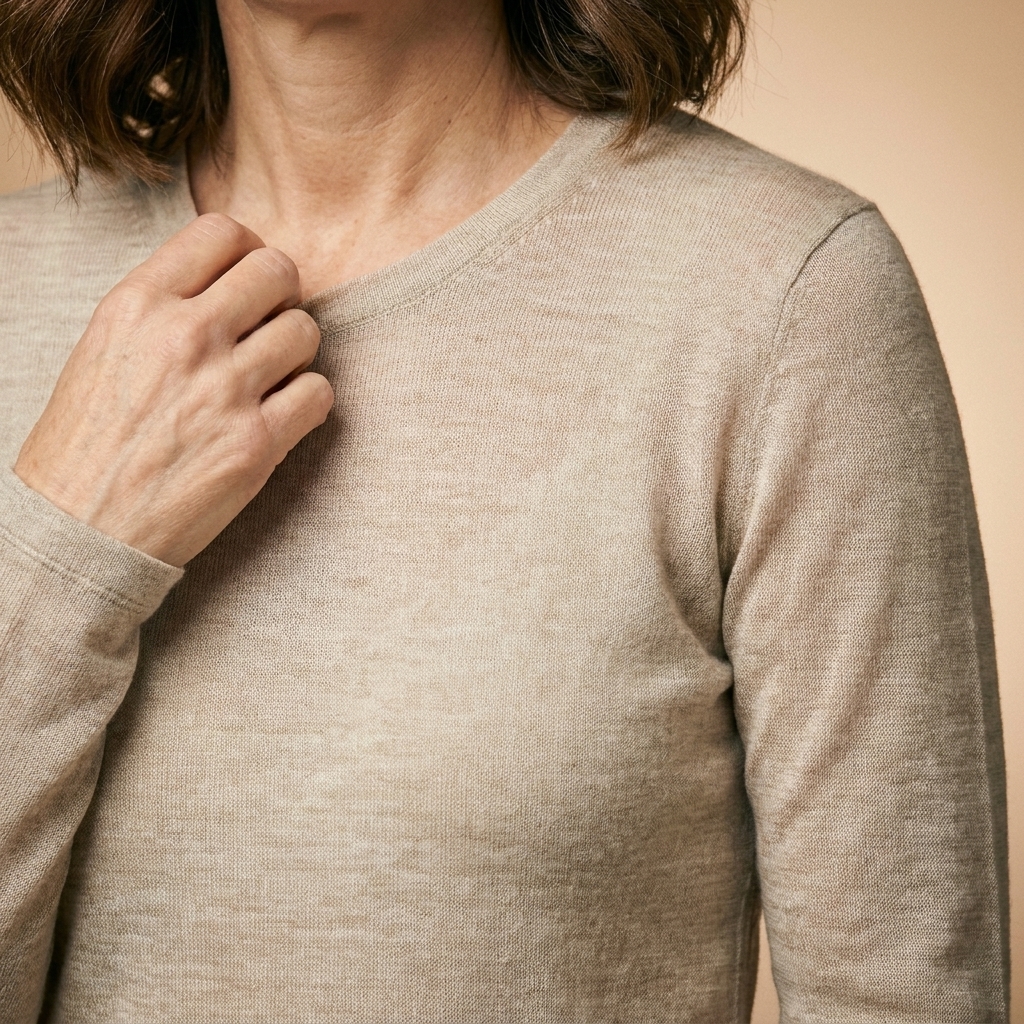
This is the layer that does the heavy lifting. It should insulate without adding visual volume. My best advice from years of styling real bodies in real winters: keep the mid-layer thin, lofty, and intentional.
Mid-layer options that look tailored
- Fine-gauge wool sweater: smooth under coats, easy to dress up, and warm without the marshmallow effect.
- Cashmere or cashmere blend: lightweight warmth, especially in fitted or slightly relaxed shapes.
- Quilted liner jacket: a thin, structured liner worn under a coat is a secret weapon for windchill days.
- Fleece, but make it sleek: choose smooth-face fleece or a fitted zip style rather than shaggy pile.
What to avoid when you want a clean silhouette
- Chunky cable knits under tailored coats. Save them for puffer days or wear them as the outer layer.
- Long, floppy cardigans under structured coats. They bunch at the arms and create thickness at the hips.
- Two mid-layers at once unless one is extremely thin (like a vest).
The coat is architecture
Your coat decides the outfit's shape. When you want to layer without bulk, pick outerwear that has enough room to move but still gives you lines.
Best coat styles for sleek layering
- Single-breasted wool coat: the cleanest front, easiest to wear open or closed without looking wide.
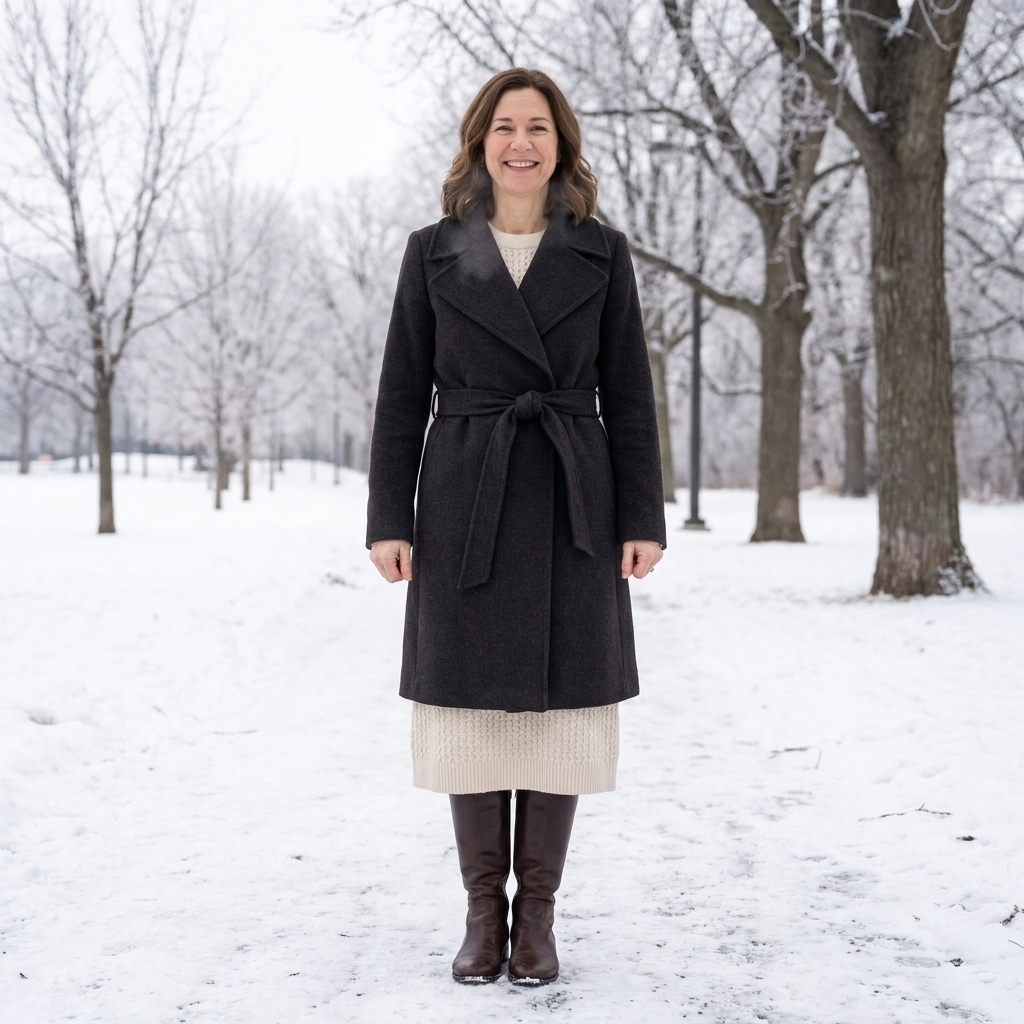
- Wrap coat with a real tie: lets you cinch at the waist even with a sweater underneath.
- Tailored trench with a warm liner: great for wet cold and wind, especially layered over merino and a blazer.
- Longline puffer with quilting: look for narrower channels and a shaped shoulder for less "balloon."
Coat fit checklist
- Shoulders should sit correctly. If the shoulder seam drops too far, you'll look larger and feel colder.
- Armholes matter. Higher armholes allow movement without needing oversized sleeves.
- You should be able to hug yourself comfortably over your chosen mid-layer.

Volume placement
If you only remember one thing, let it be this: volume looks intentional when it's placed in one area.
- Big coat, slim underneath: fitted base layer + fine knit + statement coat.
- Slim coat, streamlined mid-layer: merino base + thin quilted liner + tailored wool coat.
- Chunky sweater, no extra bulk elsewhere: chunky knit + slim pants + a coat that has room and structure.
When everything is oversized, the outfit loses shape. When one piece has volume and the others are sleek, you look styled on purpose.
Tailoring tricks that elevate layers
I grew up adjusting thrift-store finds on my grandmother's sewing machine, so I have to mention this: a few small alterations can turn winter chaos into a clean, confident silhouette.
Easy, high-impact tweaks
- Shorten sweater hems so they hit at the high hip and don't bunch under coats.
- Taper sleeves on wool coats or blazers so your arms don't look swallowed by fabric.
- Add a small shoulder pad to a coat that collapses. Structure at the shoulder instantly reduces the appearance of bulk.
- Fix gaping fronts: consider repositioning buttons, adding hidden snaps, or having a tailor adjust the closure so the front lays flat. (Thinner buttons can help a little, but fit and closure placement are usually the real fix.)
If your coat fits your shoulders and your base layer fits your torso, you're already 80 percent of the way to a sleek winter look.
Smart fabric pairings
A lot of "bulk" is actually friction. When fabrics cling, they bunch. When they glide, they stack cleanly.
Combinations that behave well together
- Silk or merino base + fine wool sweater + lined wool coat
- Technical base + quilted liner + trench
- Merino base + blazer + wrap coat
Quick fixes for cling
- Choose coats with a smooth lining (viscose, acetate, or similar).
- Use a slip or half-slip under skirts and dresses.
- Lightly mist static-prone items or use a static-reducing spray.
Temperature guide
Use this as a quick reality check. Your exact formula depends on wind, precipitation, and how long you're outside.
- Around 32°F / 0°C (cold, not brutal): base + mid + coat is usually plenty. Prioritize wind resistance if it's breezy or damp.
- Around 10°F / -12°C (sharp cold): upgrade fabrics (merino, cashmere, lined coat) and add a thin liner or vest if you're outside for a while.
- Below 0°F / -18°C (deep winter): it's normal to need 4+ layers, insulated outerwear, and serious accessories. At this point, wind-blocking and moisture management matter as much as insulation.
Lower-body layering
If your legs are cold, you don't need a bulkier top. You need smarter insulation below the waist.
- Base layer leggings under trousers: look for thin merino or technical thermals that don't bunch at the knee.
- Lined pants (fleece-lined or flannel-lined): a clean silhouette with built-in warmth.
- Skirts and dresses: thermal tights plus a slip can add warmth and reduce cling.
- Boot strategy: choose boots with a bit of sole thickness, room for a warm sock, and consider traction in icy climates.
Outfit formulas
When it's freezing, decision fatigue is real. These formulas are simple, warm, and reliably sleek.
Formula 1: City-polished
- Merino long-sleeve base
- Fine crewneck sweater
- High-waisted straight trousers
- Single-breasted wool coat
- Pointed or almond-toe boots
Formula 2: Cozy but not puffy
- Silk base layer top
- Quilted liner jacket
- Longline puffer with narrow quilting
- Slim jeans or ponte pants
- Chunky scarf (your one intentional volume piece)
Formula 3: Dress days in the cold
- Thermal tights or merino tights
- Long-sleeve base layer under a knit dress
- Wrap coat tied at the waist
- Knee-high boots
Accessories that add warmth
Accessories are your secret warmth boosters because they increase comfort without changing your silhouette much.
- Thin cashmere beanie instead of a bulky pom hat.
- Leather gloves with a thin wool lining for warmth without stiffness.
- Neck warmth: try a slim knit scarf tucked into your coat, or a soft neck gaiter under a collar.
- Socks: one well-fitting pair of wool socks is often warmer than two cotton pairs that trap moisture or cut off circulation. If you double up, go thin and choose wool or synthetic.
Common layering mistakes
Mistake: sizing up everything for layers
Fix: Keep your base and mid-layer true to size. Size up only the coat if needed, and only by one step.
Mistake: thick sweater + thick coat
Fix: Choose one hero. If the sweater is chunky, wear a roomier coat or a puffer. If the coat is tailored, go fine-gauge underneath.
Mistake: cold legs, bulky top
Fix: Put insulation where it counts. Add thermal tights, lined trousers, or tall boots, then keep the top layers sleek.
Mistake: bunching at the waist
Fix: Use thinner base layers, do a neat tuck (or no tuck), and choose higher-rise bottoms that hold layers in place.
Care and comfort
One more thing that makes a huge difference: avoid getting sweaty indoors. Overheating is the fastest way to feel colder later.
- When you step inside, open your coat or remove your mid-layer if you can.
- If you sweat easily, prioritize technical or merino bases that dry quickly.
- Carry a thin tote so you can stash a hat or scarf without stuffing your pockets.
FAQ
How many layers should I wear in winter?
For many freezing days: three (base, mid, coat) plus targeted accessories. Add a thin liner or vest when windchill is brutal or you're outside longer than usual.
What's the warmest layer that doesn't look bulky?
A lightweight merino base layer plus a fine wool or cashmere sweater gives excellent warmth for very little thickness.
How do I layer under a blazer without looking stuffed?
Use a thin base (merino or silk) and keep the second layer minimal. A blazer loves a smooth turtleneck or fitted knit. If you need more warmth, put it in your coat, not inside the blazer.
How do I stay warm without a huge puffer?
Choose a lined wool coat, add a quilted liner, and make sure your base layer is doing its job. Also, don't underestimate warm feet and a covered neck.
A final stylist note
You don't need to hide your body under a mountain of fabric to be warm. You need the right materials, the right fit, and a little outfit strategy. When your layers lie flat and your coat fits like it was meant for you, winter style stops feeling like survival mode and starts feeling like self-expression again.