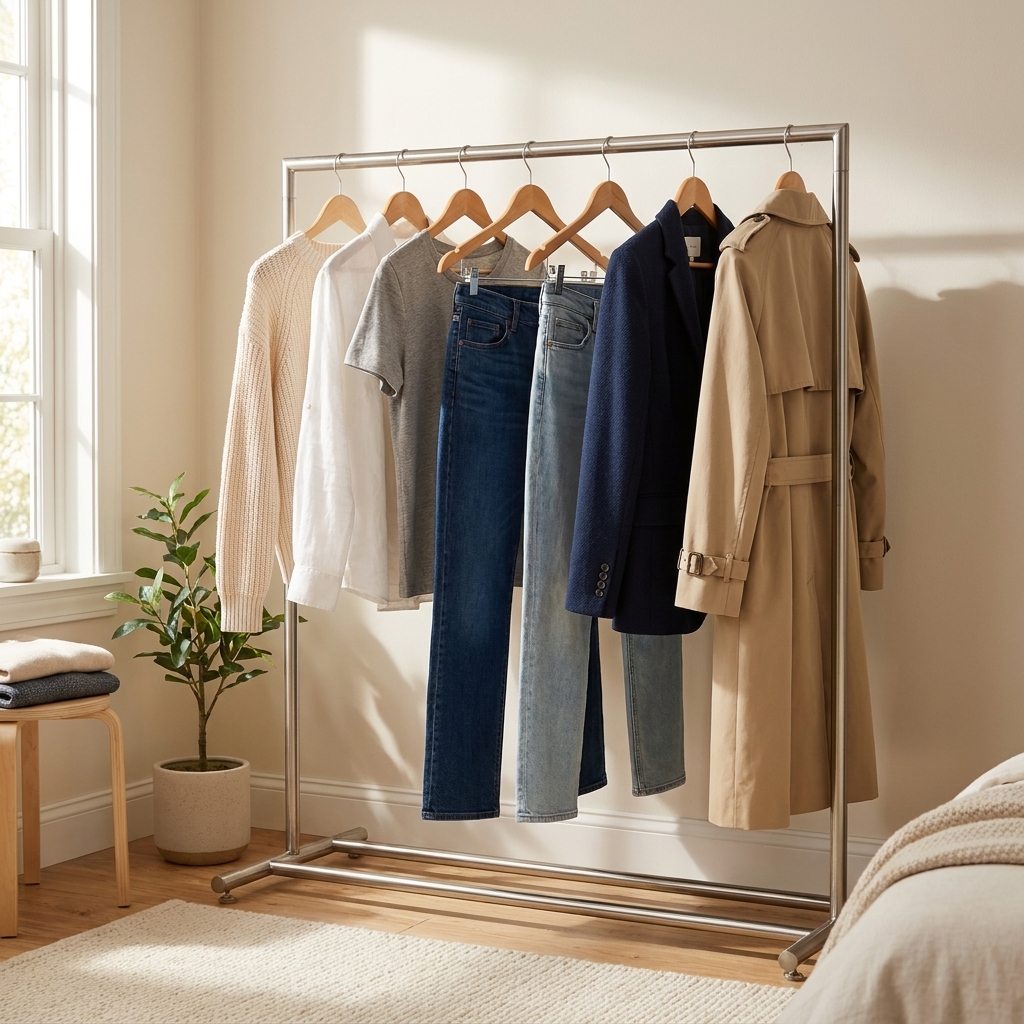
Finding a signature scent is a lot like finding your perfect blazer. It is not about the price tag or what looks good on someone else. It is about fit, personality, and that quiet little lift you feel when it finally clicks.
This guide will help you understand fragrance notes, choose a concentration that matches your lifestyle, and apply perfume in a way that lasts. No gatekeeping, no intimidation. Just practical, feel-good fragrance know-how.
Start with the feeling
Before you sniff a single strip, get clear on the vibe. Not the brand. Not the trend. The feeling.
- Polished and put-together: clean musks, soft woods, iris, gentle florals
- Cozy and comforting: vanilla, tonka, amber, sandalwood, lactonic notes (creamy, milky)
- Fresh and energetic: citrus, green notes, aquatic notes, crisp aromatics
- Bold and magnetic: spicy notes, incense, leather, dark rose, patchouli
- Romantic and airy: peony, jasmine, orange blossom, soft fruity notes
Think of this as your “style keywords” for scent. If your closet is full of relaxed denim and vintage knits, you may want something easy and intimate. If you live in sharp tailoring, you might prefer something structured and smooth.
Notes, like a playlist
Perfume is built in layers that unfold over time. When people say a scent “changes,” this is what they mean.
Top notes (the opening)
What you smell in the first 5 to 15 minutes. Often bright and quick: citrus, herbs, light fruits. Top notes are the hello, not the whole conversation.
Heart notes (the main character)
What shows up after the top fades, usually 20 minutes to a few hours in. Florals, spices, and many aromatics live here. If you are testing fragrance, this is the part to pay attention to.
Base notes (the linger)
The lasting foundation that can stay on skin for hours: woods, musks, amber, vanilla, resins. Base notes are usually what people catch when they hug you.
Find your scent family
If “notes” feel abstract, start with fragrance families. They are like the broad categories of a wardrobe: denim, knits, tailoring. Once you know your lane, it gets easier to explore without getting overwhelmed.
- Fresh: citrus, aquatic, green, soapy musks. Clean, easy, daytime friendly.
- Floral: from airy peony to big white florals. Classic and versatile.
- Woody: sandalwood, cedar, vetiver. Grounded, polished, often unisex.
- Amber: vanilla, resins, warm spices. Cozy, sensual, great for evenings.
- Gourmand: edible vibes like caramel, coffee, cacao. Fun and comforting.
- Chypre: a classic structure often built around citrus, mossy woods, and patchouli. Elegant, expensive feeling.
- Fougère: aromatic, barbershop-adjacent notes like lavender and tonka. Clean, confident, timeless.
If you are unsure where you land, try this shortcut: sample one fresh scent, one woody scent, and one amber or gourmand. Wear each for a full day. Your body will tell you which one feels like home.
Concentration, explained
Concentration can affect how long a fragrance lasts and how “loud” it feels, but it is not a perfect predictor. Skin chemistry, weather, and the formula matter too. Still, these labels are a helpful starting point, and the ranges can vary by brand and region.
- Eau de Cologne (EDC): often around 1 to 5% aromatic compounds. Fresh, short wear, great for reapplying.
- Eau de Toilette (EDT): commonly around 5 to 15%. Airy and casual, often a few hours on many people.
- Eau de Parfum (EDP): commonly around 10 to 20% and sometimes higher. More depth, often 6 to 8 hours depending on the formula and your skin.
- Parfum / Extrait: often in the 15 to 30%+ range, with lots of overlap. Rich, usually longer-lasting, and often the most expensive per ounce.
Editor tip: If you are fragrance shy or work in a scent-sensitive environment, an EDT applied strategically can be your best friend. If you want one spritz and done, an EDP is often the sweet spot.
How to test perfume
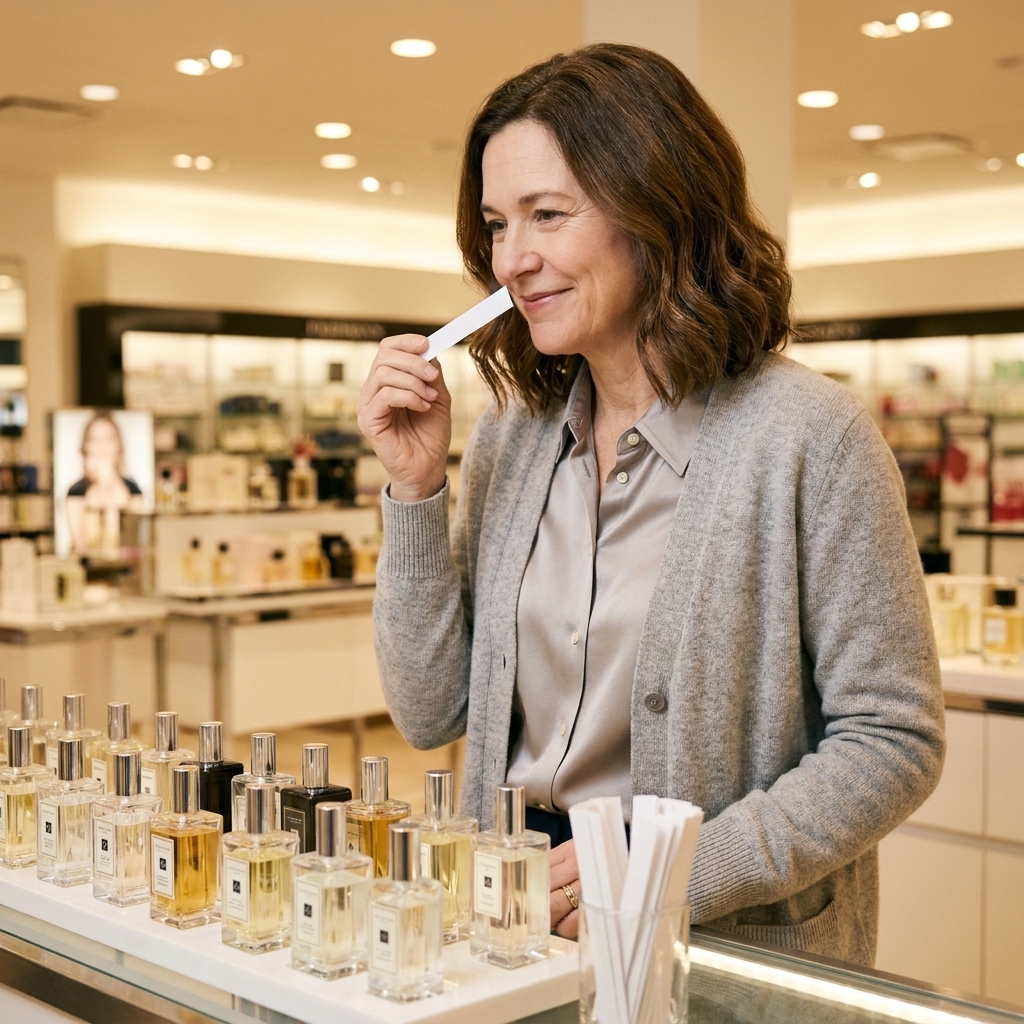
Testing scent is like trying on jeans. If you try on fifteen pairs back-to-back, your brain stops giving useful feedback. Keep it simple.
Step 1: Use blotter strips first
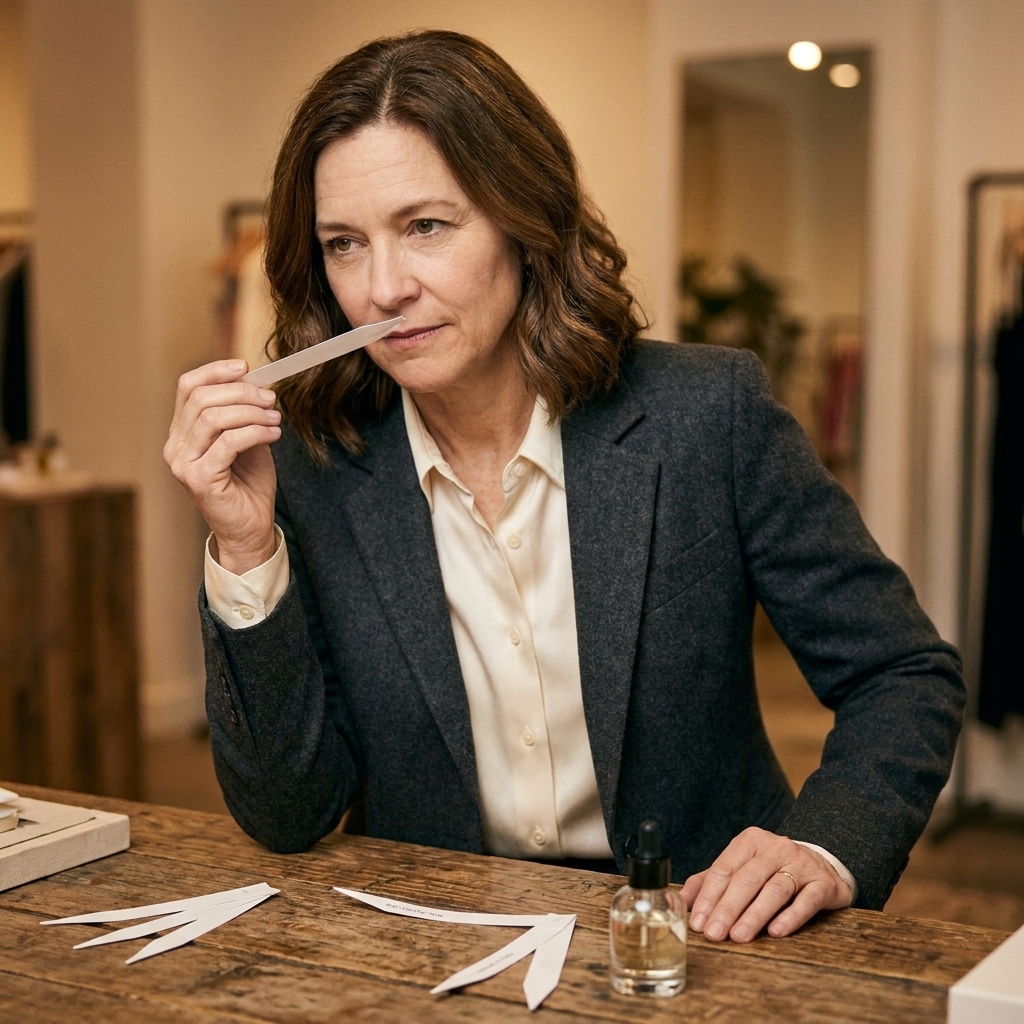
Spray once, wave it dry for a few seconds, then smell. Do not rub the strip.
Step 2: Pick your top two
Only then put fragrance on skin. One scent per wrist or inner elbow.
Step 3: Give it time
Walk around. Run an errand. Let it hit the heart and base notes. If you still love it after two to four hours, you are onto something.
Step 4: Manage nose fatigue
If everything starts to smell the same, pause. Fresh air helps more than coffee beans. Smell your sleeve or clean skin as a reset, then go back in.
Step 5: Keep notes like you are styling a closet
Write down:
- How it smelled at 15 minutes, 2 hours, and end of day
- How it made you feel
- Whether it felt like you at work, on a date, or just hanging out
If you can, try a fragrance 2 to 3 separate wears before buying. Samples, discovery sets, and decants make this easy without committing to a full bottle.
Signature scent in real life
A signature scent does not have to mean one bottle forever. For a lot of people, it looks more like a small rotation that covers different moods and settings.
Try the 3-scent wardrobe
- Everyday: easy, versatile, close to the skin
- Elevated: what you wear when you want to feel especially confident and put-together
- Cozy or evening: warmer, deeper, more intimate
If you want just one, choose the one that works for your most frequent setting, then use application amount to dress it up or down.
Quick vocab that helps: Longevity is how long it lasts on skin. Projection is how far it radiates. Sillage is the trail it leaves as you move.
Where to apply
The goal is not to announce yourself from across the room. The goal is a beautiful little scent bubble that moves with you.
Best spots for most people
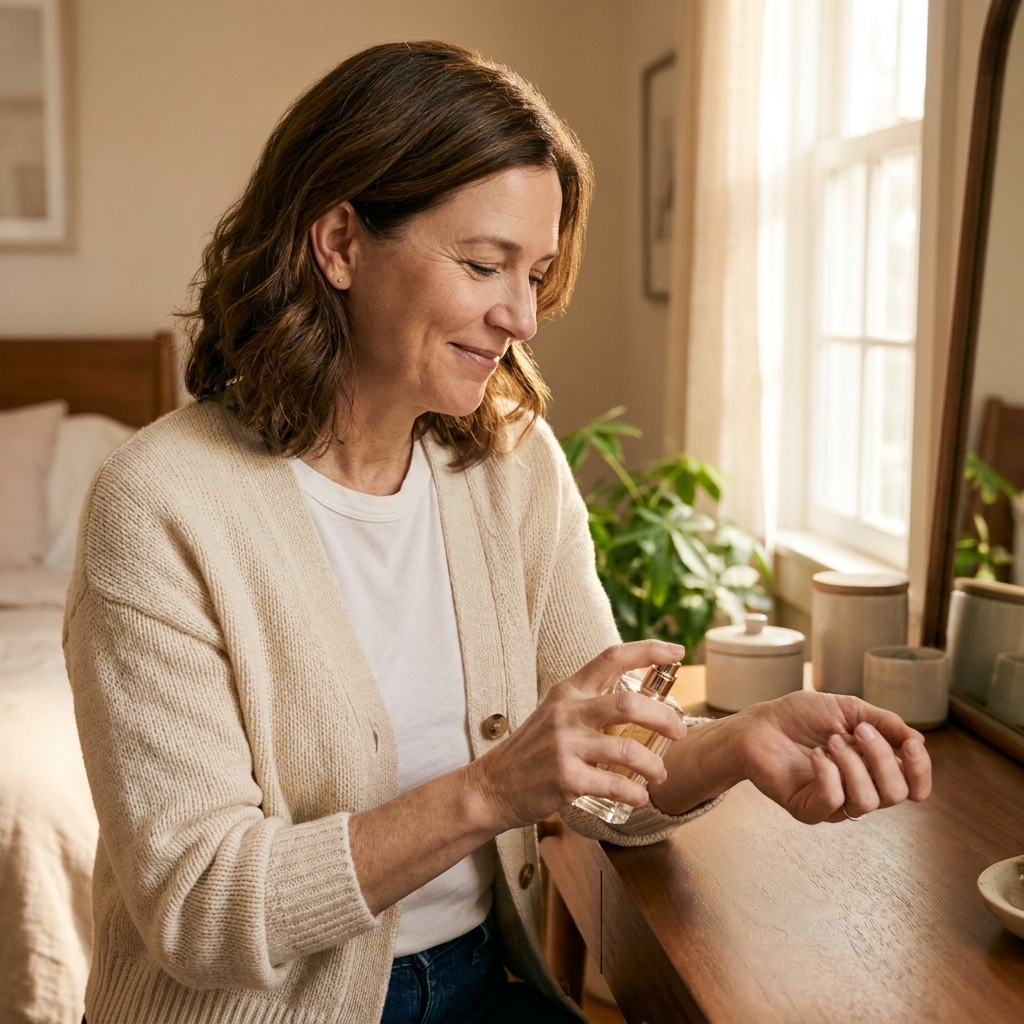
- Pulse points: wrists, inner elbows, base of throat. Warmth helps fragrance bloom.
- Behind the ears: great for soft projection, especially if you wear your hair down.
- Back of the neck: leaves a gentle trail when you move.
Clothing and hair, yes with a few rules
- Clothing: one light spray on natural fibers can help longevity, but test first. Some perfumes can stain delicate fabrics like silk.
- Hair: fragrance can cling to hair, but alcohol can be drying. Mist a brush or use a hair fragrance if you are concerned.
Skip this: the spray-and-walk-through method. It is less efficient and more wasteful than applying directly where you want the scent to sit.
Do not rub wrists
I know, I know. We all learned it somewhere. But rubbing can warm the skin and make the opening evaporate faster, which may change how the first few minutes smell. Best practice is simple: spray, then let it air dry.
Make it last longer
Longevity is part formula, part skin prep, part technique. Also, a quick reality check: some fresh citrus-heavy compositions are designed to be breezy and may never last like a deep amber, even at higher concentrations.
1) Moisturize first
Fragrance holds better on hydrated skin. Apply an unscented lotion or body oil, then spray perfume on top.
2) Layer thoughtfully
If your perfume has a matching body wash or lotion, layering can extend wear. If not, keep your body products low-scent so they do not fight with your fragrance.
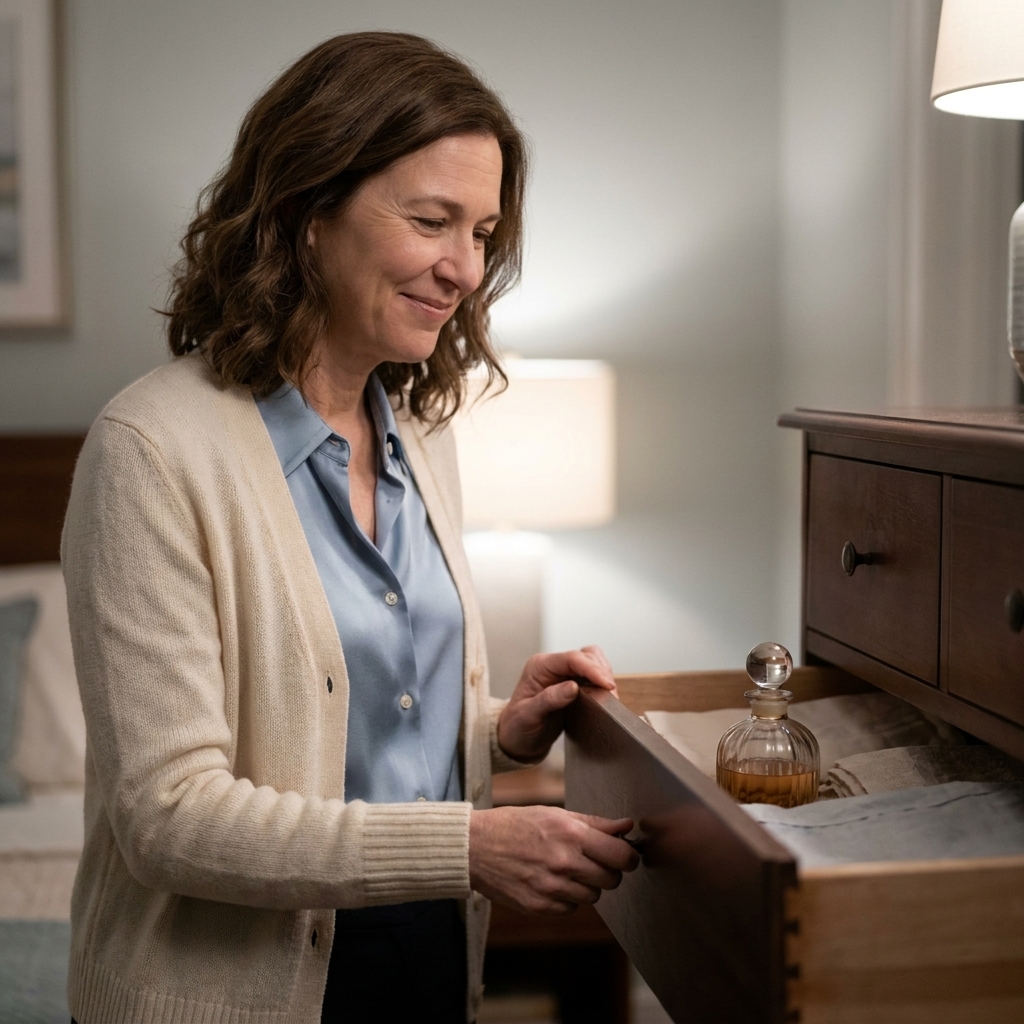
3) Store it well
Heat, light, and humidity can degrade fragrance. Keep bottles in a cool, dark place. A dresser drawer beats a sunny bathroom shelf.
4) Adjust for weather
- Hot weather: fresh and citrus scents can sparkle, but they may fade faster. Reapply lightly or choose a stronger concentration within the same line.
- Cold weather: woods and ambers shine and often last longer. Go easier on the trigger.
How much to spray
- Office, close quarters, public transit: 1 to 2 sprays total
- Daytime, casual: 2 to 3 sprays
- Date night, events: 3 to 5 sprays, depending on strength
If you are unsure, start with less and add later. You can always reapply. You cannot un-spray.
Signature fit check
When you think you have found the one, ask yourself:
- Do I still like it after 4 hours, not just 4 minutes?
- Does it feel like me, or like I am borrowing someone else’s vibe?
- Would I be happy smelling this on my scarf tomorrow?
- Does it work with my lifestyle and budget to repurchase?
A signature scent should feel like an extension of your style, not a costume. If it makes you stand a little taller, you are in the right neighborhood.
FAQ
Why does perfume smell different on me than on a friend?
Skin chemistry, body temperature, and even your moisturizer can change how notes develop. That is why testing on your own skin matters more than how it smells on a strip.
Can I have more than one signature scent?
Absolutely. Think of it like a mini fragrance rotation. Many people switch by season, mood, or setting.
What if perfume gives me a headache?
Try lighter concentrations, apply fewer sprays, and avoid very strong, heavily diffusive, or very sweet scents if they trigger you. Dense florals, ambers, aldehydes, and some musks can all be culprits depending on the person. Test in a well-ventilated space, and consider wearing it on clothing farther from your face.
If you are prone to irritation, patch test and avoid spraying on freshly shaved or already irritated skin. If you have known allergies or asthma, check ingredients where available and talk with a clinician if you are unsure.
How long should a bottle last?
It depends on sprayer output and how generously you apply, but a 50 ml bottle at about 2 sprays a day often lasts roughly 3 to 6 months. If you love variety, travel sprays and decants are a budget-friendly way to explore without committing.