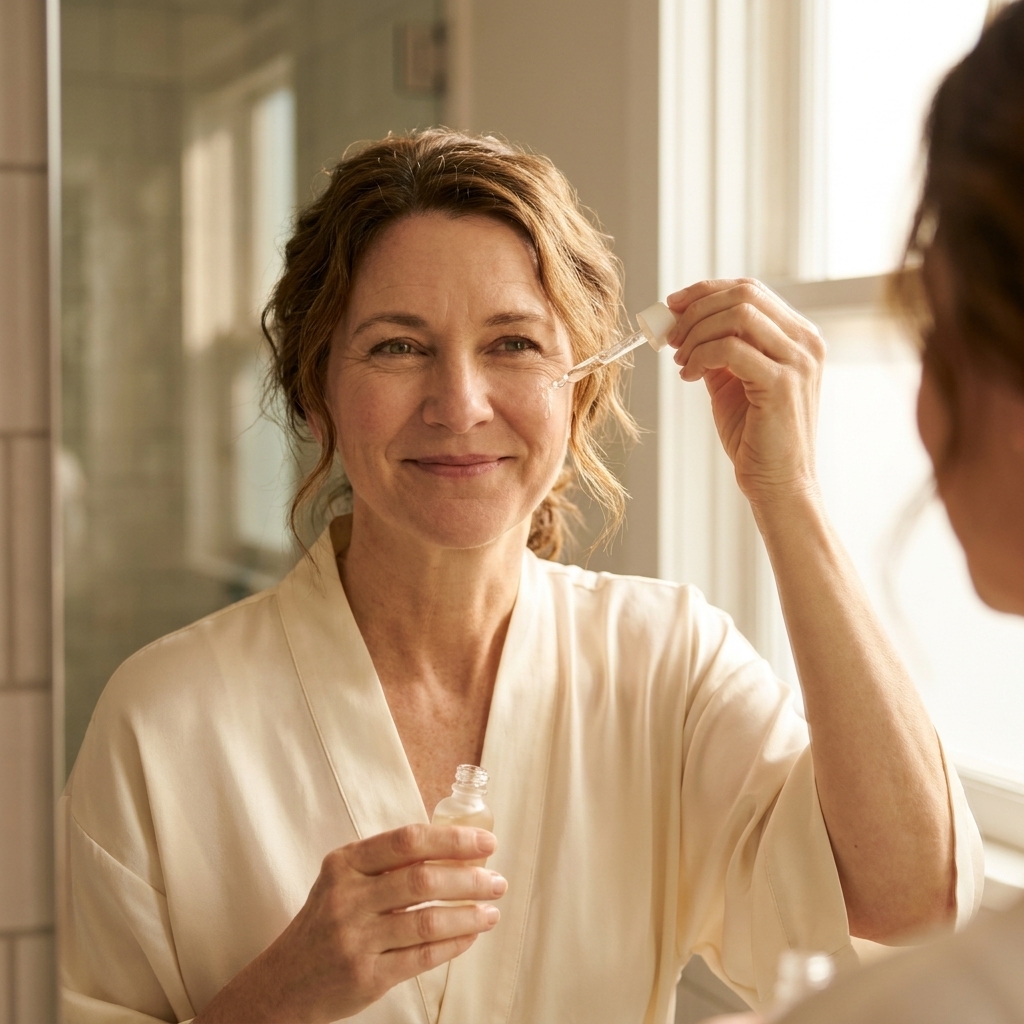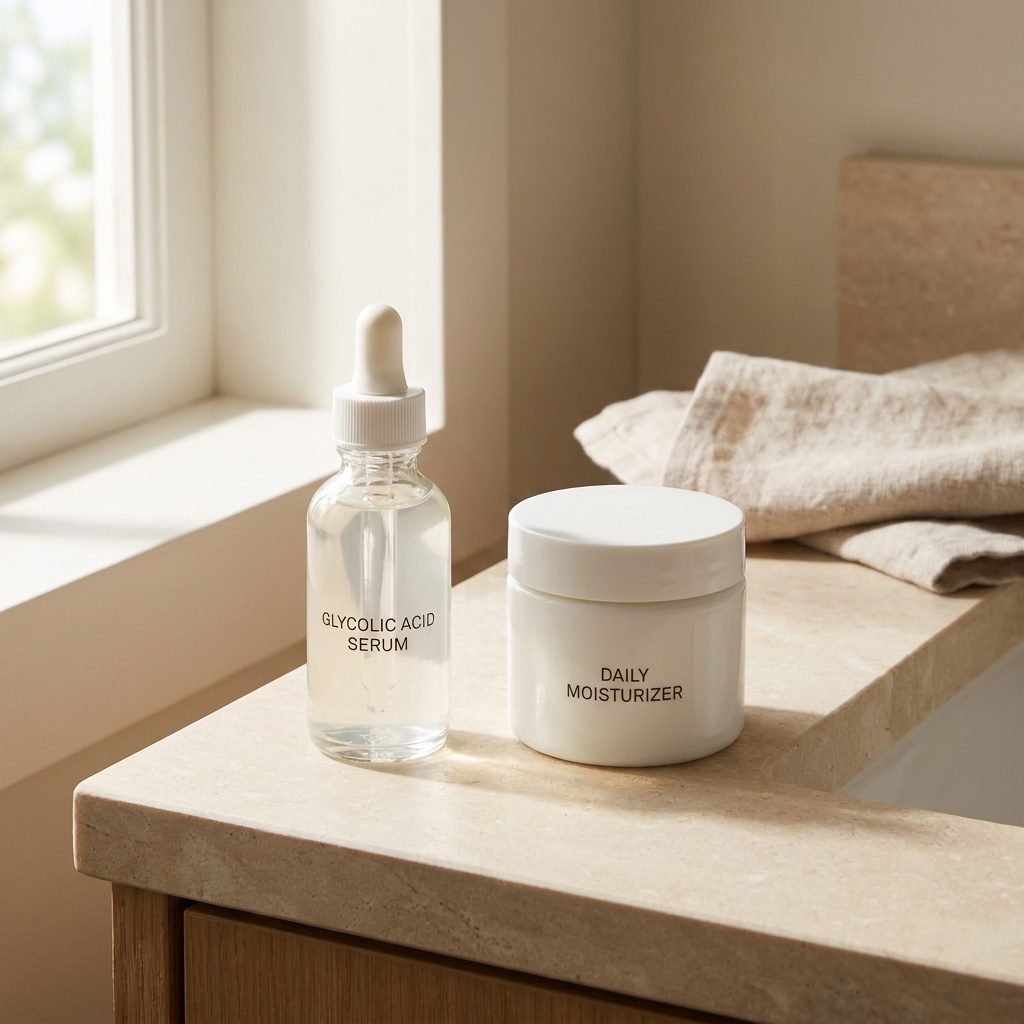
Think of your morning skincare routine like getting dressed: the goal is not to own the most products; it is to layer the right ones in the right order so everything fits, sits, and lasts. And just like a perfectly tailored blazer, the best routine is the one that makes you feel like yourself, only a little more radiant.
This guide walks you through the classic morning lineup (cleanse, treat, moisturize, protect) and shows you how to adjust it for your skin type without turning your bathroom counter into a science lab.
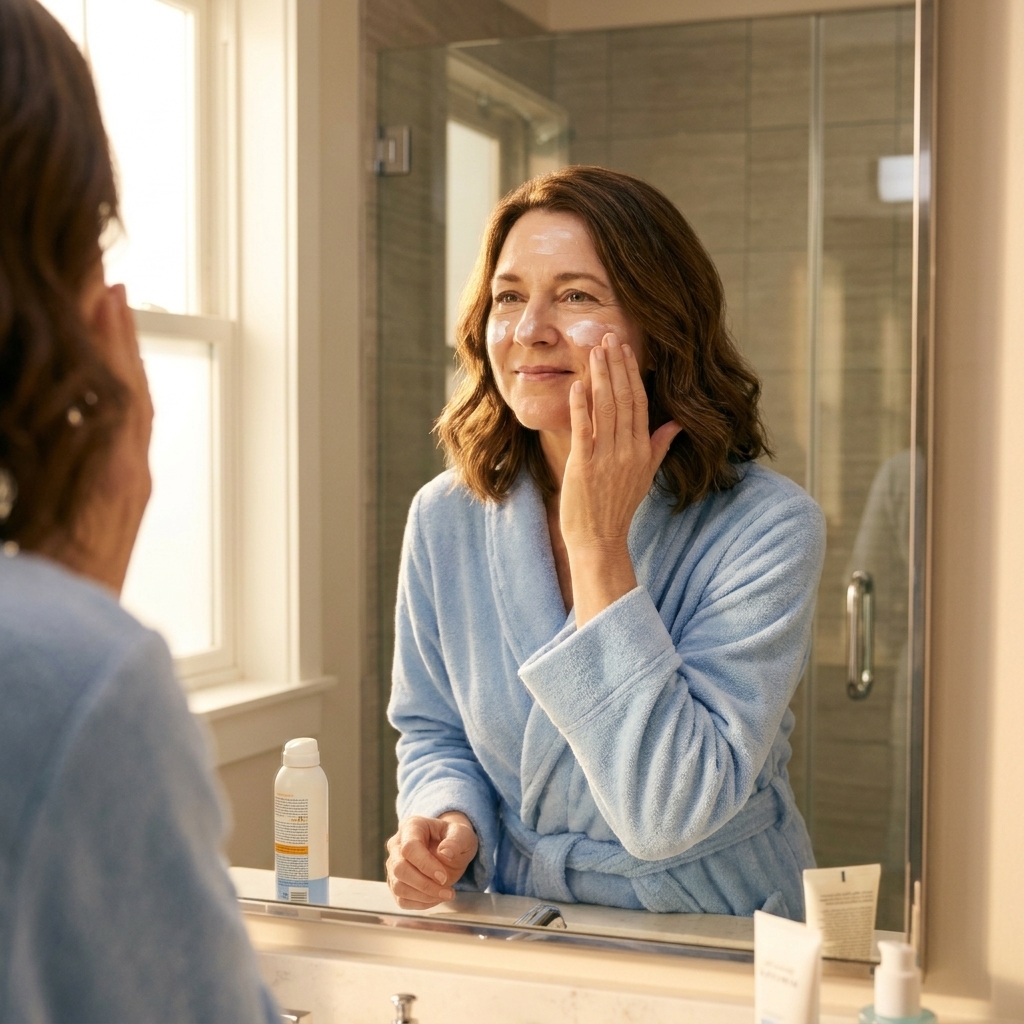
The golden rule of layering
If you remember one thing, make it this: go from thinnest to thickest, and finish with SPF. Water-based products first, oils and creams later, sunscreen last.
- Thinner textures (like watery serums) need direct contact with skin.
- Thicker textures (like creams) seal in hydration and slow evaporation.
- Sunscreen forms a protective film, so put it on after skincare and let it set before makeup.
A quick pacing tip: give each layer about 30 to 60 seconds to settle before the next one. You do not need to stand around for 10 minutes between steps, but a tiny pause reduces pilling and helps makeup sit better.
Step-by-step: the ideal morning routine
1) Cleanser (or a gentle rinse)
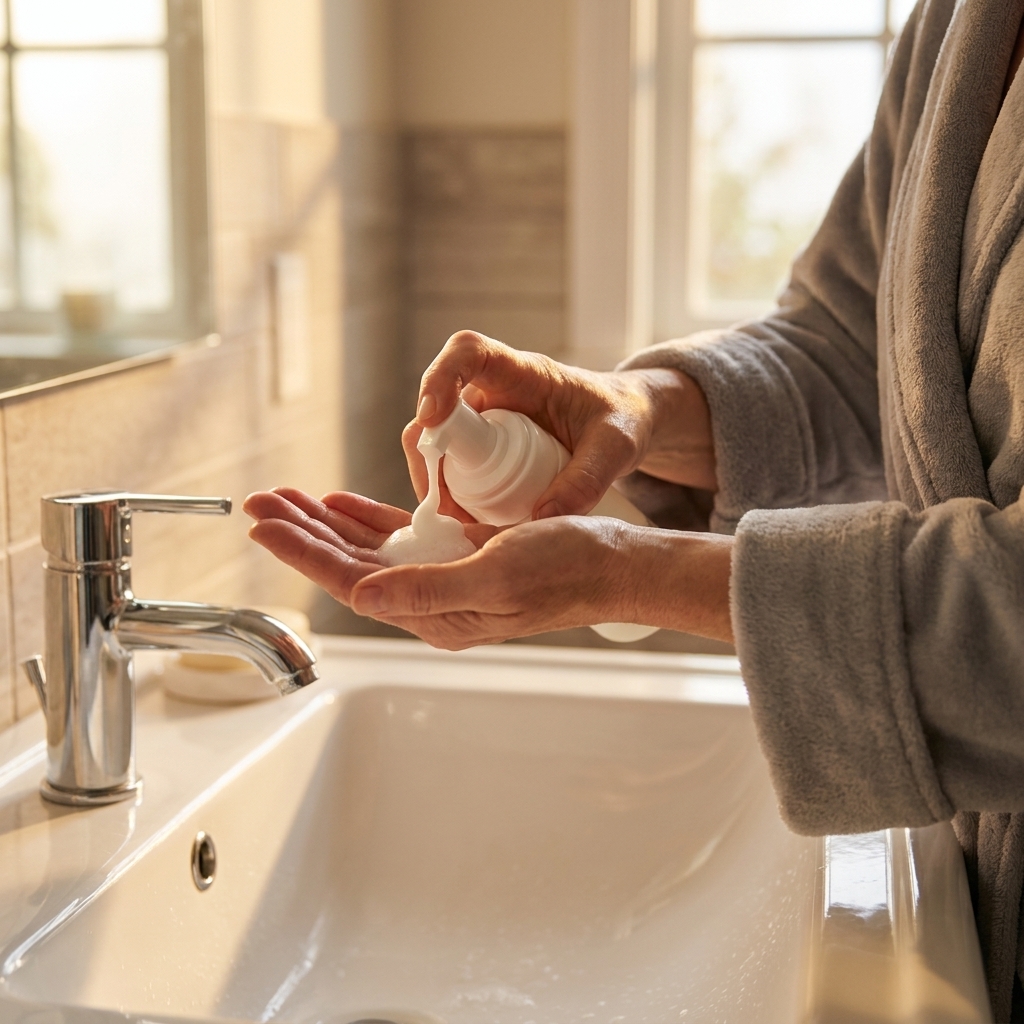
Morning cleansing is about removing overnight sweat, oil, and leftover product, not stripping your face until it squeaks. If you wake up dry or sensitive, a lukewarm water rinse can be enough. If you wake up oily or you used a heavy night treatment, reach for a gentle cleanser.
- Dry or sensitive: cream or milky cleanser, or just rinse.
- Oily or acne-prone: gel cleanser, fragrance-free, not harsh.
- Combo: gentle gel or low-foam cleanser.
2) Hydrating toner or essence (optional, but lovely)
This step is like a primer for hydration. It is especially helpful if your skin feels tight after cleansing or if you live in a dry climate. Look for humectants like glycerin, hyaluronic acid, or panthenol.
Skip it if your routine already feels balanced. Skin does not need extra steps for the sake of extra steps.
3) Targeted serum (choose one “hero”)
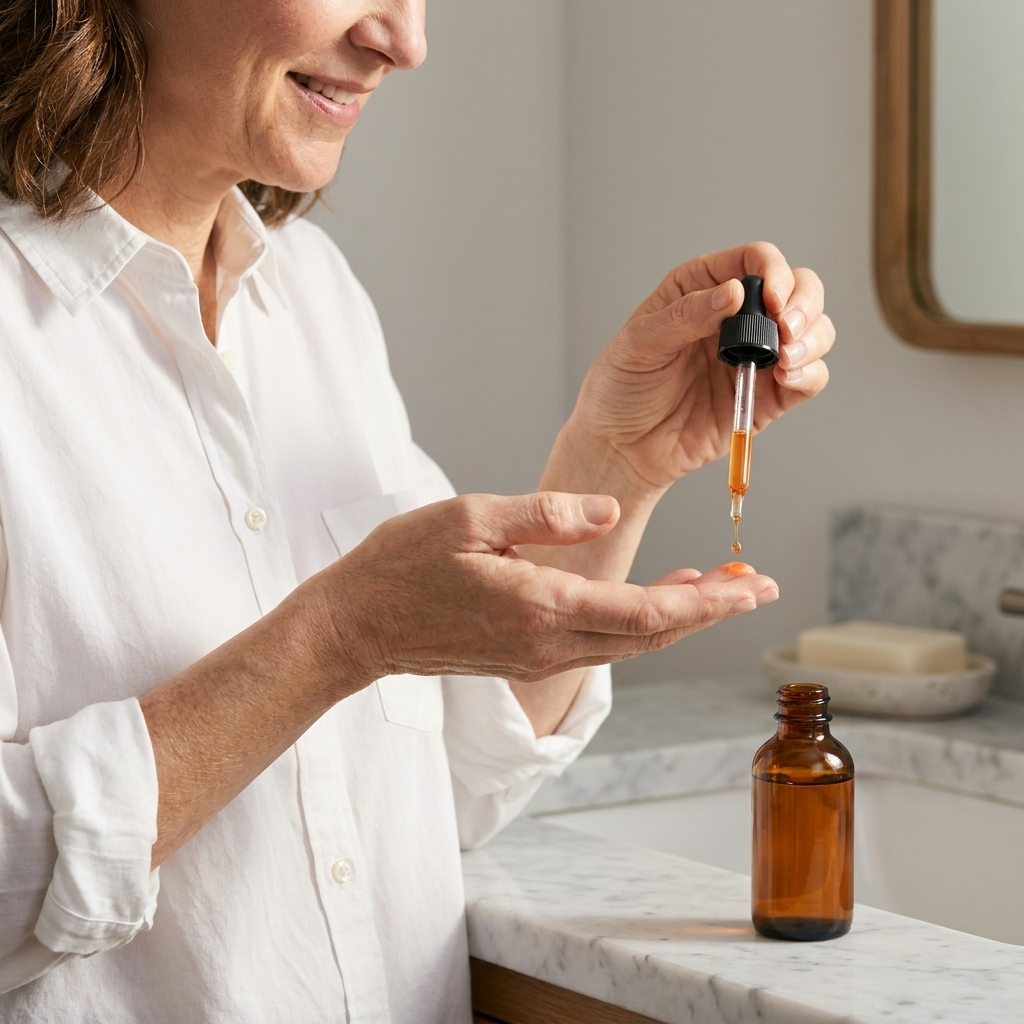
Serums are where you get strategic. In the morning, most people do best with one main serum that supports glow and resilience.
- For glow and uneven tone: Vitamin C (L-ascorbic acid or a gentler derivative). For L-ascorbic acid formulas especially, apply on clean, dry skin.
- For redness and stressed skin: Niacinamide (also great for visible pores and oil balance).
- For dehydration: Hyaluronic acid or polyglutamic acid (apply on slightly damp skin, then seal it in).
Reality check: If you are new to serums, start with one product 3 to 4 mornings a week. Consistency beats intensity every single time.
4) Eye cream (optional)
If you love an eye cream, use it after serum and before moisturizer. If you do not, do not feel like you are failing skincare. A well-formulated moisturizer applied carefully around the orbital bone is often enough.
Choose eye cream for a specific reason:
- Puffiness: caffeine-based formulas can help temporarily.
- Dryness: look for ceramides and peptides.
- Makeup creasing: lighter textures tend to play nicer with concealer.
5) Moisturizer (seal in the good stuff)
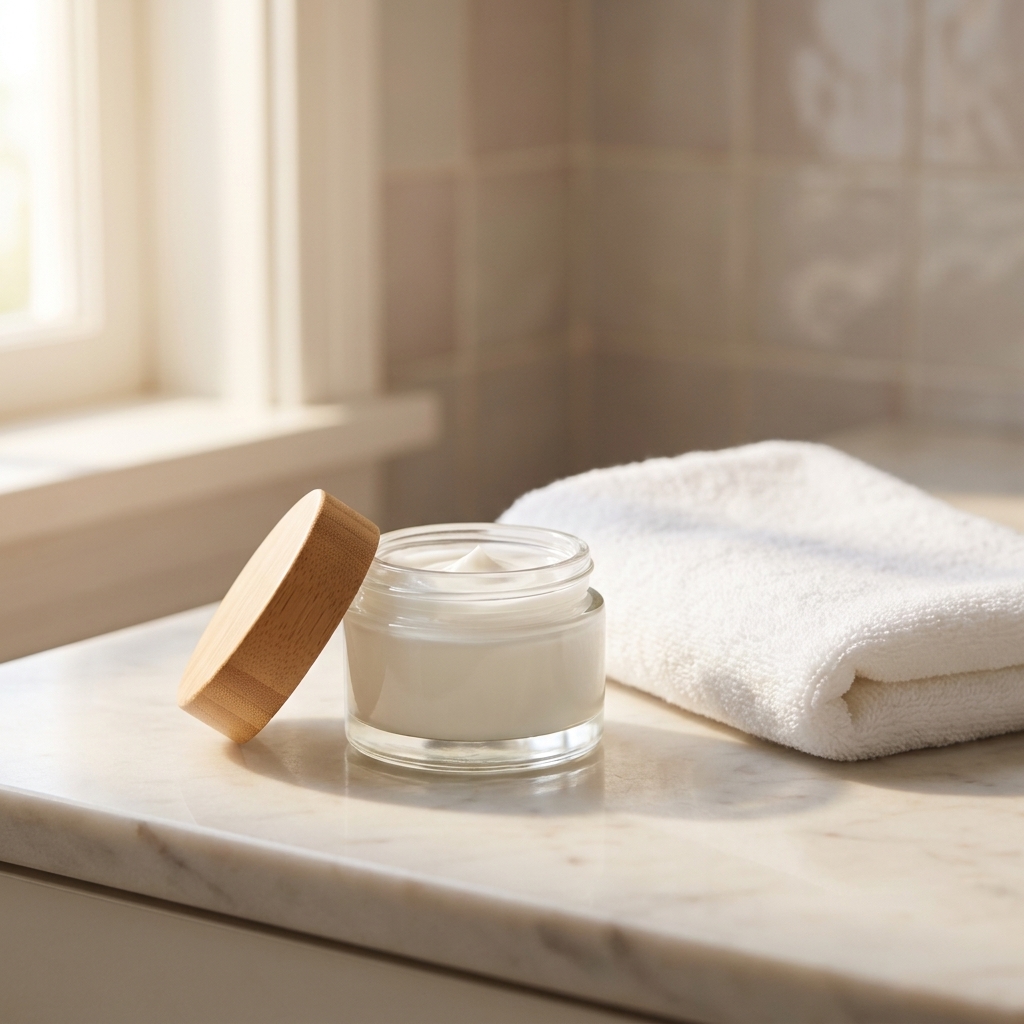
Moisturizer is your comfort layer, like the cardigan you reach for without thinking. It locks in hydration, supports the skin barrier, and helps sunscreen spread evenly.
- Dry: richer cream with ceramides, squalane, or shea butter.
- Oily: lightweight gel-cream, oil-free does not have to mean drying.
- Sensitive: fragrance-free, minimal ingredient list, barrier-supporting lipids.
6) Sunscreen (non-negotiable)
If glowing skin is the goal, sunscreen is the step that keeps your results intact. It helps prevent dark spots, dullness, fine lines, and irritation that can make skin look “tired” no matter how fancy your serum is.
- Use SPF 30 or higher every day, even when it is cloudy.
- Apply a generous amount. A common guideline is about two finger lengths for face and neck, or roughly 1/4 teaspoon for the face (plus extra for neck, ears, and chest).
- Let it set for 2 to 3 minutes before makeup.
Mineral vs chemical? Mineral (zinc oxide, titanium dioxide) can be great for sensitive skin. Chemical (often called organic) filters often feel more lightweight and invisible. Both can be effective, so the best sunscreen is the one you will actually wear.
One more thing: If you are outdoors, sweating, or in strong daylight for extended time, reapply sunscreen about every 2 hours (and after swimming or heavy sweating). Makeup does not replace reapplication, but setting sprays, cushions, and powders labeled with SPF can make topping up easier.
How to tweak your routine by skin type
If you are dry or tight by noon
- Use a gentle cleanse or just rinse.
- Add a hydrating toner or serum.
- Choose a ceramide-rich moisturizer.
- Try a more dewy sunscreen for a healthy finish.
If you get shiny fast
- Keep cleansing gentle but consistent.
- Try niacinamide or a light antioxidant serum.
- Use a gel-cream moisturizer (yes, you still need one).
- Pick a matte or natural-finish SPF.
If you are sensitive or reactive
- Go fragrance-free and introduce products one at a time.
- Prioritize barrier support (ceramides, panthenol).
- If vitamin C stings, try a gentler derivative or use it less often.
- Patch test new sunscreen. It is a common “mystery irritant.”
If you are acne-prone
- Do not over-strip. If your skin feels tight, it can look oilier later, or you may end up overcompensating with heavier products.
- Consider a morning serum with niacinamide.
- If you use benzoyl peroxide or strong acne treatments, morning irritation can worsen. Keep mornings soothing and protect with SPF. Bonus tip: benzoyl peroxide can bleach towels and pillowcases, so use white fabrics.
Common routine problems (and easy fixes)
Pilling under makeup
- Use less product. A pea-size serum is often plenty.
- Wait 30 to 60 seconds between layers.
- Check for clashing textures: silicone-heavy products stacked together can roll up.
Stinging or burning
- Scale back to a simple routine for a week: cleanser, moisturizer, SPF.
- Reintroduce actives slowly.
- Avoid applying strong serums on damp skin if they irritate you.
SPF feels greasy
- Try a different finish: gel, fluid, or “dry touch.”
- Use a lighter moisturizer, or skip moisturizer if your sunscreen is moisturizing enough for you.
- Apply in two thin layers instead of one thick one.
Sample morning routines you can copy
The minimalist glow (3 steps)
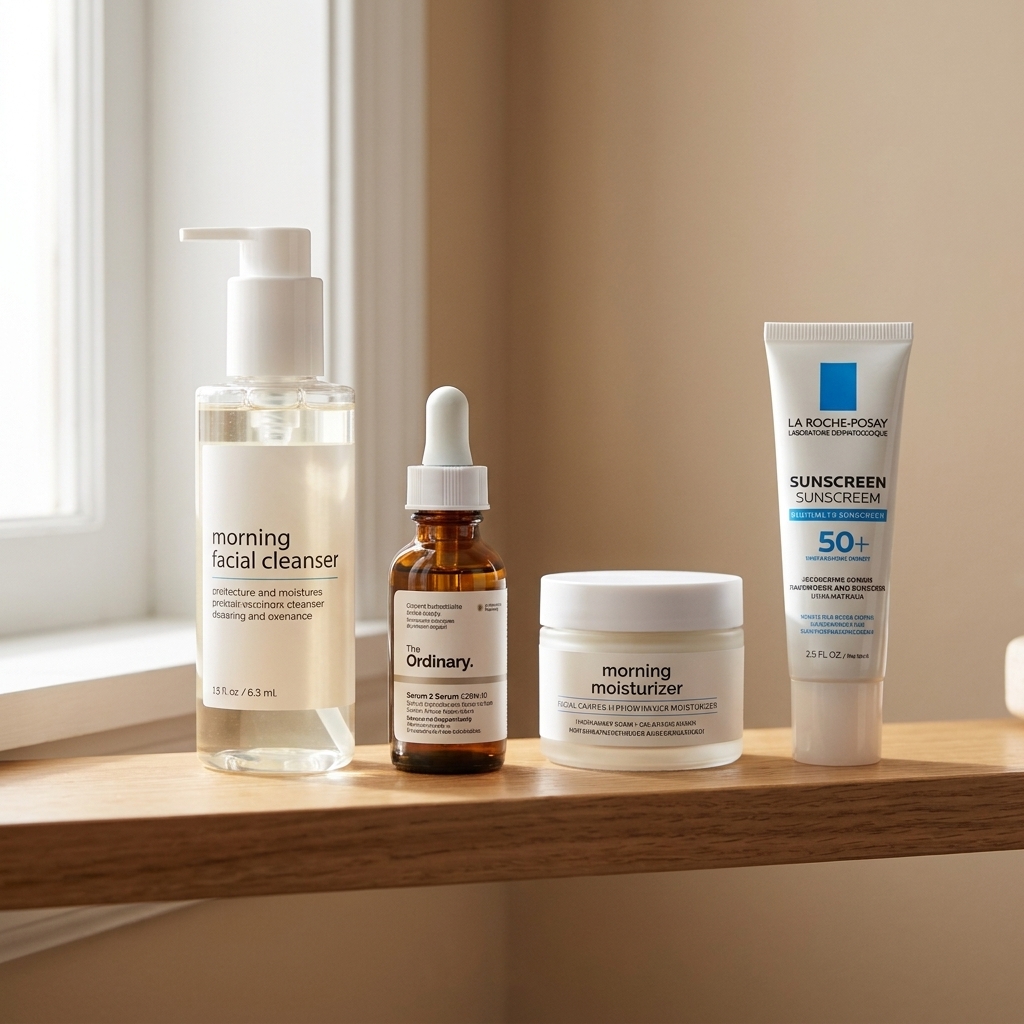
- Gentle cleanse or rinse
- Moisturizer
- SPF 30+
The brightening routine (4 steps)
- Cleanser
- Vitamin C serum
- Moisturizer
- SPF 30+
The barrier-first routine (4 steps)
- Cleanser
- Hydrating toner or essence
- Ceramide moisturizer
- Mineral SPF 30+
FAQ
Do I really need moisturizer in the morning if I use sunscreen?
Not always. If your sunscreen is hydrating and your skin feels comfortable, you can skip moisturizer. If your skin feels tight or your makeup clings to dry patches, keep a light moisturizer in the lineup.
What goes first, hyaluronic acid or vitamin C?
Generally, apply vitamin C first on clean, dry skin, then hyaluronic acid (especially if you apply it on slightly damp skin). If your vitamin C is very gentle and your HA is in a watery essence, you can adjust based on texture. Thinnest to thickest is still the guiding principle.
How long should my morning routine take?
Five minutes is plenty. A cleanser, one serum, moisturizer, and SPF is a complete routine. The glow comes from repetition, not from running a 12-step marathon before coffee.
When should I add exfoliation?
Most exfoliation does better at night, 1 to 3 times a week depending on your skin. If you exfoliate in the morning, be extra diligent with SPF and keep the rest of your routine soothing. If you use a retinoid, that is typically a night step, and daily sunscreen becomes even more important.
A final note on “glowing” skin
Glow is not about looking shiny or filtered. It is skin that looks comfortable, even-toned, and well cared for, like it is wearing its favorite outfit. Start simple, wear sunscreen like it is part of getting dressed, and give your routine a few weeks to show you what it can do.
If you want an effortless glow, protect your skin the way you protect your best investment pieces: gently, consistently, and with zero drama.