Hair typing can feel like trying to read a secret menu. One person swears by a “miracle” cream, another says it made their hair crunchy, and suddenly you are questioning everything you have ever known about shampoo.
Here is the truth: the best products are not the most expensive or the most hyped. They are the ones that match your curl pattern, your porosity, and your lifestyle. Think of it like tailoring: when the fit is right, everything looks better and feels easier.
Quick note before we dive in: the Type 1 to 4 system (straight to coily) is a popular shorthand, not a scientific diagnosis. It is still useful because it gives you a starting point for styling choices.
First: the four things that matter most
Most hair advice focuses only on curl pattern, but product success usually comes down to a mix of these four traits:
- Curl pattern (shape): straight, wavy, curly, or coily
- Strand thickness (diameter): fine, medium, or coarse (this is the thickness of each hair)
- Density: how much hair you have overall (this affects volume and how heavy products feel)
- Porosity: how easily your hair absorbs and holds onto moisture (this affects frizz, dryness, and shine)
If you only remember one line: pattern tells you how to style, porosity tells you how to moisturize.
How to find your pattern
Check your pattern on clean hair with minimal product. Let it air-dry or diffuse without brushing it out. Then look at the shape your hair naturally makes.
Type 1: Straight
What it looks like: Hair falls without an “S” bend. Can be sleek or prone to oil at the roots.
Common needs: Lightweight hydration, scalp balance, and volume without residue.
Type 2: Wavy
What it looks like: Loose “S” waves, often flatter at the crown and wavier mid-length to ends.
Common needs: Definition without heaviness, frizz control, and a routine that does not collapse your wave pattern.
Type 3: Curly
What it looks like: Spirals or ringlets. More prone to dryness because natural oils travel down the strand more slowly.
Common needs: Moisture, slip for detangling, and styling products that support curl clumps and reduce frizz.
Type 4: Coily
What it looks like: Tight coils, zig-zags, or very small ringlets with significant shrinkage.
Common needs: Rich moisture, gentle cleansing, and strong conditioning habits to reduce breakage.

Strand thickness and density
Two people can both have “curly hair,” and one loves a butter-thick cream while the other ends up with limp, greasy curls. Usually, that is strand thickness and density talking.
How to tell strand thickness
- Fine: A single strand is hard to feel between your fingers. Tends to get weighed down easily.
- Medium: You can feel it, but it is not wiry.
- Coarse: You can clearly feel the strand. Often stronger, but can feel dry or rough without enough moisture.
How to tell density
- Low density: Scalp is more visible, ponytail circumference feels smaller.
- Medium density: Scalp shows a bit when you part hair.
- High density: Scalp is hard to see, hair feels “full,” styles take longer to dry.
Why it matters: Fine strands usually want lighter formulas, while coarse strands typically tolerate richer ones. High density hair often needs more product overall, but not necessarily heavier product.
Porosity: the missing piece
Porosity is your hair’s relationship with water and product. It is influenced by genetics, heat styling, chemical services, sun exposure, and wear and tear over time. Hard water does not usually change your hair structure overnight, but mineral buildup can make hair behave more “low porosity” (coated) or more “high porosity” (dry and rough) until you clarify it.
A porosity check you can trust
Skip the floating-in-a-glass-of-water test. It is inconsistent and often misleading. Instead, use these real-life clues:
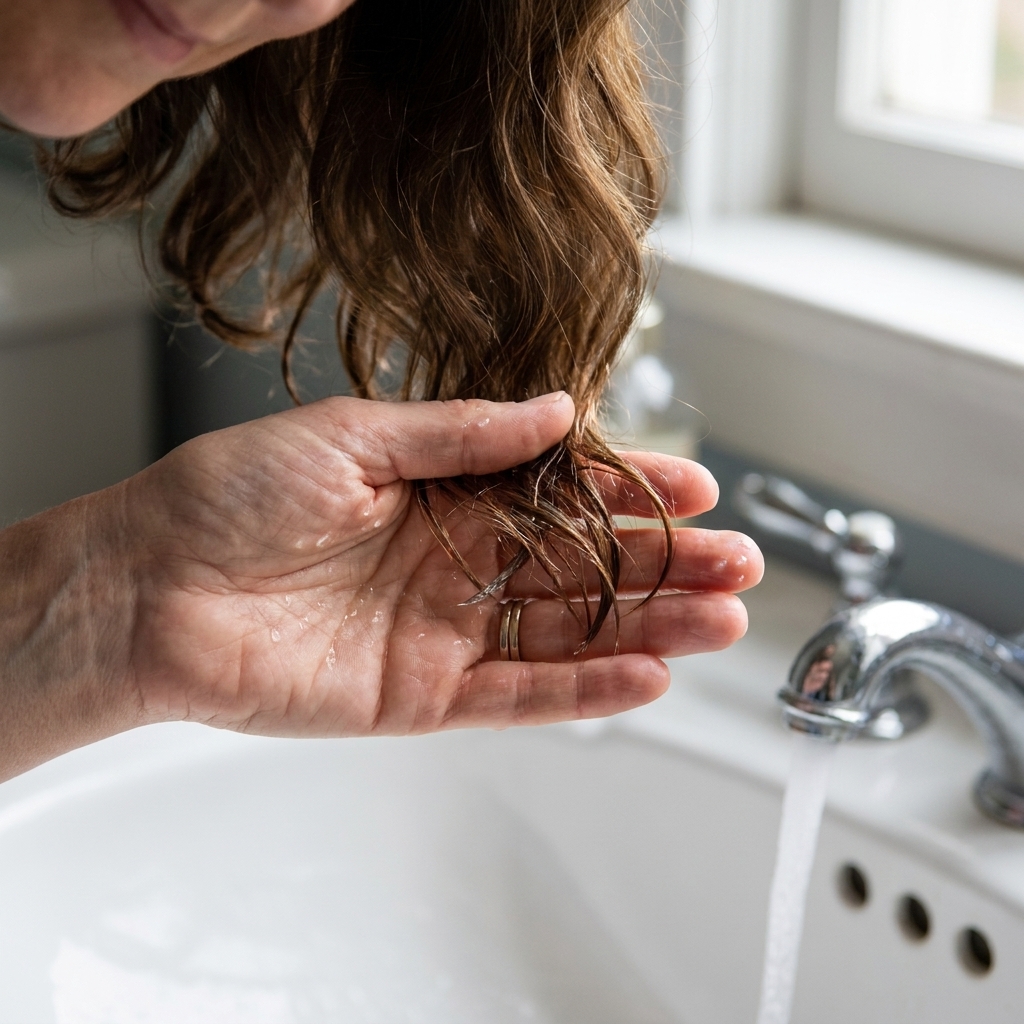
- Low porosity signs: Water beads on the hair, takes a long time to get fully wet, products sit on top, hair takes forever to dry, build-up happens easily.
- Medium porosity signs: Hair wets and dries at a reasonable pace, holds styles well, responds predictably to products.
- High porosity signs: Hair gets wet fast, often dries fast, frizzes easily, feels rough, tangles more, color fades quickly, ends feel thirsty no matter what.
Shampoo and conditioner that fit
If styling products are your outfit, shampoo and conditioner are your base layer. The right base makes everything sit better.
One important distinction: shampoo choice is mostly scalp-driven (oiliness, flakes, sensitivity). Porosity mainly influences how gentle or clarifying you go, and it matters most for conditioner, masks, and leave-ins.
If you have low porosity hair
- Shampoo: Use a gentle shampoo as needed for your scalp, plus a clarifying or lightweight balancing shampoo about 1 to 4 times a month if you get build-up. Avoid very heavy oils and butters near the roots.
- Conditioner: Choose lightweight conditioners with good slip. Heat helps: a warm towel or shower steam can help products absorb.
- Watch for: Waxiness, coated feeling, curls or waves going limp.
If you have medium porosity hair
- Shampoo: A gentle shampoo that matches your scalp is usually enough, with occasional clarifying if you use lots of stylers.
- Conditioner: Most standard conditioners work well. Rotate in a deeper mask if you heat style or color.
- Watch for: Overdoing protein or heavy oils when you do not need them.
If you have high porosity hair
- Shampoo: Choose sulfate-free or gentle cleansers that do not leave hair squeaky. Focus on cleansing the scalp, not stripping the lengths.
- Conditioner: Rich conditioners and masks are your best friend. Look for ingredients that help smooth and protect the cuticle (conditioning agents, ceramides, and film-formers).
- Watch for: Hair that feels great wet, then puffs up and dries out within an hour.
Pick stylers that make sense
Once cleansing and conditioning are right, styling gets dramatically less frustrating. Here is how to match stylers to what your hair actually does.
For straight hair (Type 1)
- Go for: Lightweight leave-ins, heat protectant sprays, root-lift foams, texturizing sprays (if you like grip).
- If you get oily: Scalp-focused shampoo, occasional clarifying, and a light conditioner only on mid-lengths and ends.
- Avoid if you hate residue: Heavy oils, thick creams, too much dry shampoo buildup.
For wavy hair (Type 2)
- Go for: Mousses, foams, light gels, and curl enhancers that are not butter-heavy.
- Technique tip: Apply styler to soaking-wet hair, scrunch, then micro-plop with a cotton tee to keep definition without frizz.
- Avoid if you lose volume easily: Layering multiple creams plus oils.
For curly hair (Type 3)
- Go for: Leave-in conditioner plus gel, or a curl cream plus gel if your strands are medium to coarse.
- Technique tip: Build a cast with gel, then once fully dry, scrunch out the crunch with a drop of lightweight oil or serum.
- Avoid if you get stringy curls: Too much product without enough water during application.
For coily hair (Type 4)
- Go for: Creamy leave-ins, butters or richer creams (especially for coarse strands), and gels for hold and definition.
- Technique tip: Work in sections, prioritize slip, and consider layering (leave-in then cream then gel) if your hair loses moisture fast.
- Avoid if breakage is an issue: Rough towel drying, styling on dry hair without a moisturizing base.
Protein, moisture, and weird hair days
Most hair frustration is an imbalance between moisture and strength. Protein can help reinforce the hair, but too much can make it feel brittle. Not enough can make it feel mushy and limp.
One caution though: these signals are not exclusive to protein or moisture. Over-clarifying, heat or color damage, humidity swings, and product buildup can create the same “what is happening?” feeling. Use this as a clue, not a diagnosis.
Signs you might need more moisture
- Hair feels rough, tangly, or straw-like
- Frizz appears immediately after drying
- Curls look dull and lose shape quickly
Signs you might need a little protein
- Hair feels overly soft and “gummy” when wet
- Curls will not hold a pattern even with hold products
- Breakage increases after color or heat damage
Rule of thumb: Start with moisture. Add protein slowly, like seasoning. You can always add more later, but it is annoying to undo a protein overload.
Build a simple routine
Let’s make this practical. You do not need a 12-step routine to have great hair. You need a few well-matched staples.
The core routine
- Cleanse: Shampoo as needed for your scalp. Clarify occasionally if you use lots of stylers or get build-up.
- Condition: Match richness to your porosity and strand thickness.
- Style: Pick one main definition product (mousse, cream, or gel) and one finish product (oil or serum) if you need it.
- Protect: Heat protectant if you diffuse, blow-dry, or flat iron.
A low-effort option
If time is tight or air-drying is not realistic: shampoo your scalp, condition your lengths, apply one styler on very wet hair, then diffuse for 5 to 10 minutes just to set the pattern. Let the rest dry while you live your life.
If you want one shopping shortcut
Choose products in this order: shampoo (for your scalp), then conditioner (for your porosity), then one styler for hold or definition. When those are right, everything else becomes optional.
Roadblocks and real fixes
“My hair gets greasy fast but the ends are dry.”
Condition only mid-lengths to ends, use a gentle shampoo focused on the scalp, and clarify once or twice a month. If you are high porosity, add a leave-in just on the ends.
“My curls look great in the shower and then explode into frizz.”
That is usually porosity plus hold, and sometimes weather. Apply styling product on very wet hair, use a gel for a stronger film, and avoid touching while drying. A microfiber towel or cotton tee helps a lot.
“My waves disappear by lunchtime.”
Try mousse or foam instead of cream, use less conditioner near the roots, and diffuse for a few minutes to set the pattern.
“Nothing absorbs, everything sits on my hair.”
Likely low porosity or build-up. Clarify, then condition with a lighter formula. Warmth helps absorption, so give your conditioner a few minutes in the steam of the shower.
“Humidity ruins everything.”
Humidity can swell the hair and lift frizz, especially if your hair is porous. Try a harder-hold gel, use less glycerin-heavy styling in very humid weather (if it makes you puff up), and fully dry your hair before going out if possible.
Quick FAQ
Can my hair type change over time?
Yes. Hormones, stress, medications, color, heat styling, and aging can all change pattern and porosity. Re-check your routine if your hair suddenly behaves differently.
What if I have more than one pattern?
Totally normal. Many people have straighter pieces at the crown and curlier underneath. Style for the most “delicate” or finicky section, and do small tweaks elsewhere.
Do I need sulfate-free shampoo?
Not automatically. If you have high porosity, color-treated hair, or dryness, a gentler cleanser can help. If you have heavy build-up, oily roots, or use lots of silicones and stylers, an occasional stronger shampoo can be your reset button.
How often should I clarify?
Most people land somewhere between every 2 to 6 weeks. If your hair feels coated, limp, or dull, clarify sooner. If your hair feels dry and fragile, clarify less and focus on gentle cleansing.
When should I see a professional?
If you have sudden shedding, scalp pain, sores, or persistent flakes and itch that do not improve with gentle dandruff care, it is worth checking in with a dermatologist or trichologist. Hair products can do a lot, but they are not a substitute for medical care.
Your next best step
If you want the simplest plan: figure out your pattern, then decide whether you are low, medium, or high porosity. Buy one shampoo that matches your scalp, one conditioner that matches your porosity, then pick a single styling product that fits your pattern and strand thickness.
And if you take nothing else from me, take this: you are not “bad at hair.” You just have hair with specific needs. Once you meet them, styling stops feeling like a fight and starts feeling like self-expression.